What Was Sony’s First Product?
The Failed Rice Cooker From Sony’s Earliest Days

Sony’s first product was an electric rice cooker prototype developed in 1945, before the company formally existed.
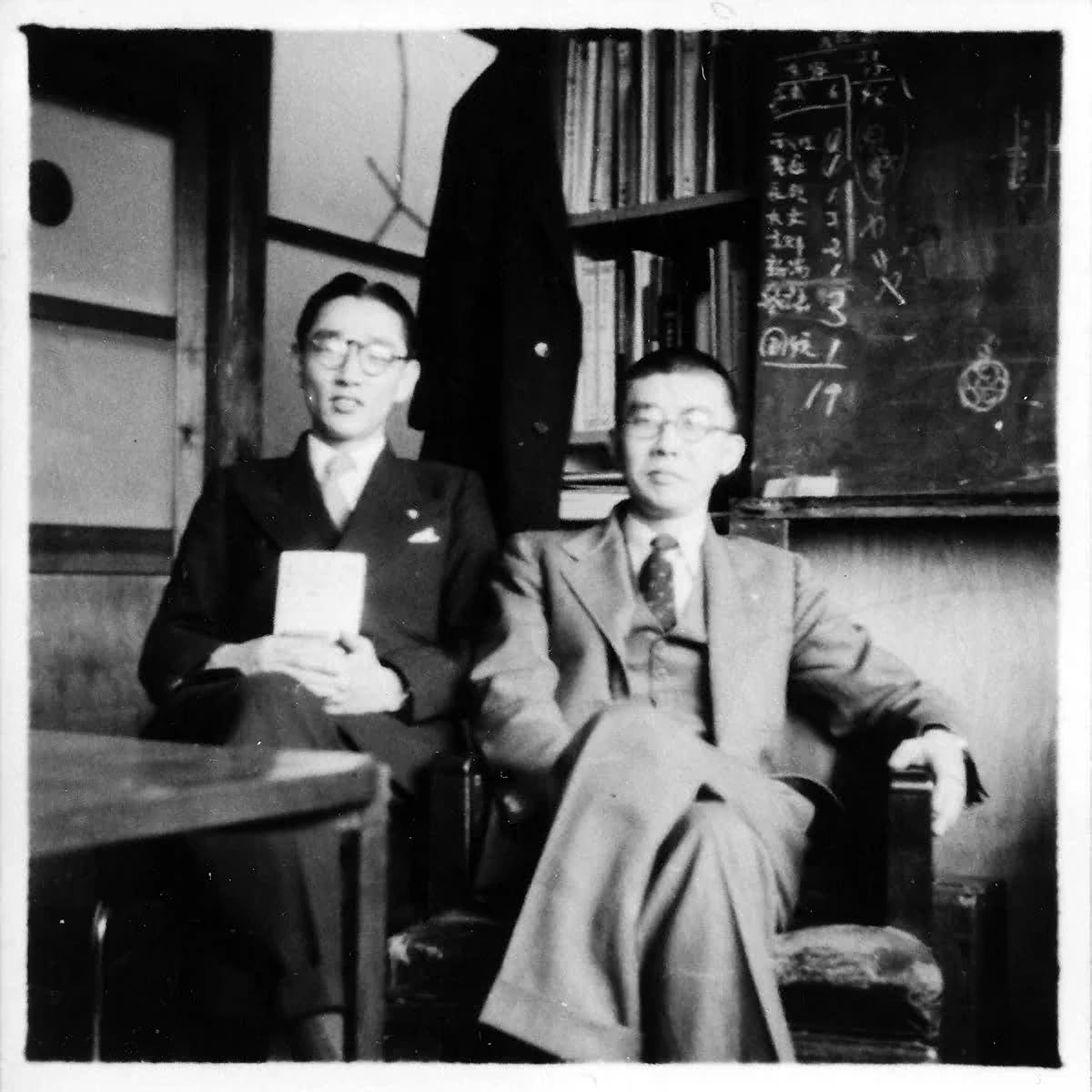
At the time there was no Sony. Tokyo Tsushin Kogyo would not be founded until May 1946 by Masaru Ibuka and Akio Morita. In the months before that, Ibuka was working in a small workshop in Tokyo, experimenting with surplus electrical parts, repairing radios, and building simple devices while the country was still recovering from the war.
Japan in 1945 was rebuilding from destruction after World War II. Electricity had returned to parts of Tokyo, but consumer appliances were rare and many households relied on improvised solutions for everyday tasks. Rice remained the center of the Japanese diet, yet cooking it properly required careful control of heat and timing, usually over charcoal or gas.
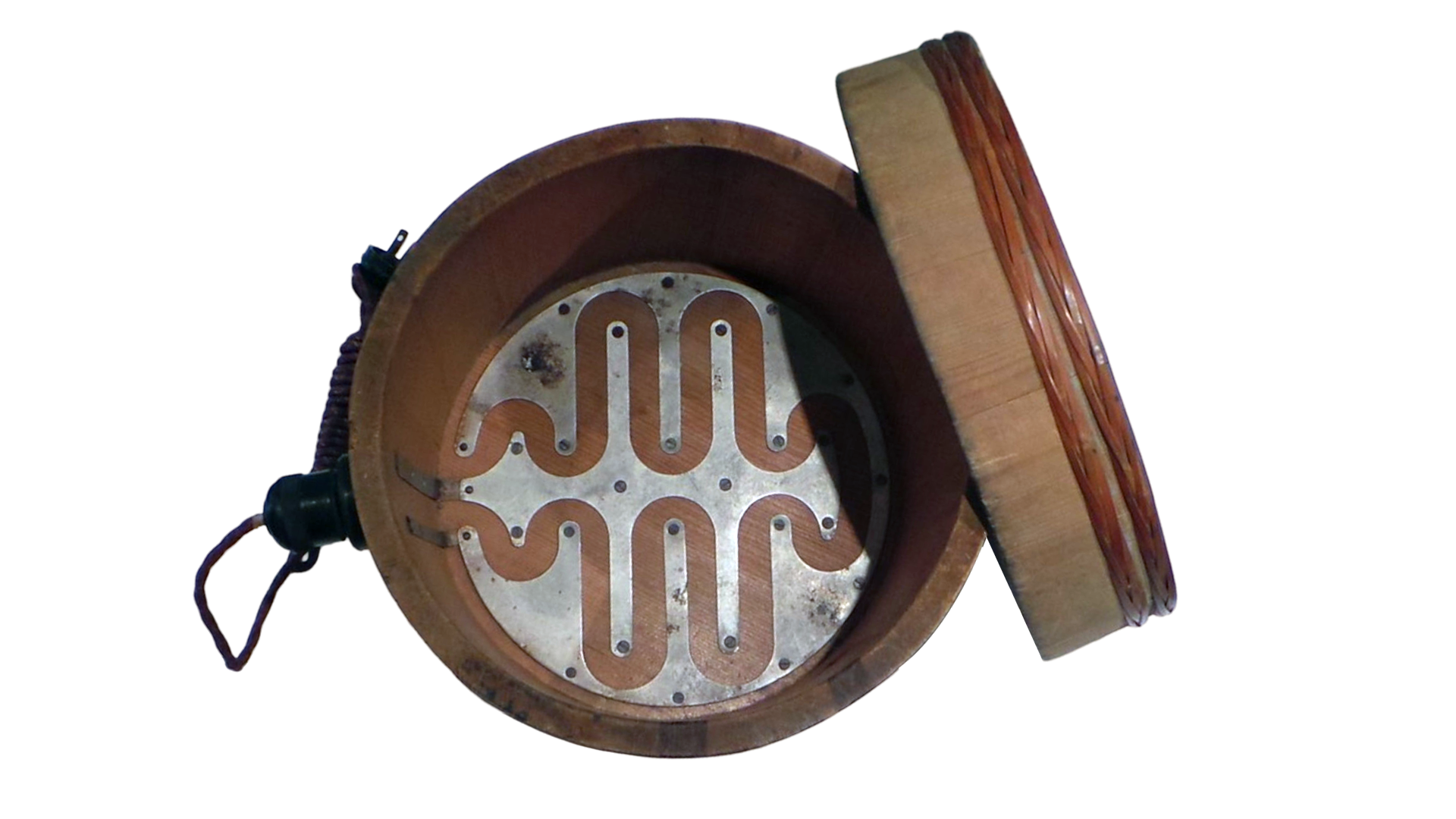
An electric rice cooker was an appealing idea. If electricity could heat rice directly, cooking might become simpler and more consistent, so Ibuka built a prototype to test the idea. Sony’s historical archives and museum materials date the device to 1945. It remains the earliest documented product experiment associated with the future company.
The prototype was built from simple materials. A wooden container held rice and water, with aluminum electrodes fixed at the bottom. When electricity passed through the mixture, the water conducted the current and heat was produced inside the container through electrical resistance.
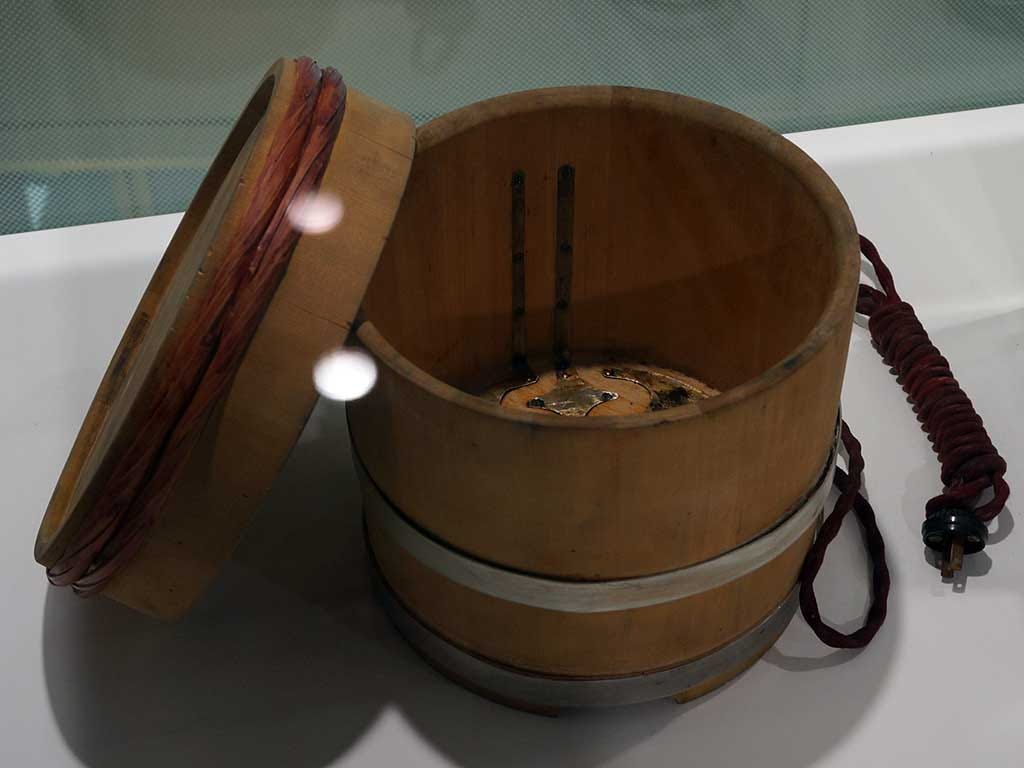
The problem was control. As the rice absorbed water and the liquid level dropped, the electrical resistance of the mixture changed constantly. Small differences in the amount of water could produce very different results, and without a thermostat, timer, or cutoff mechanism the cooker depended entirely on guesswork.
Sometimes the rice cooked acceptably, but other times it burned or remained uneven. The prototype never became a commercial product.
The next experiments moved in a different direction. Instead of trying to regulate heat precisely, the work shifted toward simpler uses of electrical heating. Electrically heated cushions were developed soon afterward and sold to the public, becoming some of the first products associated with the young company.
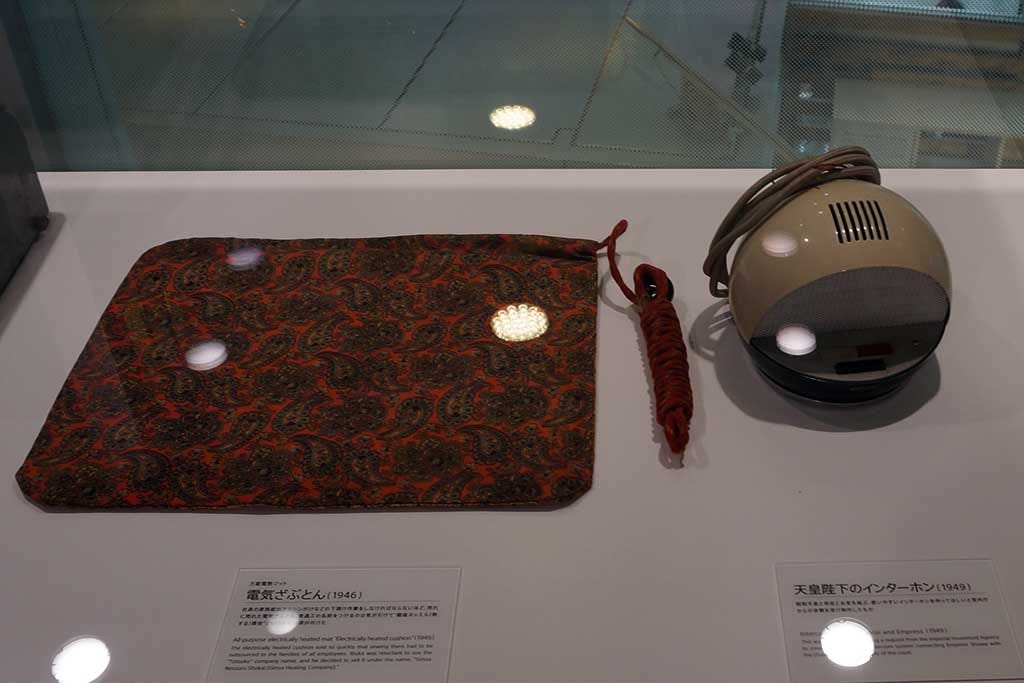
These devices were crude and would not meet modern safety standards, but they addressed a practical problem. In the late 1940s many homes lacked reliable heating, and a cushion with an electric heating element could provide warmth during the winter while remaining inexpensive to produce. The early sales generated income while the company searched for more ambitious products.
To avoid attaching risk directly to the new company name, the cushions were not sold under the Tokyo Tsushin Kogyo name. They were marketed through a separate company commonly translated as the Ginza Heating Company, known in Japanese as Ginza Nessuru Shokai. The arrangement created distance between the new business and a category of products that carried safety risks and uncertain regulation.
The rice cooker failed and was abandoned, but the underlying electrical heating idea did not disappear. It was redirected toward a simpler device people actually needed.
Even before Tokyo Tsushin Kogyo formally existed, the pattern was already visible: experiments were attempted, failures were dropped, and whatever still showed promise was redirected into something that worked.