
PlayStation 1: Sony’s First Gaming Platform, Architecture, and Legacy
What the PlayStation was, how it worked, and what it changed

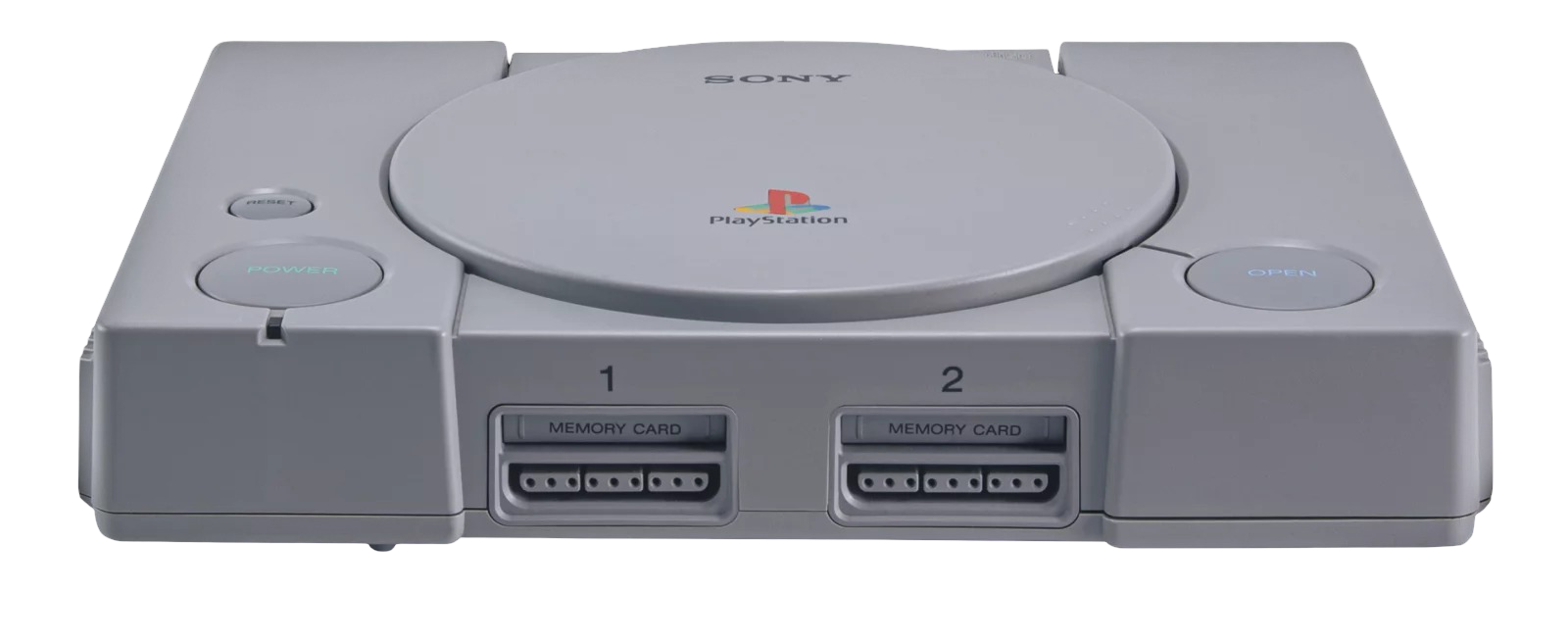
Introduced in 1994, the PlayStation was Sony’s first home video game console, built as a CD-ROM–based system designed for real-time 3D graphics.
What made the PlayStation unusual was not that Sony entered gaming, but that it entered with a platform mindset already formed. Long before the company shipped a console, it had built internal experience with long-lived technical systems, predictable real-time hardware, and optical media at global scale, including the workflows and licensing structures that come with it.
The PlayStation was the point where multiple strands of Sony’s internal experience converged into a single platform.
Rather than treating the PlayStation as a single product or a turning point, this article examines it as infrastructure. It focuses on how the system took shape, how its internal design grew out of Sony’s earlier work, and how those choices produced a console that stayed viable well beyond its launch window.
Before PlayStation
Sony’s preparation for gaming began outside the consumer product lineage that produced Trinitron and the Walkman. By the mid-1980s, the company was already learning how to design, deploy, and maintain complex technical systems for internal use, while also expanding into personal computing.
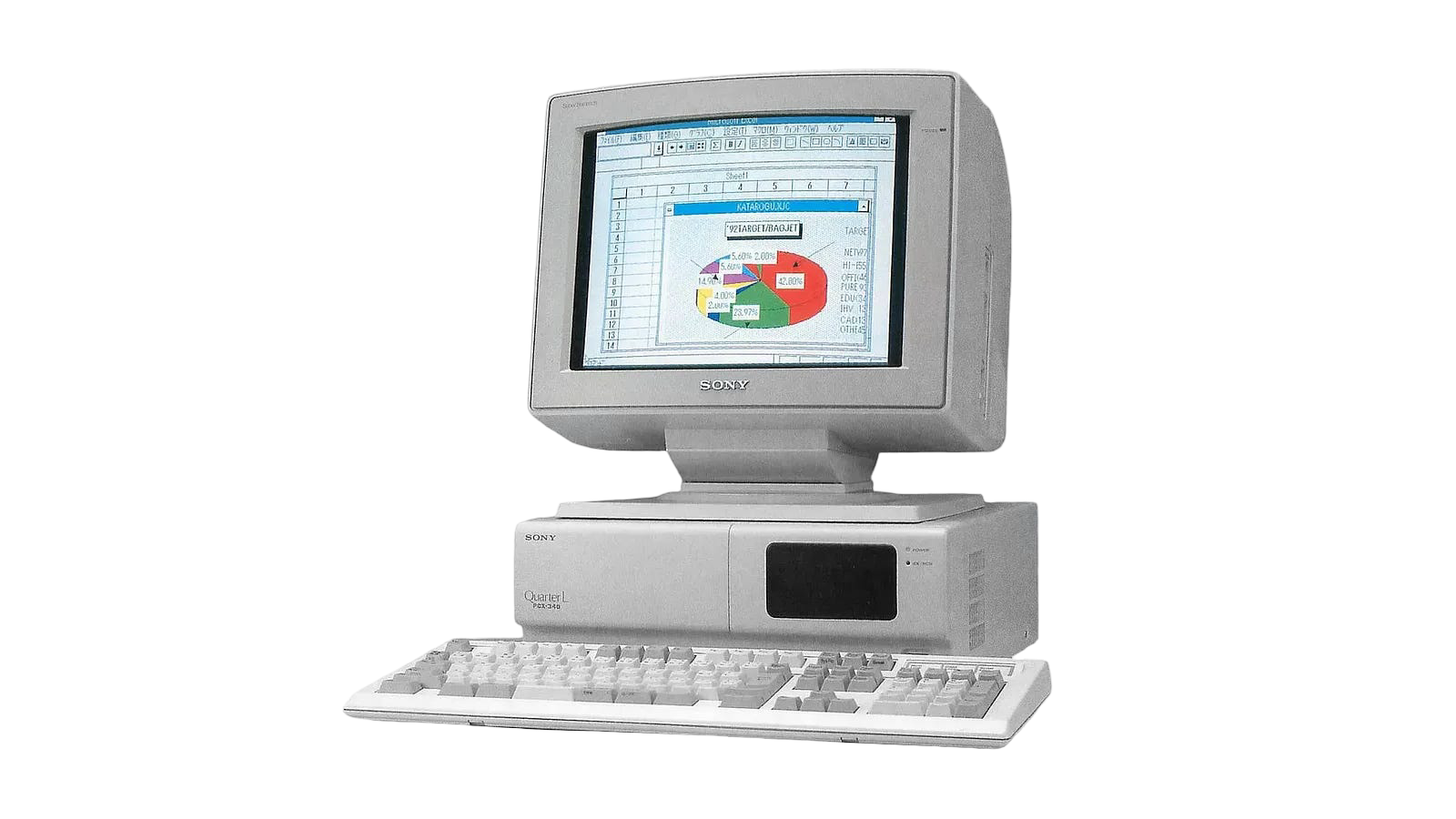
In 1985, Sony launched the NEWS workstation project led by Tadashi Doi. The goal was practical: replace DEC VAX machines used across Sony’s engineering teams with a standardized UNIX platform built around predictable performance and long-term stability. NEWS treated engineers as its primary users. It was infrastructure, not a showcase product, and it trained Sony in the habits of shipping computer systems that had to survive real work over long periods.
That project shaped the PlayStation in an indirect but important way. It taught the company how to ship a platform at scale, keep software workflows consistent across years, and work comfortably with MIPS-based CPUs. There was no direct reuse of NEWS technology inside PlayStation hardware. The value was organizational. Sony entered gaming already accustomed to long-lived systems and to MIPS as a development environment.
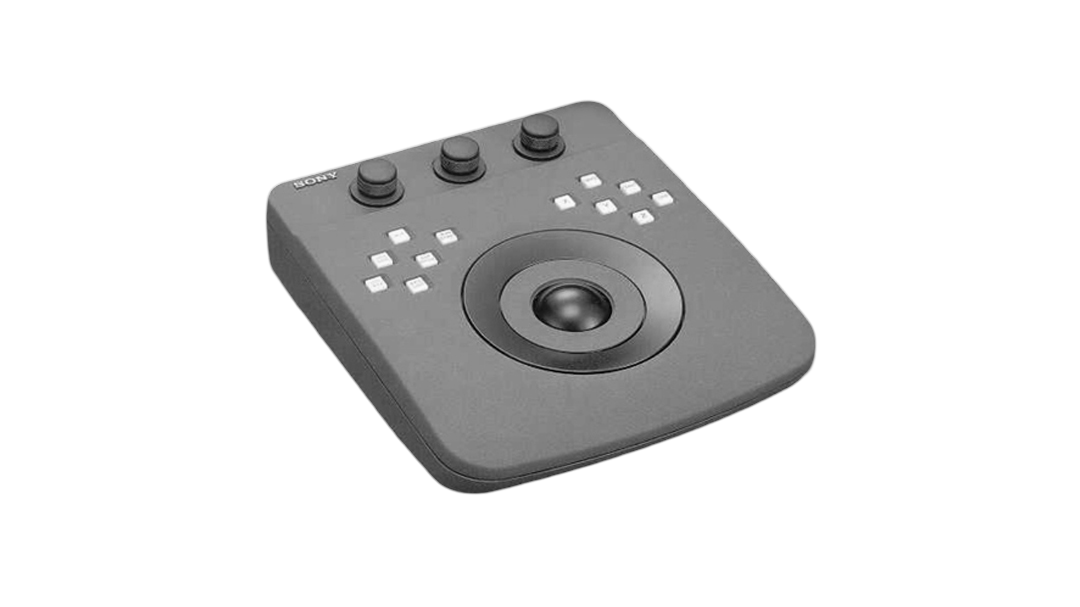
In parallel, Sony video engineers were solving a different class of problem in broadcast television: real-time image 3D manipulation. In 1984, Sony began internal demonstrations of the DME-9000, known internally as System G. Designed for live production, it could rotate, warp, and manipulate images instantly using custom hardware for real-time texture mapping. That capability would later reappear in PlayStation, not as a direct transfer, but as a translated idea constrained by cost, power, and mass production.
Sony also built experience with optical media at an ecosystem level. It worked with Philips to define the Red Book and Yellow Book standards, manufactured drives and mechanisms, shipped disc-based computers, and released the Data Discman. By the time the idea of games migrating from cartridges to discs gained traction, Sony already had manufacturing, licensing, and distribution systems built around optical media.
By the late 1980s, Sony had three capabilities a modern console would need: platform discipline, real-time 3D system engineering, and disc-based software distribution. A game system had not yet appeared, but the groundwork was already in place.
Partnership With Nintendo
Sony entered gaming through a component rather than a console. In 1986, Ken Kutaragi designed the SPC700 audio processor for Nintendo’s Super Famicom. Sony did not yet belong to the games industry, but the chip placed it inside Nintendo’s platform. Supplying a critical component gave Sony a foothold inside the games business.
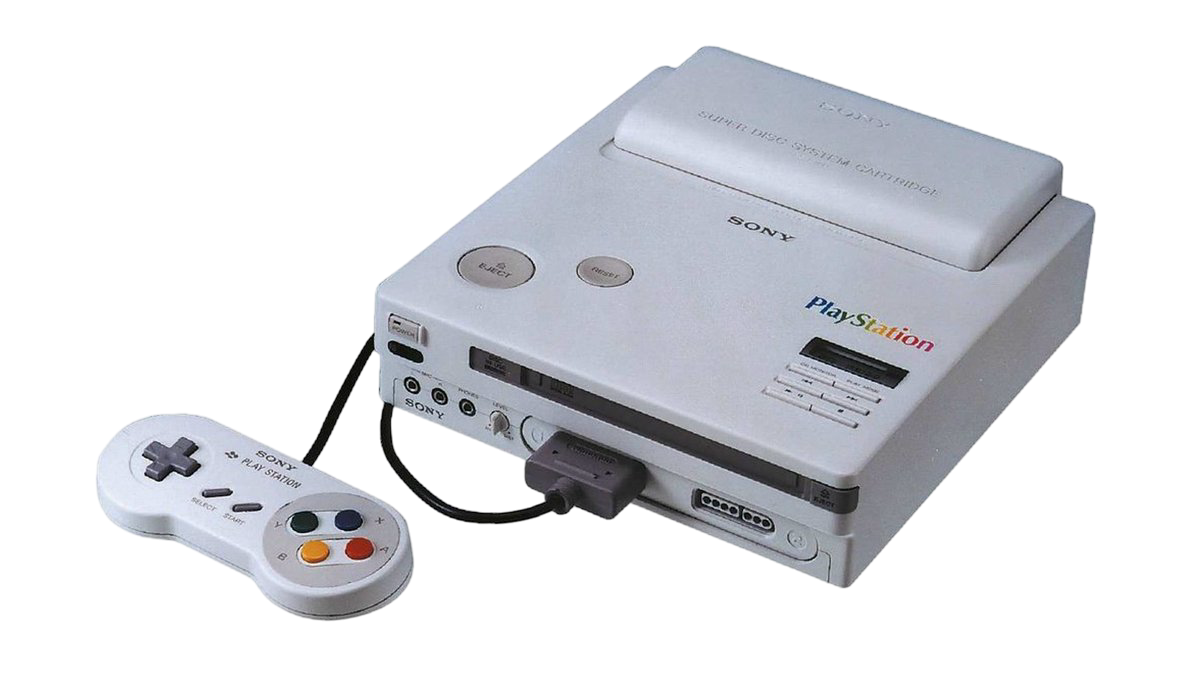
As compact discs reshaped music distribution, Sony saw optical storage as a way to change games as well. The original proposal presented to Nintendo in 1987 involved a CD-ROM add-on for the Super Famicom. That concept later expanded into a hybrid system capable of running cartridges alongside a Sony-controlled disc format called Super Disc.
In January 1989, the project received the name Play Station. Inside Sony, it was not treated as a typical game console. It resembled a second attempt at home computing after MSX, approached through entertainment rather than productivity.
By 1990, a working prototype existed. More importantly, the design placed software licensing and disc manufacturing under Sony’s control. Under the proposed agreement, Sony would retain full rights to the CD-ROM format, meaning Nintendo would effectively become a licensee on its own hardware, losing the lucrative licensing royalties that defined its business model. That shift away from cartridge production governed by a single platform holder became the central point of tension.
Sony’s parallel work with Philips on CD-i increased Nintendo’s concern. Contemporary press coverage suggests Sony was no longer acting as a passive supplier. In June 1991, Nintendo ended the partnership publicly at the Consumer Electronics Show by announcing a new alliance with Philips.
Sony executives were caught off guard. An emergency meeting followed to consider legal action and potential damage control. At the time, Sony was still divided internally over whether games justified building a dedicated platform at all. Kutaragi was operating in a state of near-exile; his team functioned as a skunkworks unit hidden from Sony’s conservative executive branch, who viewed gaming as beneath the company’s dignity. Kutaragi famously had to bypass his direct superiors and appeal personally to President Norio Ohga to keep the project from being cancelled.
Sony did not respond immediately. After the partnership ended publicly in 1991, the company spent the next year weighing its options. A lawsuit was considered and set aside, not to protect a supplier role, but because it led nowhere useful. Sony continued supplying audio chips to Nintendo while reassessing its position in games and exploring other partnerships. The decision emerged gradually, not to litigate or withdraw, but to build its own console.
Designing the PlayStation
Once Sony committed to building its own console, the question was no longer whether it could enter gaming, but what kind of system it should build.
Internally, the PS/X project moved away from the idea of a general-purpose multimedia appliance for a practical reason. Sony was not a game developer, and it understood that the platform would succeed or fail based on third-party support. The system therefore had to behave predictably under load. Developers needed to know how it would respond, understand its limits quickly, and work within them without timing surprises or instability.
That priority shaped the architecture. The PlayStation used a MIPS R3000A-compatible CPU running at 33.8688 MHz for game logic and scene setup. Geometry calculations were accelerated by a dedicated Geometry Transformation Engine, while a custom Sony GPU handled rasterization, texture mapping, and framebuffer operations. Depth management relied heavily on software rather than a full hardware Z-buffer, and texture mapping used affine interpolation instead of perspective-correct mapping.
These choices were not theoretical compromises. They were made to keep frame timing consistent and reduce system overhead. The trade-off was visual precision. Because textures were interpolated in screen space rather than depth-corrected space, surfaces appeared to wobble as the camera moved or objects approached the foreground. Limited sub-pixel precision amplified the effect.
Rather than treating this behavior as a flaw to eliminate, many developers learned to design around it. Camera motion was controlled, texture detail was chosen carefully, and scene composition was adjusted to reduce visible distortion. Over time, the artifact became a recognizable visual signature of the platform rather than a barrier to adoption.
CD-ROM shaped the PlayStation just as strongly as its graphics pipeline. Disc manufacturing lowered per-unit costs and reduced the financial risk of production runs. Teams could ship larger games without committing to expensive cartridge orders months in advance, and Sony’s existing licensing and manufacturing infrastructure made the transition frictionless for publishers. Disc copying later became a sustained issue in some regions, but by that point the platform’s momentum was already established.
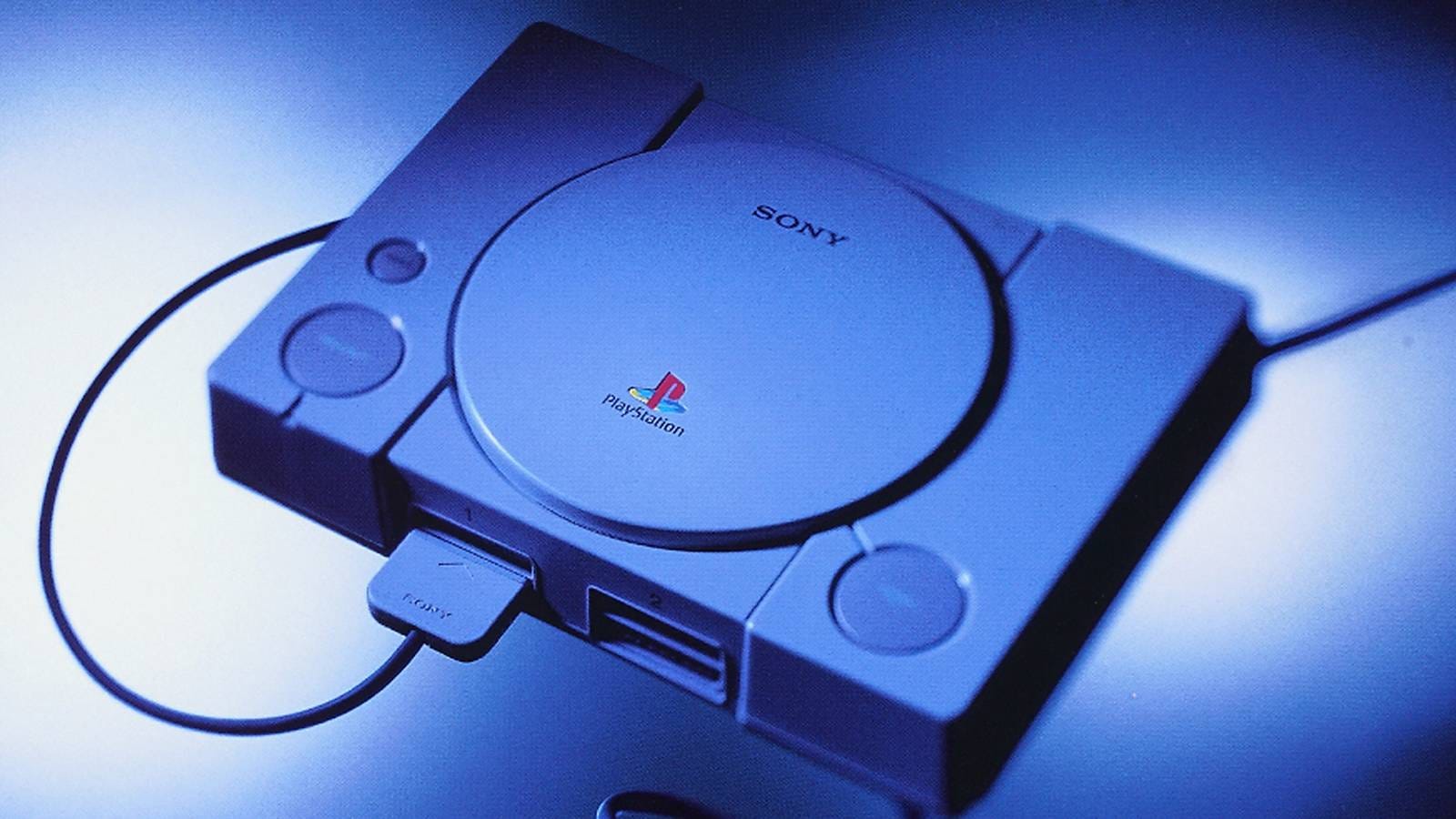
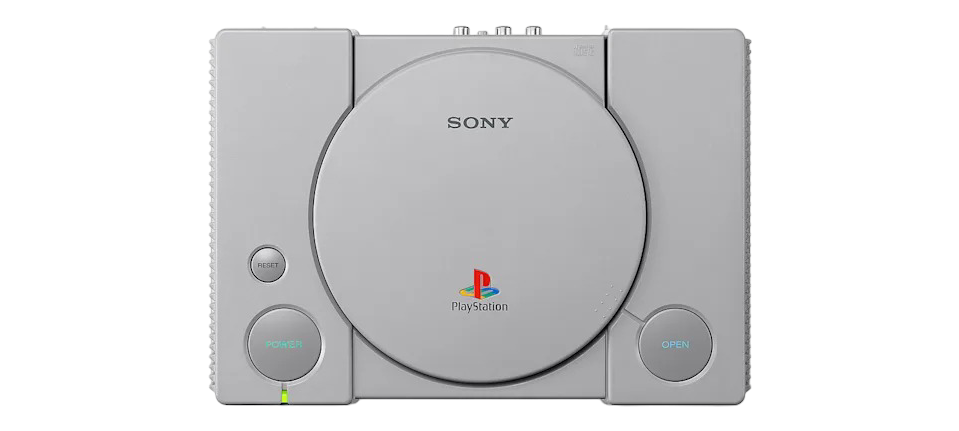
Industrial designer Teiyu Goto defined the PlayStation’s physical form with visibility in mind. At a time when most consumer electronics were black and angular, the console was deliberately light gray, with softened edges and a circular disc lid that made its optical media focus immediately obvious. The design was meant to stand apart rather than blend into an equipment stack, signaling that this was not a cartridge-based system by default.
Controller design was debated internally. Goto argued for hand grips to support longer play sessions and ultimately prevailed. The button symbols were chosen to communicate spatial relationship and functional role rather than letters or numbers, allowing players to understand inputs visually instead of memorizing labels.
By the time it launched, the PlayStation already had a clear identity. It was a system built for repeatable real-time interaction, with visual refinement expected to come from software iteration rather than hardware complexity.
The Moment PlayStation Became Real
The PlayStation became tangible for developers during internal demonstrations held at Sony’s Gotenyama headquarters in 1993. Studios were invited to see early prototype hardware, hear a technical explanation of the system from Ken Kutaragi, and, just as importantly, hear directly from Sony’s president, Norio Ohga. Ohga’s address was deliberate. It signaled that PlayStation had executive backing and long-term commitment, reassuring developers that Sony was serious about building a platform they could safely invest in.
The demonstrations focused on real-time behavior rather than polished output. Prototype boards were shown openly, and Kutaragi walked through the system’s design while running live examples. One demonstration featured a freely moving camera around a textured Tyrannosaurus rex, intended to show that complex imagery could be rendered interactively rather than pre-rendered.

Initial reactions during the sessions were muted. Developers did not commit publicly or offer immediate feedback. The significance of the demonstrations became clear afterward, as multiple studios contacted Sony to request development access.
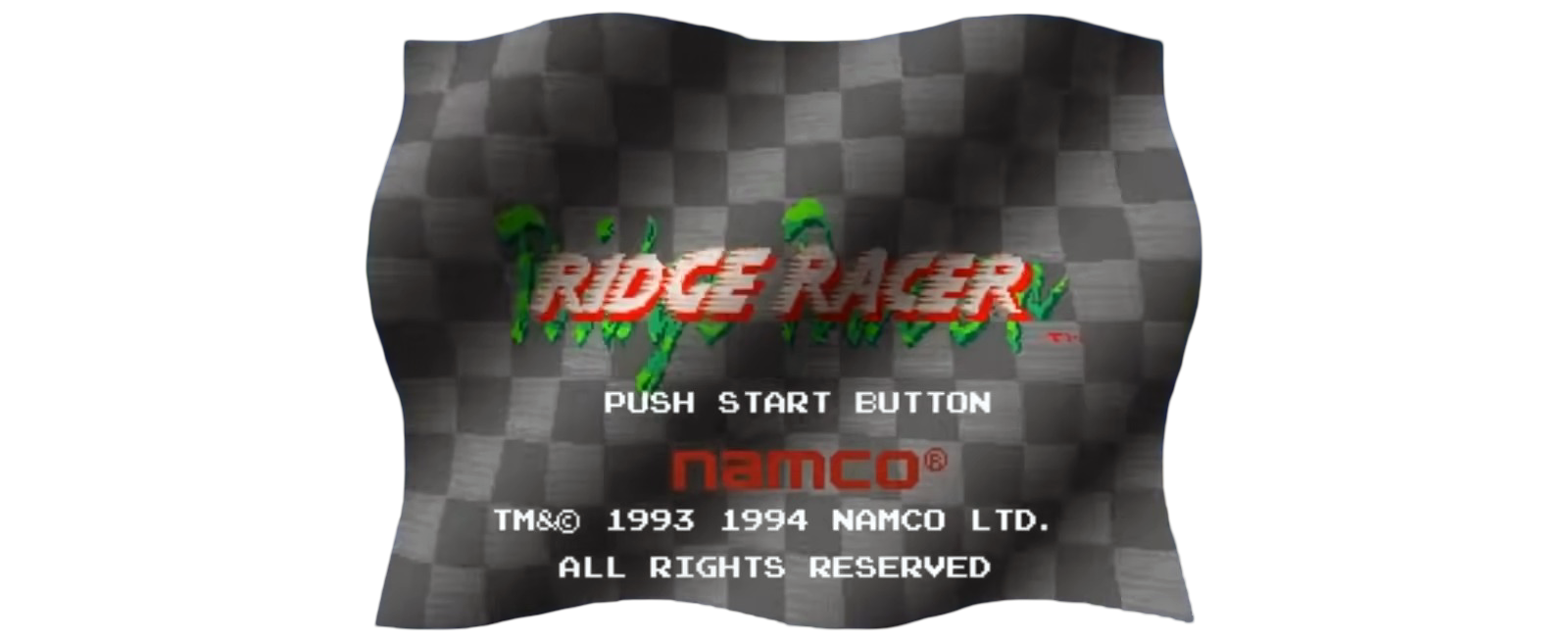
Namco committed early, and the decision was not accidental. By the early 1990s, Namco’s relationship with Nintendo had deteriorated, and its position as a major arcade operator made close alignment with Sega impractical. Sony offered a third path. Namco already had deep experience with real-time 3D through its System 21 arcade hardware, and the PlayStation’s design mapped closely to its existing workflows. Ridge Racer was chosen as the first large-scale test of the platform.
Built on a famously compressed schedule, Ridge Racer demonstrated the system’s strengths immediately. It also showed practical advantages of CD-ROM media, including the inclusion of a playable Galaxian during loading and support for standard audio CDs as alternate soundtracks.
What began as a technical test quickly became something more important. Ridge Racer emerged as the PlayStation’s primary launch title, providing a clear, working example of what the platform was built to do. By the time the system reached market, the PlayStation was no longer defined by its specifications or prototypes. It was defined by a game that made its design decisions visible and understandable on day one.
A Cultural Platform
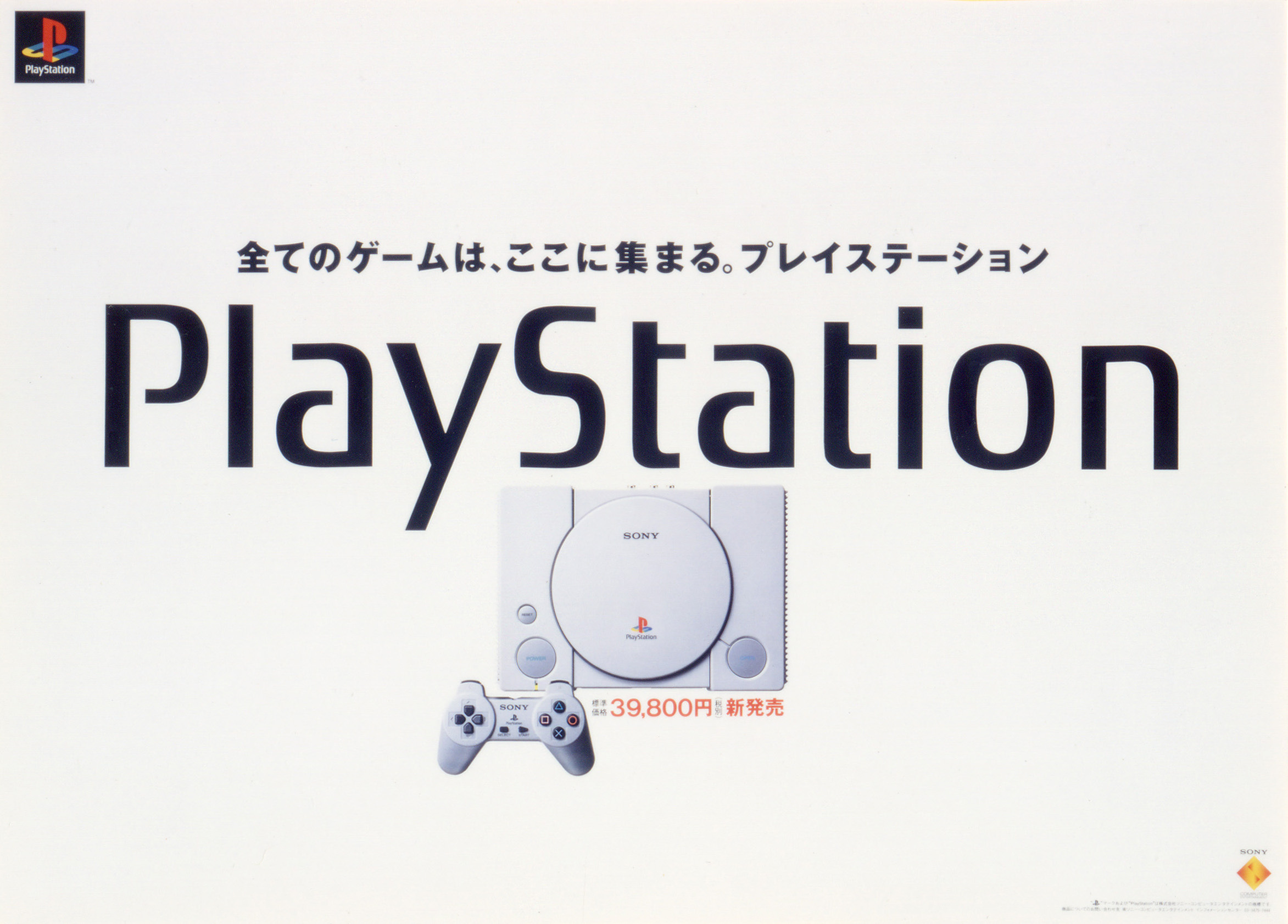
The PlayStation launched in Japan on December 3, 1994. Sony priced it at 39,800 yen, and when it reached North America in September 1995, it launched at $299. This pricing decision proved decisive. Sega’s Saturn launched in the same market at $399, a $100 difference that immediately reshaped consumer perception and retail momentum.
Sony positioned the PlayStation deliberately toward young adults rather than children. The console was not marketed as a toy or a family appliance, but as a form of entertainment meant to sit alongside music and film.
Inside Sony Computer Entertainment, leadership drawn partly from Sony Music emphasized identity and cultural alignment over technical messaging. In North America, this approach materialized through the cryptic ‘U R NOT E’ (You Are Not Ready) campaign. Unlike competitors’ aggressive advertising, these ads were abstract and encoded, treating the audience as insiders who had to decipher the message to belong. In Europe, PlayStation aligned itself with clubs, music venues, and nightlife culture rather than traditional television advertising.
The strategy drew criticism at the time, particularly in Europe, where PlayStation’s marketing was seen by some as provocative or disconnected from established gaming audiences. What critics missed was that Sony was not trying to win the same audience its competitors already had. It was defining a different one.
This reframed what a game console was allowed to be in public. PlayStation was not positioned as a device that led away from adult culture, but as something embedded within it. Titles such as Wipeout, PaRappa the Rapper, Vib Ribbon, and Tomb Raider reinforced that identity by aligning gameplay, music, and visual design with contemporary tastes rather than traditional genre expectations.
By treating the console as a cultural object rather than a children’s product, Sony expanded the boundaries of the market itself. Gaming did not simply grow on PlayStation. It changed its posture.
Expansion and Generational Takeover
The PlayStation did not take over its generation overnight. It won by staying stable while the market scaled around it.
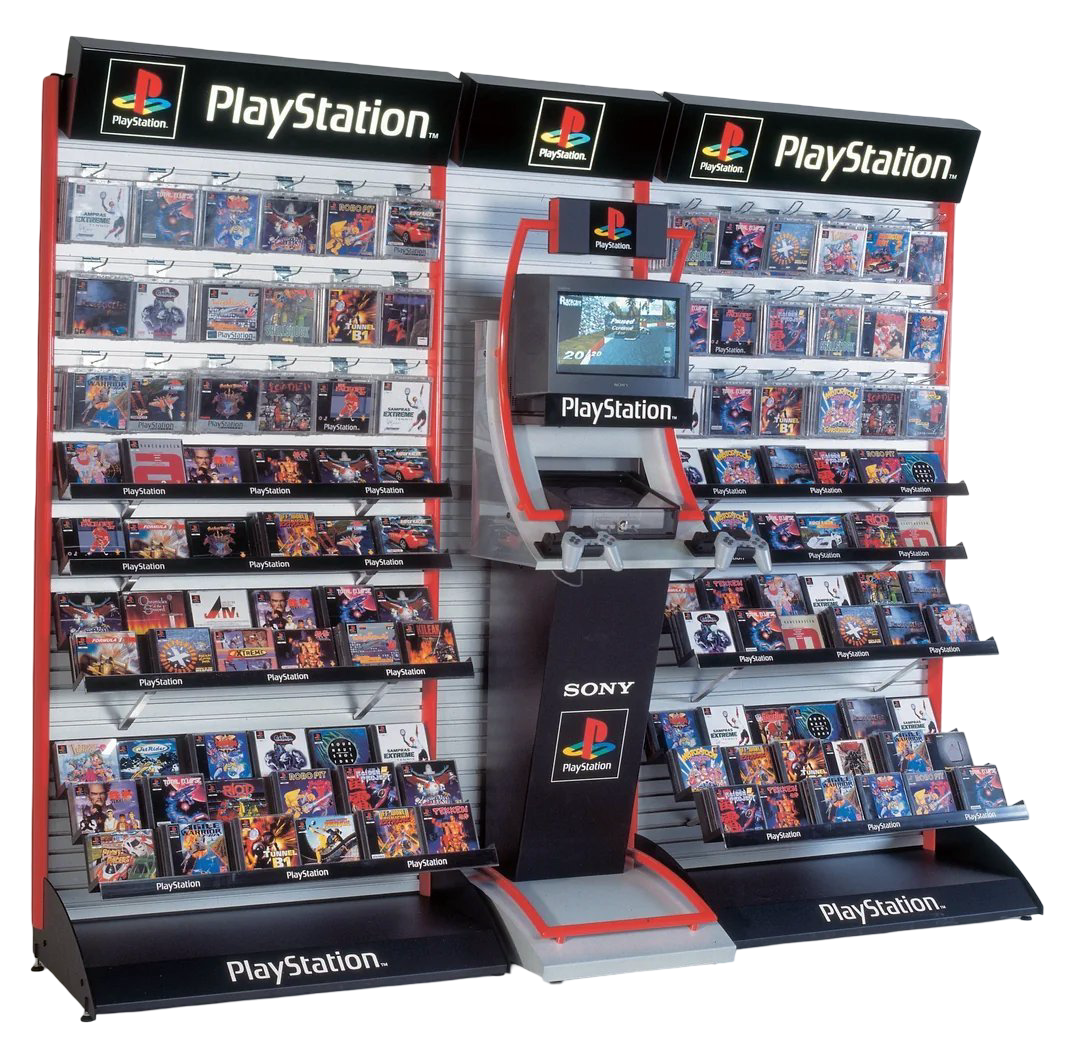
Sony treated the console as a consistent development platform. Hardware revisions reduced cost and improved manufacturing efficiency without changing behavior from a developer’s point of view. Price cuts expanded the audience without forcing studios or consumers to adapt to a moving target.
As tools improved and disc-based workflows settled into routine, software ambition increased. Publishers began planning release calendars around the PlayStation rather than treating it as one platform among several. That shift only happens when teams believe a system will stay consistent long enough to justify long-term investment.
That shift became unmistakable in Japan when Square chose to move the Final Fantasy series to PlayStation. The decision was driven by practical limits of cartridge production rather than branding, but its effect was symbolic. A franchise closely associated with Nintendo had moved to Sony’s platform, confirming that PlayStation was now a viable home for large, schedule-critical, disc-based projects. For Japanese publishers, the platform was no longer an alternative. It had become the default.
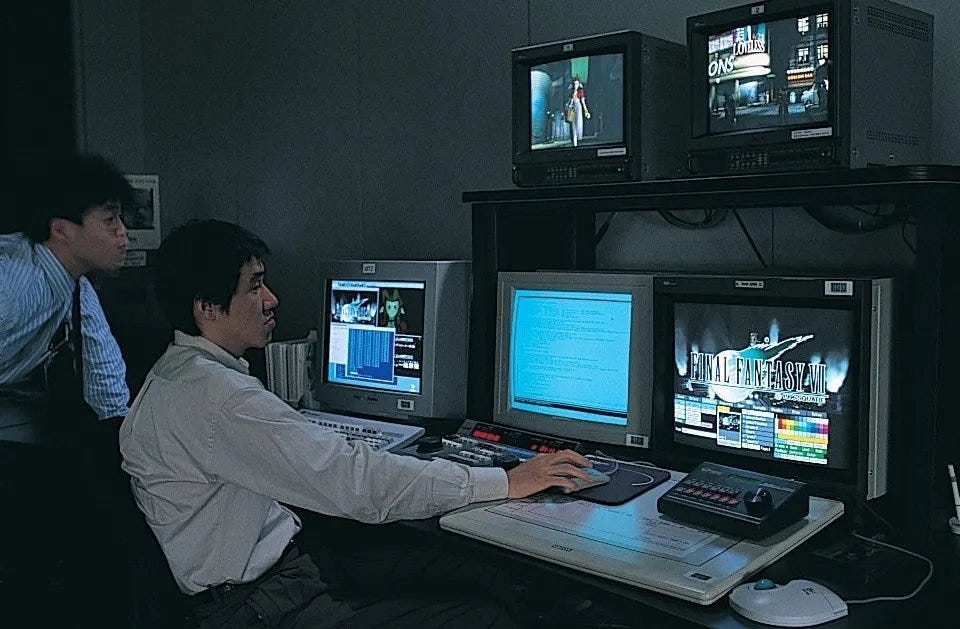
By the late 1990s, that openness extended beyond established studios. In 1997, Sony introduced Net Yaroze, a version of the PlayStation intended for hobbyists and smaller teams. It was not a commercial driver, but it reflected how comfortable Sony had become with the platform. The system was stable enough, and well understood enough, that expanding access no longer felt risky.
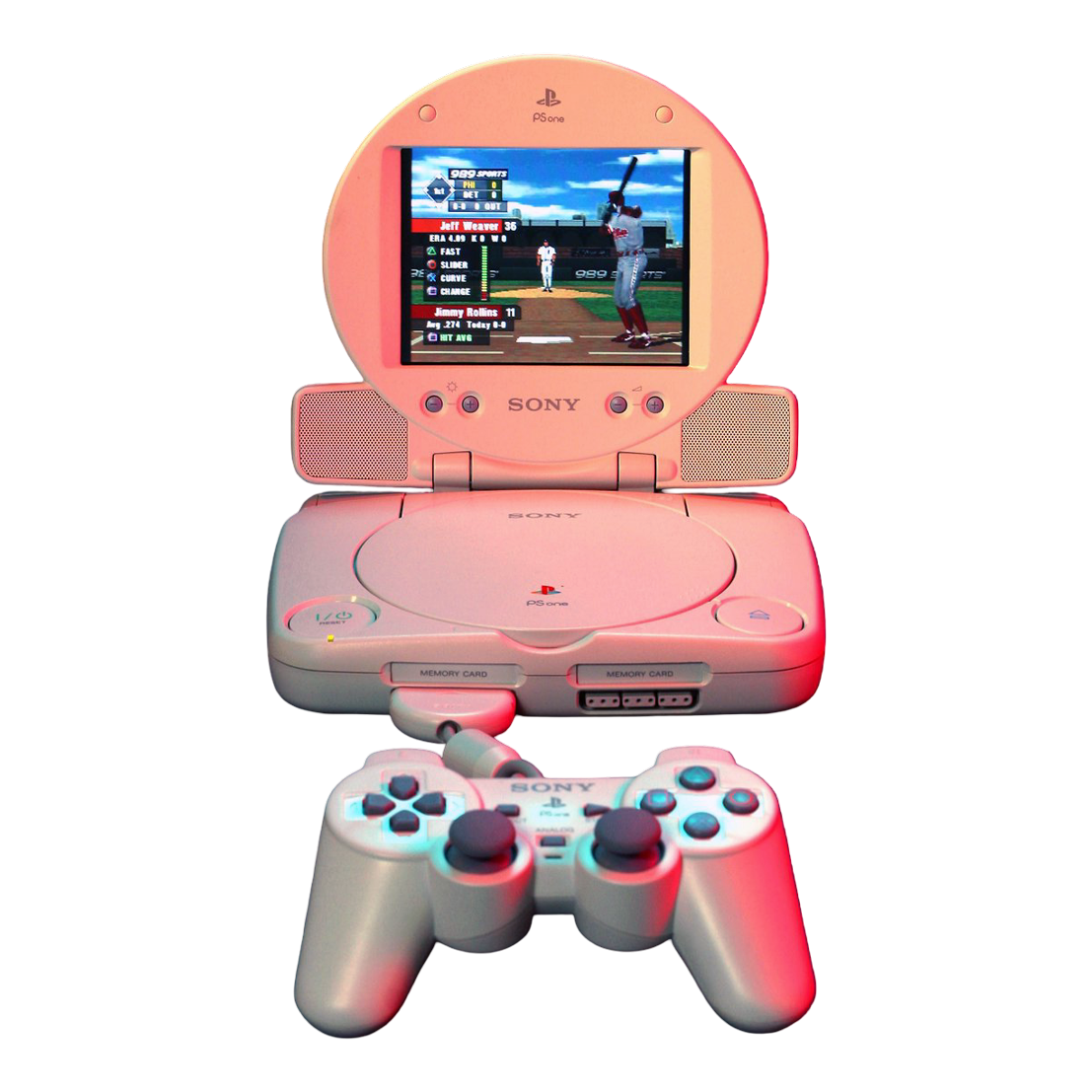
In 2000, Sony introduced the PSone. The redesign was smaller and cheaper, but its behavior remained unchanged. Existing games, controllers, and accessories carried forward without modification, preserving the platform as a continuous target rather than a reset.
When the PlayStation 2 arrived, Sony continued selling the original PlayStation in additional markets instead of cutting it off. The generation faded gradually rather than ending on a single date. The overlap showed that a console could coexist with its successor without being treated as obsolete the moment a new model appeared.
Legacy
The PlayStation did more than establish Sony in gaming. It expanded the operating scale of the console business in measurable terms. By the end of its commercial life, the PlayStation sold 102 million units worldwide, compared to approximately 33 million units for the Nintendo 64 and 9 million units for the Sega Saturn. The gap was decisive, consolidating developer support and consumer attention around a single platform.
PlayStation technical limits shaped both its lifespan and the hardware that followed. Texture distortion, software-driven depth handling, and the realities of disc copying were persistent constraints. At the same time, they clarified where real-time 3D needed to improve next. Later systems placed greater emphasis on depth precision, filtering, and more robust graphics pipelines in response to what the PlayStation made possible and what it left unresolved.
More important was the platform model it normalized. Sony treated PlayStation as a consistent development platform rather than a disposable product. Hardware revisions preserved compatibility. Tools matured instead of resetting. The system continued to sell alongside the PlayStation 2 rather than being replaced outright. That continuity reshaped expectations for how consoles could be supported, how developers could plan, and how long hardware could remain commercially relevant.
The PlayStation proved that a console didn’t need to be a toy to be mass market, and that a platform holder didn’t need to be a game developer to win. Sony entered the industry as an infrastructure builder, and by the time the generation ended, the industry had rebuilt itself around Sony’s blueprint.
PlayStation 1 Timeline
1980 — Sony and Philips publish the Red Book CD standard
1984 — Sony demonstrates System G
1985 — NEWS workstation project begins
1986 — SPC700 developed for Super Famicom
1987 — NEWS NWS-800 released
1988 — MIPS-based development matures inside Sony; Namco System 21 debuts
1989 — Play Station project named
1990 — Hybrid prototype completed
1991 — Nintendo partnership ends
1992 — PS/X approved
1993 — Developer demos; Namco commits
1994 — Japanese launch
1995 — North American and European launch
1997 — PlayStation passes 10 million units sold worldwide
1999 — PlayStation passes 70 million units sold
2000 — PSone redesign released
2000 — PlayStation 2 launches
2003 — PlayStation passes 100 million units sold
2006 — Original PlayStation production ends
Because the PlayStation is often discussed through shorthand, retroactive naming, and later generational assumptions, a number of recurring questions benefit from clarification. The answers below address common points of confusion while keeping the platform grounded in how it actually functioned during its commercial lifespan.
Frequently Asked Questions
Why is the first PlayStation called PSX?
PSX was the original internal codename for the PlayStation project during development. While “PlayStation” became the official brand name in 1994, the “PSX” abbreviation persisted in gaming magazines and developer circles for years.
Are PlayStation 1 games region locked?
Yes. PlayStation 1 consoles utilize regional lockouts. A North American (NTSC-U) console will only play North American discs, while Japanese (NTSC-J) and European (PAL) consoles are restricted to their respective software libraries.
Why are PlayStation 1 discs black?
The black tint was a form of physical copy protection. The PlayStation hardware was designed to detect the specific light-frequency reflectivity of the black polycarbonate discs. This allowed the console to distinguish between official Sony-manufactured media and standard silver CD-Rs.
Why do PS1 graphics wobble or warp?
The PlayStation 1 lacked “perspective-correct texture mapping” and a hardware Z-buffer. As a result, textures were calculated in 2D screen space rather than 3D depth, causing them to “warp” or “jitter” when the camera moved or objects got close to the screen.
Can you play PS1 games on a PS2 or PS3?
Yes. All PlayStation 2 models are hardware-compatible with PS1 discs. All PlayStation 3 models support PS1 games through software emulation, regardless of whether they support PS2 games.
Is the PlayStation 1 still relevant today?
Yes. Historically, the PlayStation remains relevant as a playable system. The library is large, varied, and still easy to access, offering hundreds of games that hold up as entertainment rather than artifacts. For many players, it remains one of the most complete and approachable consoles of its era.
Sources and Methodology
This article draws on primary and contemporaneous sources, including:
Sony NEWS NWS-800 series technical manuals
Sony and Philips Red Book and Yellow Book optical media standards
Sony Computer Entertainment developer documentation from the 1994–1997
Contemporaneous CES reporting from 1991–1995
Namco System 21 documentation and arcade hardware interviews
Dates and technical details are based on primary documentation and contemporaneous sources where possible. When records are incomplete, conclusions are drawn from how the systems behaved in practice, how developers worked with them, and how they were adopted, rather than from later retrospective accounts.
About the Author
ObsoleteSony is an independent archival research project that studies Sony as a connected system rather than a collection of individual products.
The work traces how technologies, design practices, and internal decisions move across Sony’s divisions over time. Research is grounded in primary documentation and contemporaneous sources, with a focus on platform architecture and the long-term consequences of engineering and marketing choices.
The "PSone" redesign really doesn't get enough praise. It's the perfect compression of the original system concept into a wonderfully swish and compact design. The external DC power supply has helped with longevity too. It's always a tragedy when leaky electrolytic caps lead to another original PS1 being thrown away.
I see the NEWS workstations come up a lot across a broad range of Sony topics. Have you considered doing a deep dive article on the systems, their software, users etc?