
MiniDisc Reloaded
The Birth of Net MD

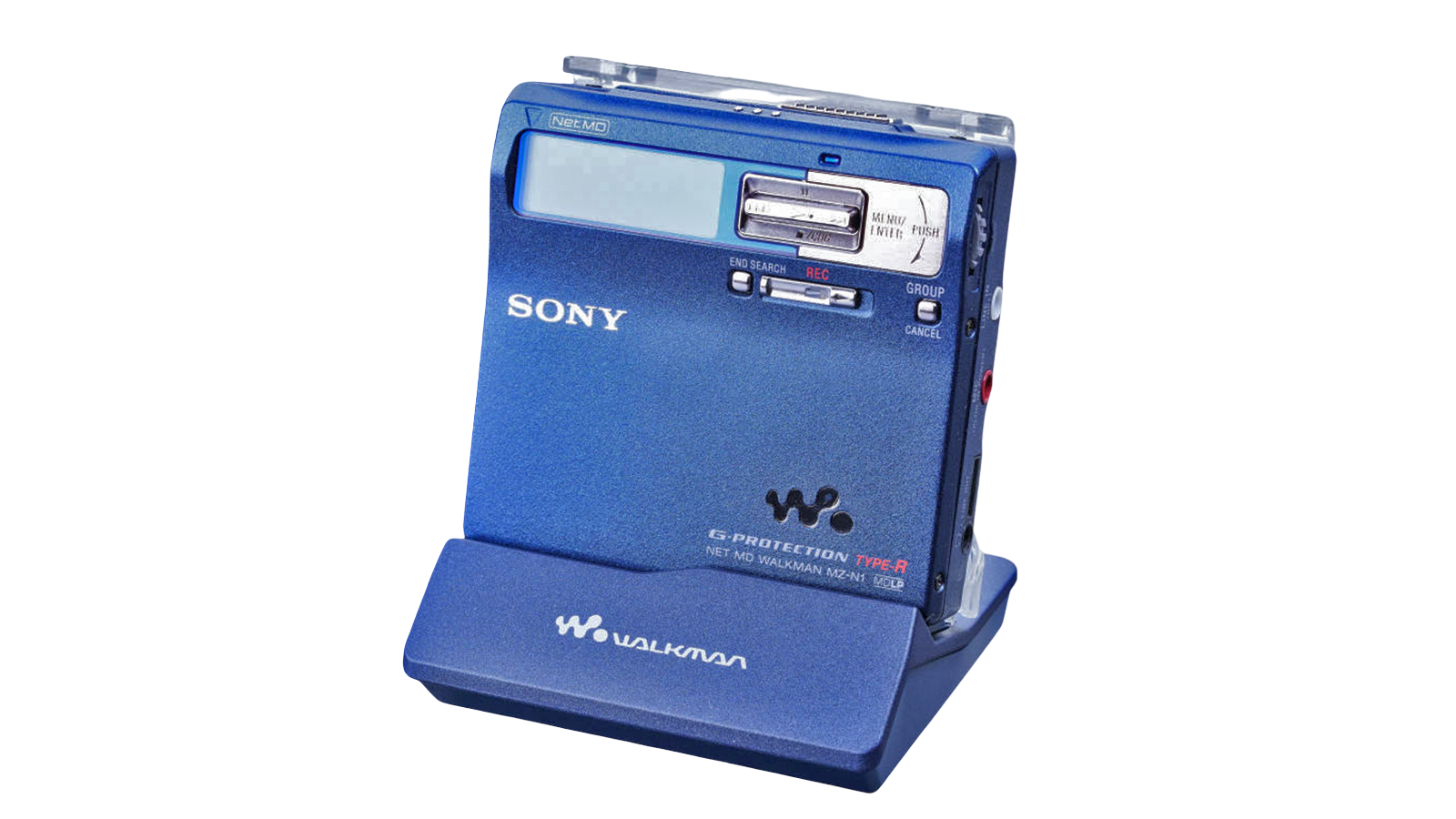
When Sony unveiled the MZ-N1 in late 2001, it felt like a second wind for MiniDisc. The iPod had just arrived, Napster had shaken the music industry, and MP3 players were redefining convenience. MiniDisc had survived nearly a decade but was starting to fall behind.
The N1 was built to change that, bringing high speed USB transfers and a design meant to carry MD into the new millennium. Sony believed the format still had a future. Net MD was their attempt to prove it.
For a while, it worked…
For a format-level overview of MiniDisc, see MiniDisc: Sony’s Digital Audio Format, History, and Legacy.
Inside Sony, engineers had long been frustrated that MiniDisc had not lived up to its potential. The recording process had been impressive at launch, but by the 2000s it could not match the convenience of digital players. That frustration gave birth to Net MD. By linking MiniDisc to the growing PC ecosystem through USB, the format could finally move at the speed of the digital age.
Sony also knew it had to make compromises. For fear of piracy and under pressure from the music industry, the company restricted Net MD to one way transfers. Users could send music down to the disc, but not upload it back to their PCs. The decision frustrated fans, but it reflected the environment of the early 2000s, when record labels still feared MP3s more than they trusted the digital future.
The MZ-N1 reflected that compromise but managed to bring real advances. An 80 minute disc could now stretch to 296 minutes in LP4 mode, and USB promised transfers up to 32 times faster than real time, slower in practice but still minutes instead of hours. Yet the restriction remained a constant frustration, a small barrier that grew heavier with time and hinted at where the format was truly headed.
The magnesium alloy chassis was slim yet durable, weighing just 117 grams with the battery. It offered skip free playback with G Protection and a jog dial for quick navigation. A backlit remote could clip to a bag strap, while the unit itself kept a simple three line display with recording level meters.
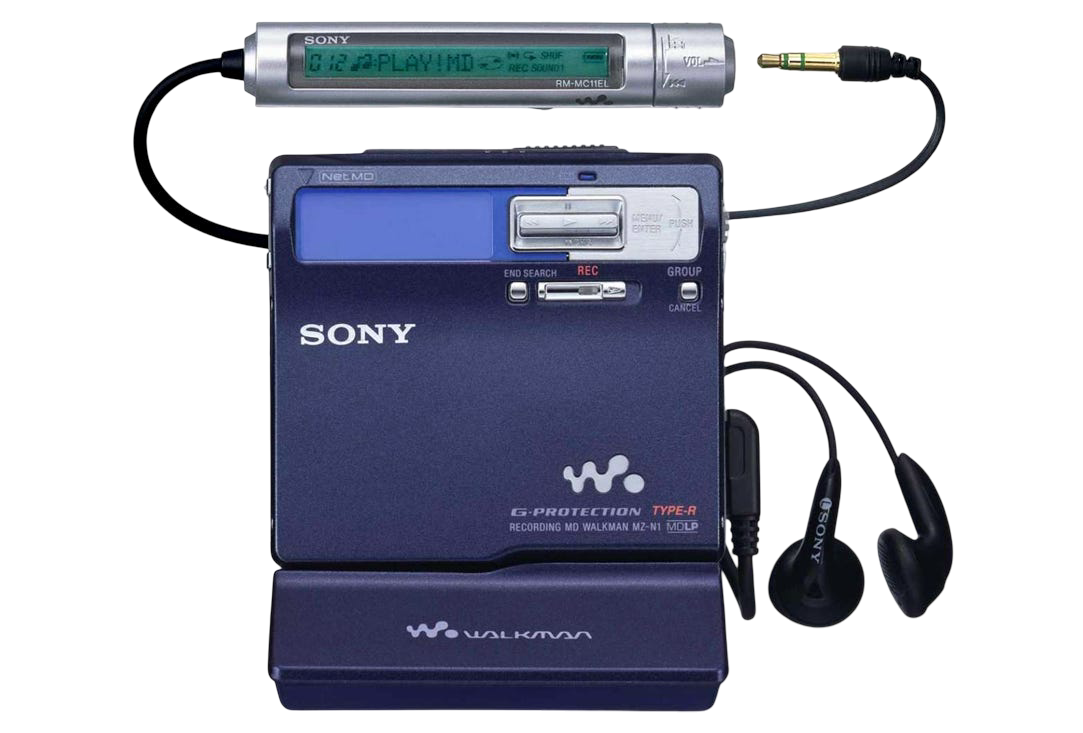
Sony added its ATRAC DSP Type R encoder, supporting SP at 292 kbps, LP2 at 132 kbps, and LP4 at 66 kbps. Recording was possible through optical, analog, or microphone inputs. Features included variable speed playback, a two band EQ, and grouping tracks into folders.
Power came from a gumstick rechargeable with an AA extender for over 100 hours of playback in LP4, or 12 hours of recording. There were no extra frills. The N1 was stripped to essentials.
Net MD also introduced software as part of the experience. Sony bundled OpenMG Jukebox, and later SonicStage, to manage music libraries and handle the encrypted transfers. This was where the promise of Net MD began to crumble.
The software was slow, transfers occasionally stalled, and DRM checks often frustrated users who were otherwise impressed with the hardware. Enthusiasts admired the elegance of the N1 but joked that it required patience to wrestle with the PC side. Even so, compared to real time recording, a flawed transfer system still felt revolutionary.
Sony positioned the N1 as a flagship. Reviews praised the elegant design, long battery life, and crisp sound, especially when paired with quality headphones. The magnesium build and intuitive remote stood out, and G Protection finally delivered reliable skip resistance.
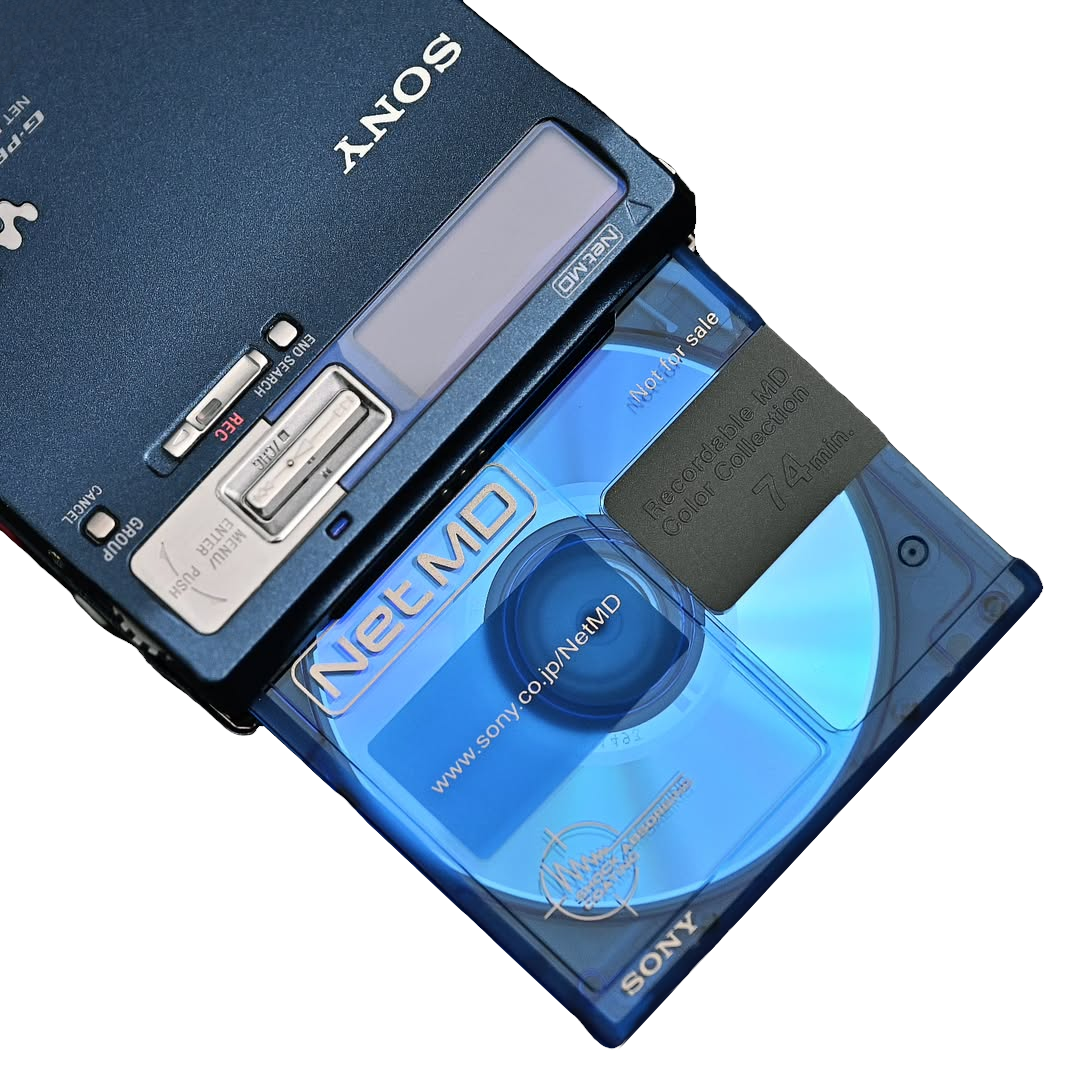
Critics noted that while the software was clumsy and the restriction limiting, the N1 remained a breakthrough. In Japan, early adopters marveled at the convenience of dragging albums to a disc in minutes. Fans were eager to defend LP2 as a sweet spot between fidelity and capacity, while others debated the flaws of LP4 and insisted on sticking to SP mode for serious listening.
Its release aligned with Sony’s broader digital push under CEO Nobuyuki Idei. Low margin analog lines were being phased out in favor of proprietary digital formats positioned as premium audio. The MZ-N1, priced around ¥45,000 (about $400), was not designed to compete with the rising wave of MP3 players. It was built to serve Sony’s own MiniDisc ecosystem and to prove that the format could survive in a PC driven era. Net MD was also a signal to record labels, proof that Sony could build digital ecosystems that respected copyright while still offering consumers more convenience. The one way transfers were not merely a technical limitation but a deliberate statement.

The MZ-N1 opened the Net MD era, ushering in sleeker models and eventually Hi-MD before the RH1 finally closed the chapter in 2006. It was never about rescuing MiniDisc, but about giving it one more chance to matter when it could have quietly disappeared. For a while, it did, showing that Sony could still craft something precise, durable, and worthy of its Walkman legacy.
The real tragedy of Net MD is not that it failed, but that it almost worked. What it needed was freedom instead of restriction. If Sony had embraced MP3 and openness, the format might be remembered today not as a late revival but as a true revolution. Yet in the early 2000s, when record labels feared piracy more than they trusted digital progress, that future was impossible. Net MD stands as a reminder that even the most elegant hardware could be undone not by design flaws, but by an industry unwilling to rewrite the rules it had lived by for decades.