Why Sony’s Greatest Products Failed
A Pattern of Control, Conflict, and Strategic Self-Resistance

Sony’s most ambitious products failed because they were built inside a company that could not agree on who they were for, how open they should be, or which division was allowed to win.
Again and again, Sony produced technically advanced hardware, then undermined it from within. Internal conflict, restrictive formats, and fear of disruption limited scale even when the products themselves were sound. What appears to be a series of unrelated failures follows a single structural pattern repeating across decades.
Failure here does not mean commercial collapse or lack of cultural impact. Many of the products discussed succeeded by conventional measures, sometimes for years. The failure was narrower and more damaging: moments when Sony’s internal structure and incentives favored control and containment in markets that increasingly rewarded scale.
These conflicts were structural rather than ideological. Hardware divisions were pushed to ship volume, while content divisions were pushed to restrict copying. Each group acted rationally within its own profit and loss structure. What Sony never resolved was which side was allowed to dictate the outcome.
This pattern did not begin in the digital era. Its first clear expression appeared decades earlier, when Sony attempted to control an entire media ecosystem end to end. The same tensions that later undermined Walkman, MiniDisc, and Cyber-shot were already visible in the company’s first great format war.

Why Betamax Failed
Sony built Betamax as a technically superior system and assumed the market would organize around quality. Instead, video rental chains, recording length expectations, and licensing scale determined the winner. To a consumer, recording an entire football game mattered more than marginal image fidelity.
Sony restricted licensing, limited third-party manufacturing, and assumed that superior engineering would dictate adoption. VHS took the opposite approach, prioritizing recording time, distribution partnerships, and rapid ecosystem growth.
Sony optimized for control in a market that rewarded flexibility.
The outcome became clear. Distribution beats quality when formats compete. Superior engineering cannot compensate for restricted licensing and slow ecosystem growth. Sony’s later decision to co-develop the Compact Disc with Philips shows how deeply that shift landed, prioritizing shared standards over unilateral control.
Crucially, this lesson never traveled cleanly across Sony’s internal boundaries. One division adjusted. Others would later repeat the same mistake as if it had never happened.

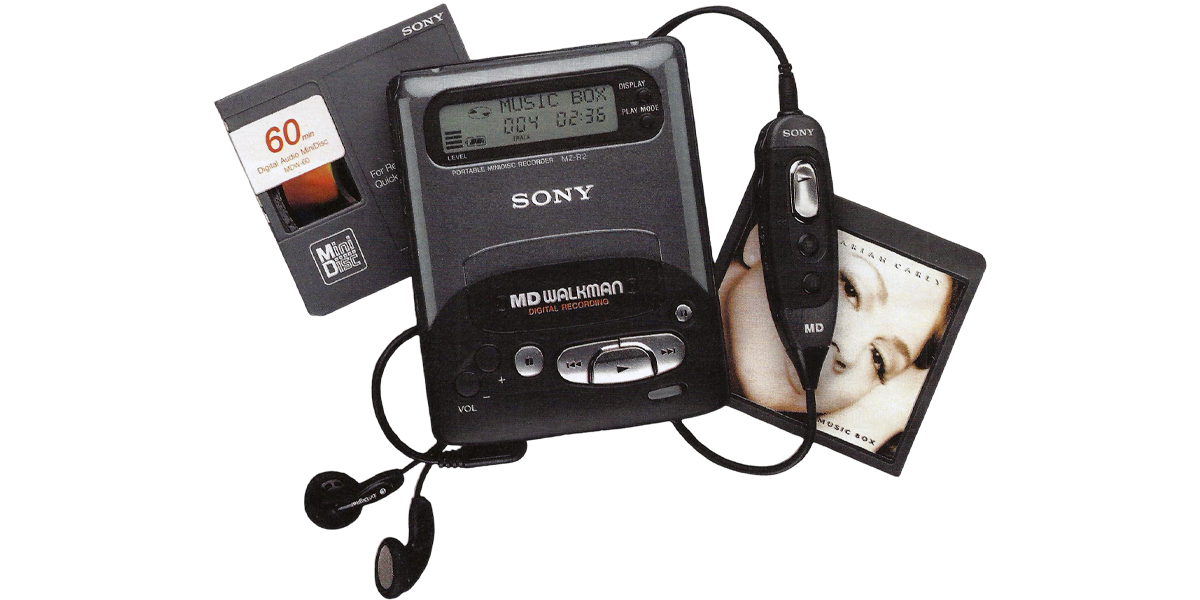
Why MiniDisc Failed
MiniDisc arrived with advanced technology and a confused mission. It found sustained success in format-tolerant markets, particularly in Japan, which reinforced Sony’s belief that the format was sound. That domestic success masked a global reality. MP3-era freedom outpaced Sony’s permission-based, DRM-locked ecosystem.
MiniDisc was a recorder, a player, and an editing tool at a time when consumers wanted recording to be fast, cheap, and invisible. Sony treated it as a format to defend rather than a platform to open, even as digital distribution accelerated faster than expected.
ATRAC repeated the same proprietary logic Betamax had introduced a decade earlier, this time applied to personal audio.
The market made the consequence obvious even if Sony’s structure failed to absorb it. Protecting content could suffocate platforms. User behavior moved faster than copyright safeguards. The instinct to control recording and distribution hardened Sony’s DRM posture and directly shaped later Walkman software decisions.