
How Sony Turned the Walkman Into a Product Line in 1982
The year the Walkman stopped being one thing.

By 1982, the Walkman was only three years old, yet Sony was already pulling it in several directions at once, introducing recording, radio, direct drive, and logic control before the format had even settled into a stable identity.
Seen side by side, Sony’s core Japan-market Walkman releases from that year do not read like a tidy sequence of upgrades so much as a company discovering, in real time, how far its hit cassette player could be stretched. What had started as a single, sharply defined product was already turning into something broader, a line that could carry different ideas at once.

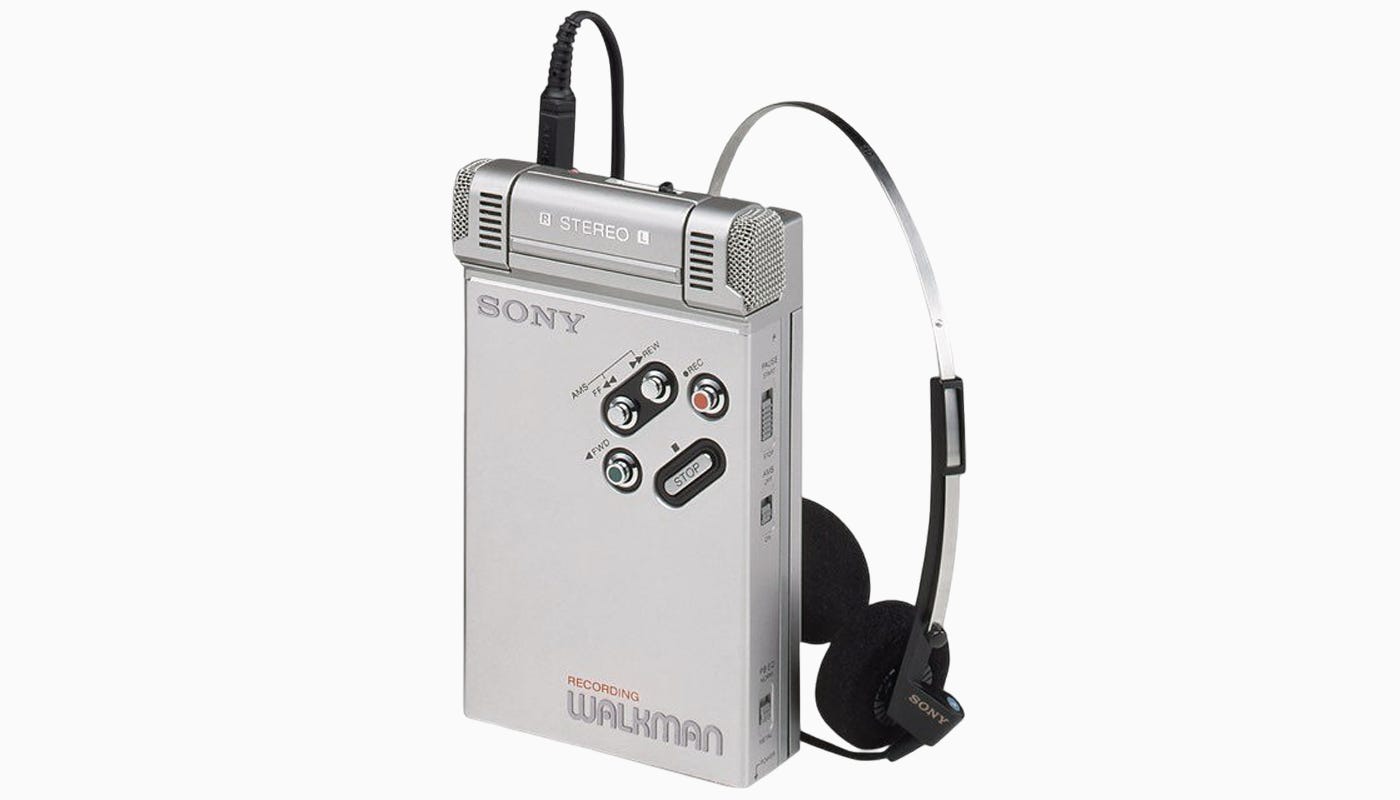
The WM-R2 is one of the clearest early signs of that shift. Recording had long been part of portable cassette hardware, but bringing it into the Walkman line altered what the product represented. The R2 still looked close enough to earlier models to feel continuous, yet functionally it had already crossed into a different category. A playback-only Walkman is a listening device; once recording is introduced, it becomes something more open, capable of capturing a voice, saving an idea, or documenting a moment.
That was the point of the R2. Sony was no longer keeping the Walkman tightly tied to private stereo playback, and the brand was already beginning to absorb functions that had previously lived elsewhere.
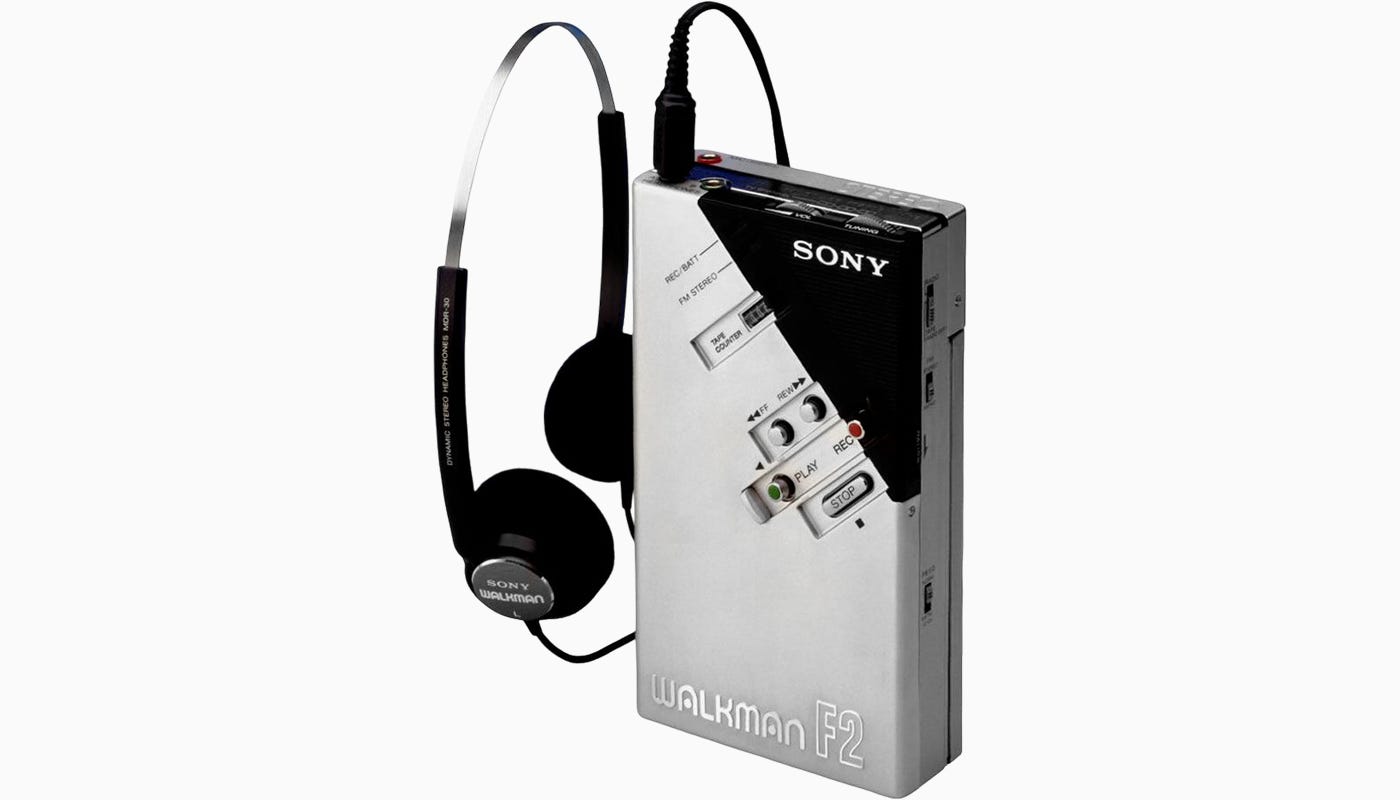
The WM-F2 pushed that expansion outward rather than inward. Instead of focusing on input, it opened the machine to the outside world by adding FM radio and the ability to record directly from broadcasts, loosening the assumption that portable listening had to revolve around whatever tape you carried with you. In Japan, it sat near the top of the lineup at ¥42,000, a signal that Sony saw it as a serious branch rather than a casual variation.
Radio-recording was not new in 1982, having already appeared in larger cassette recorders and boomboxes, but scale changed the experience. The F2 brought that capability into a compact personal stereo, something you carried rather than placed in a room. In practical terms, it meant chart songs, live broadcasts, and casual listening without preparation. You no longer had to rely entirely on whatever tape you brought along.
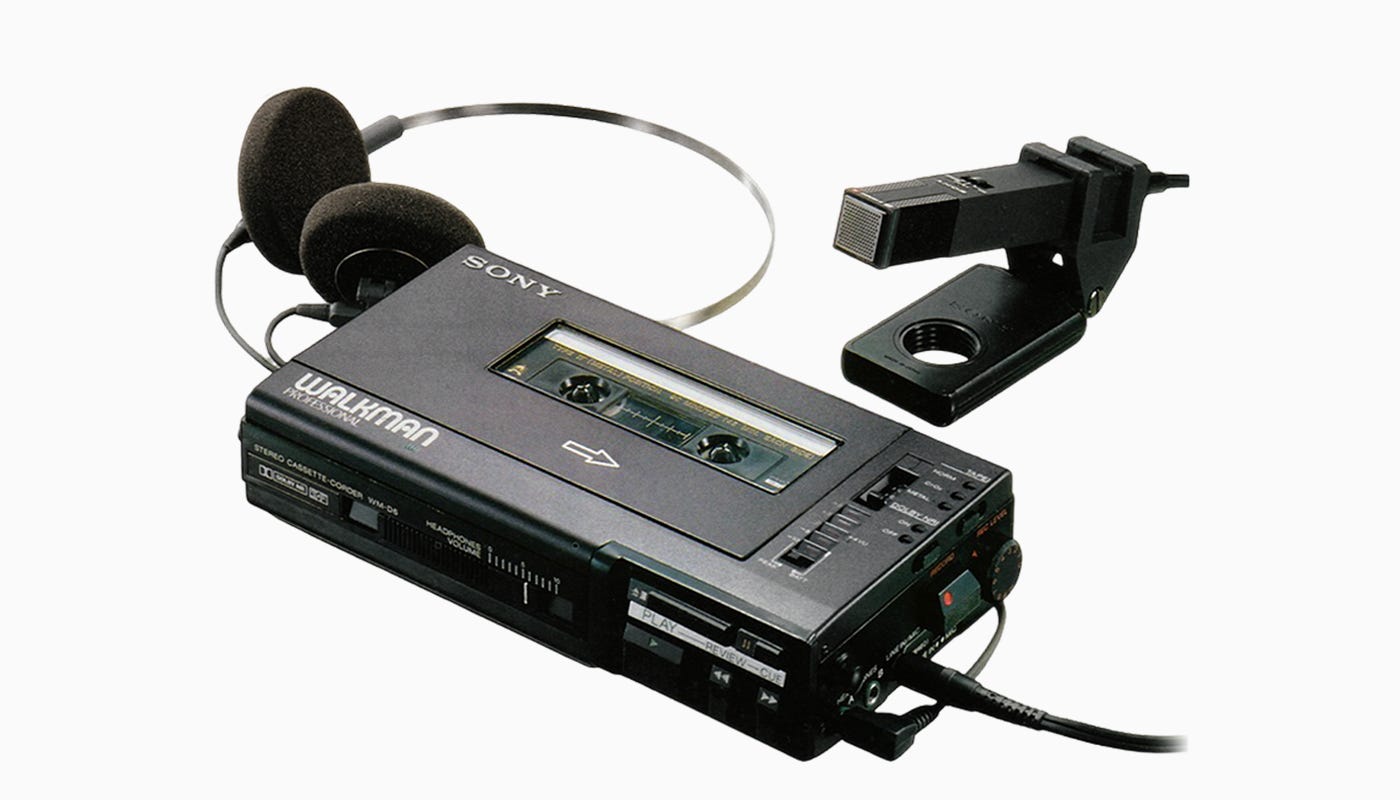
Once recording entered the format at all, Sony did not leave it at the casual end for long. The WM-D6 extended the same idea into far more serious territory.
The D6 was a true portable recorder, equipped with microphone and line inputs, manual recording level controls, Dolby noise reduction, and a quartz-controlled motor for stable tape speed. It drew directly from Sony’s field-recording expertise, bringing that approach into the Walkman family instead of keeping it separate.
Seen next to the other 1982 models, the D6 almost feels like it belongs to another class of device, which is precisely what makes it revealing. By that point, the Walkman was no longer limited to light, personal playback. The same form could support more deliberate, more technical use than the original concept had suggested.
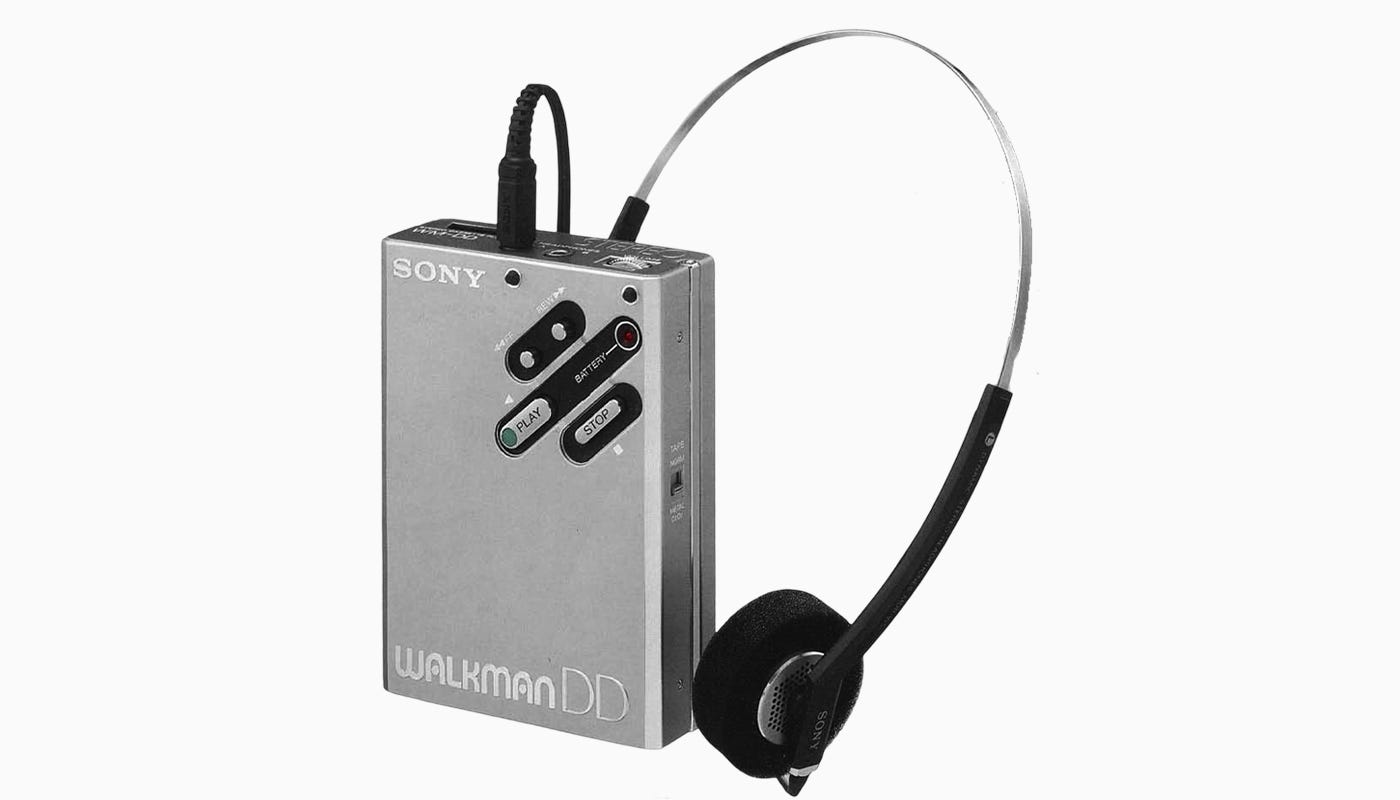
Sony was also refining the core machine itself, and the WM-DD makes that shift clear. Rather than adding new features, it focused on the transport, replacing the traditional belt-driven system with a direct-drive mechanism that reduced one of the cassette format’s most persistent weaknesses. Belts stretch and wear; removing them improved stability at the most fundamental level. Its wow and flutter performance, around 0.08% WRMS, was a serious technical achievement for a portable device of the period.
This was a different kind of improvement. The DD did not need additional functions to stand out. It performed the same task with greater consistency and control, and that emphasis on precision would later define some of the most respected Walkman in the entire line. In 1982, it was simply another direction being explored alongside several others.
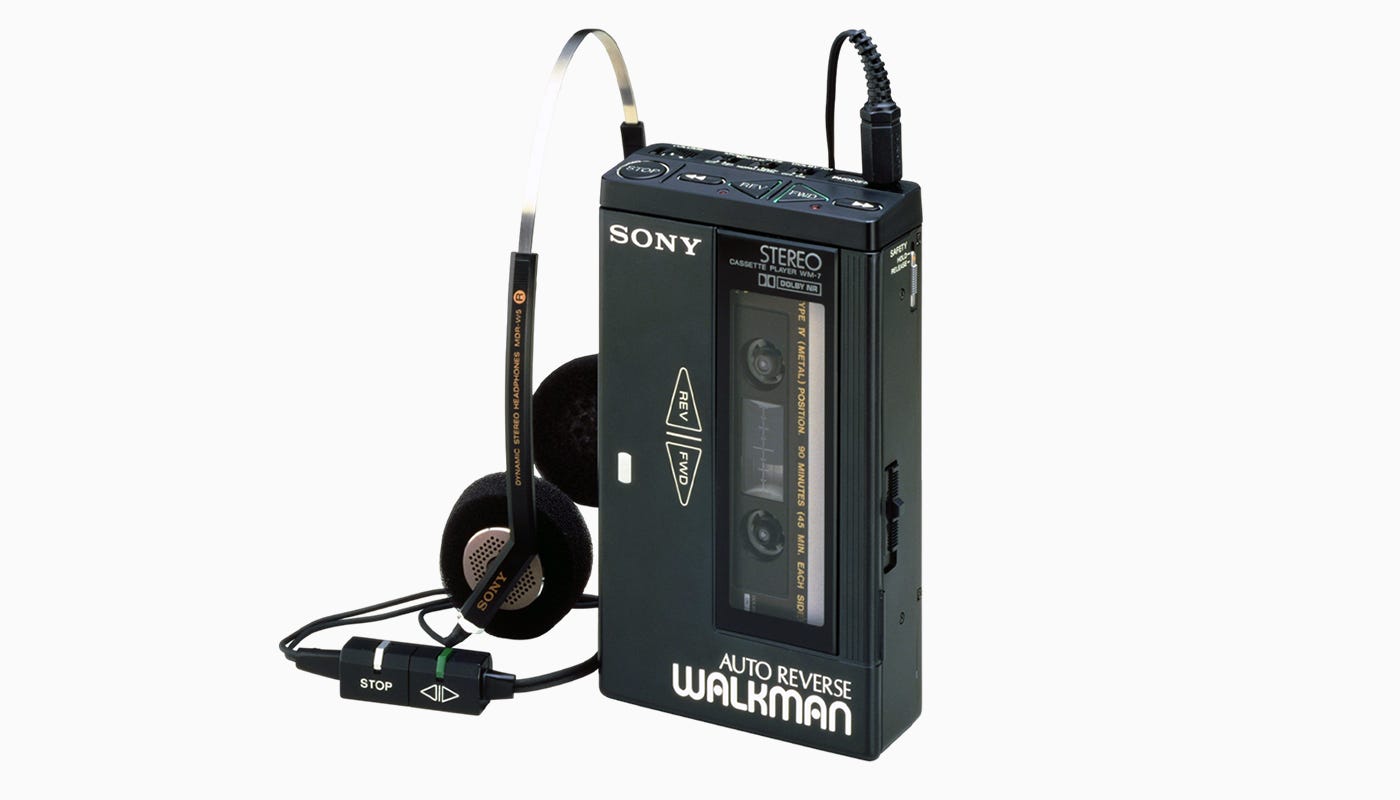
The WM-7 points toward yet another shift, not in capability or sound, but in how the machine behaved. Earlier Walkmans still felt like small tape decks, their controls tied directly to mechanical linkages that required the user to manage the transport physically. The WM-7 began to change that relationship.
With electronic logic control, features like auto-reverse became possible, and the machine responded less like a mechanism and more like a coordinated system. Soft-touch controls and a wired remote reinforced that shift, pulling the experience away from the tactile feel of traditional tape hardware.
Across consumer electronics in the early 1980s, this transition was already underway. Devices were becoming less visibly mechanical and more electronically mediated, and the WM-7 reflects that moment. You no longer worked the machine in the same way. You gave it an instruction, and it handled the rest.
The 1982 lineup looks less like one family of players and more like several distinct ideas sharing the same form. One branch leaned into recording, one into radio, one into serious field use, one into mechanical precision, and one into a more controlled, electronically managed experience.
None of this sat outside the market. It came directly from it. Sony was moving quickly, filling gaps, covering price points, and defending a hit before competitors could flatten the category. In doing so, it revealed something early on: the Walkman was flexible enough to support very different kinds of use under a single name.
Much of what would define the line later can already be seen here in early form. Radio would become a standard extension of portable listening, recording would remain useful but more specialized, electronic control would become normal, and direct-drive precision would define the high end.
By the end of 1982, the question was no longer “Do you have a Walkman?” It was “Which one?”