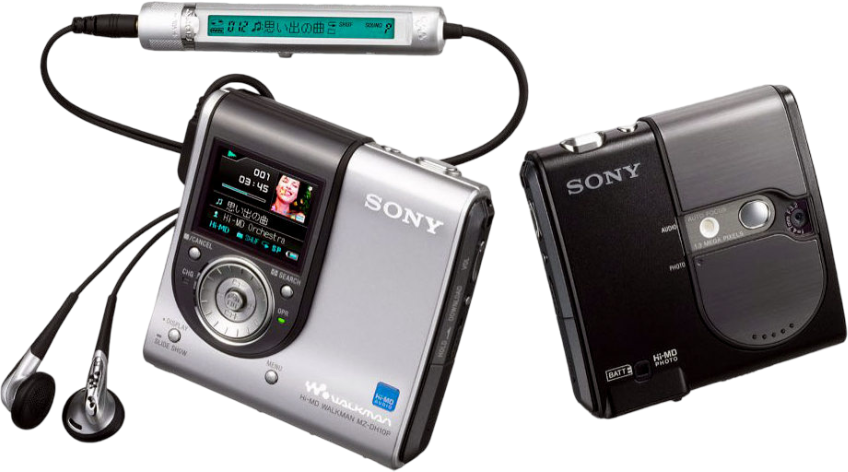
The Walkman With a Camera
Sony’s MZ-DH10P

In late 2004, Apple introduced the iPod photo, a radical evolution of its player that promised to carry not just music but an entire photo library in your pocket.
For Sony, a company built on hardware excellence, it was clear the portable player was evolving beyond music into something that could store and display digital content.
Their answer arrived four months later, in March 2005. It was called the MZ-DH10P, and it was not just a Hi-MD Walkman. It was a Walkman with a digital still camera built in.
The idea was to create a product that lived at the intersection of sound and images, transforming MiniDisc into a more lifestyle-oriented device. Sony even coined a new label for it: Hi-MD PHOTO.
The goal was ambitious, the execution eccentric, and the result became one of the strangest Walkmans ever built.
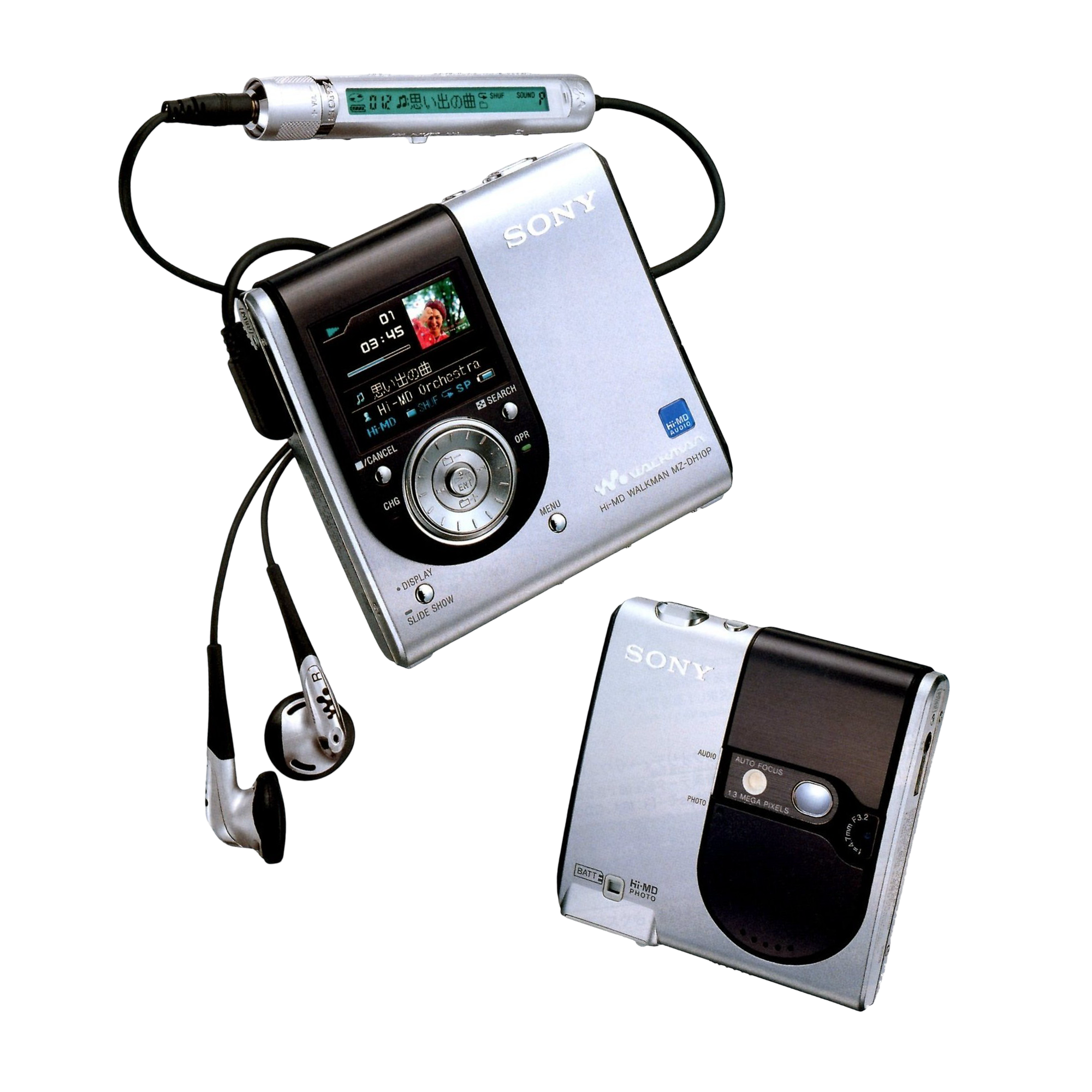
Inside Sony, the project was known by the codename Truffle, a delicacy, something rare and unusual. The DH10P was meant to be just that, a hybrid unlike anything else on the market. It was the first Walkman with a digital camera and also the first with a color screen.
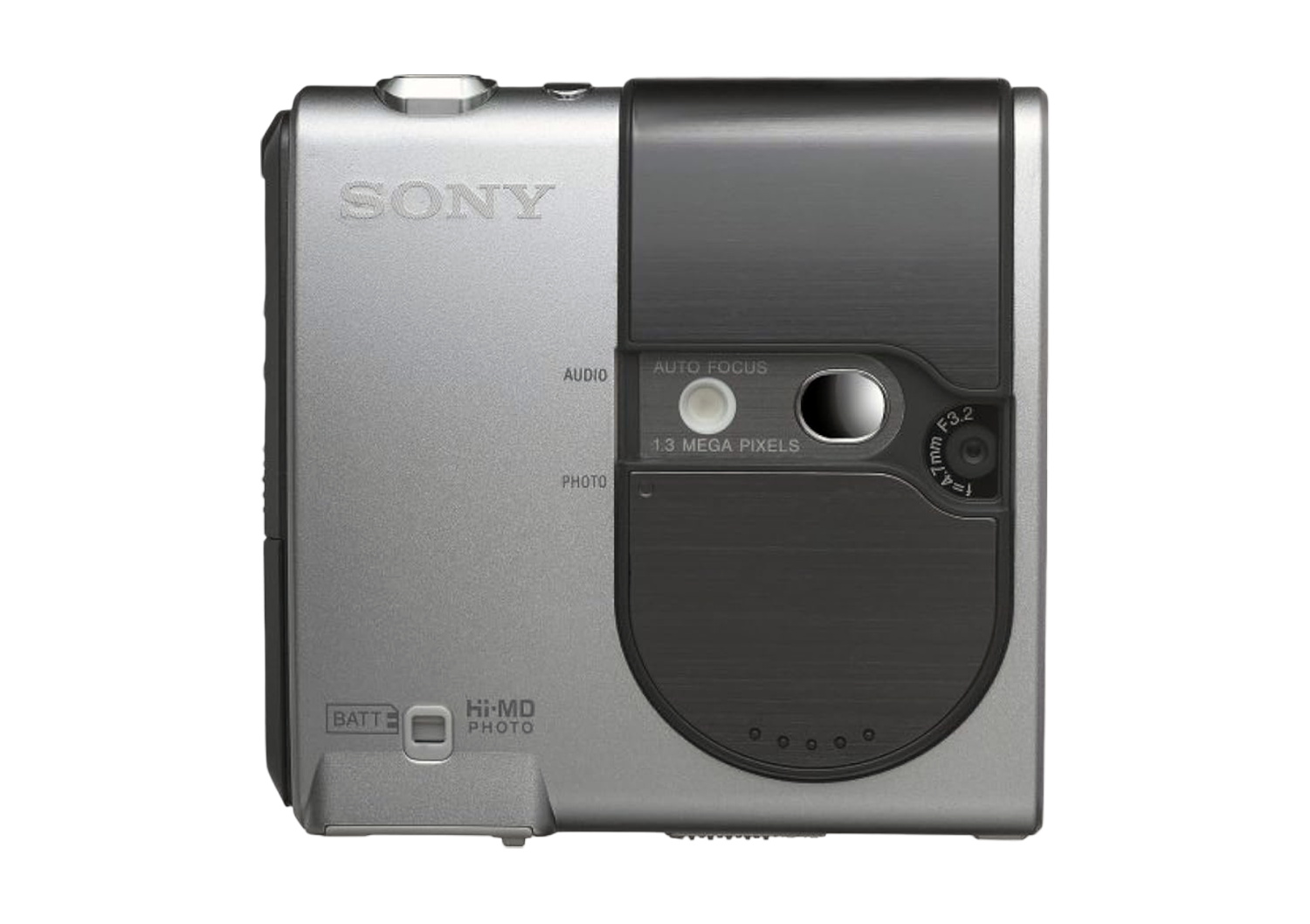
The design team leaned into the dual identity. The body had an arch shape meant to feel natural when held up like a camera, but it also had no real front or back. One face spoke to music, the other to photos. A sliding lens cover doubled as a switch so that when you opened it, the device would leap into camera mode. Just before mass production, the team even overhauled the interface so that opening the lens cover could toggle between Walkman and camera modes, a decision that forced the firmware engineers into a last minute scramble. Another discovery came when they realized the camera module supported a self timer but the unit could not stand upright. The fix was to quickly add feet to the casing. These details tell you everything about how hard they were trying to make the concept work.
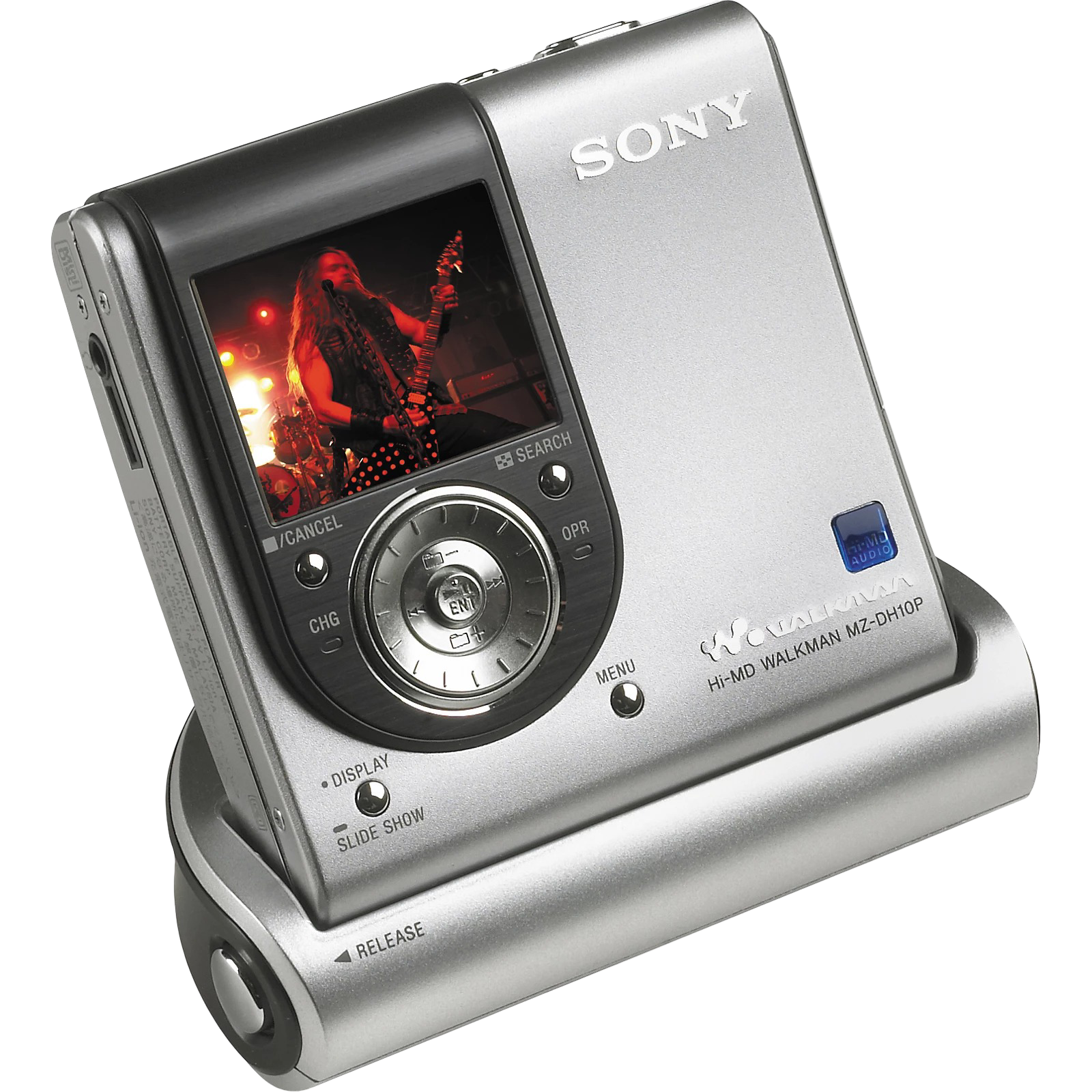
Technically the MZ-DH10P was solid on the audio side. It supported Hi-MD discs with their 1GB capacity, native MP3 playback alongside ATRAC, and uncompressed PCM recording from a PC. It had Sony’s G-Protection, a six band equalizer, and a digital amplifier that gave it clean, powerful sound. And that OLED screen, the first of its kind on a Walkman, really was stunning, capable of showing cover art in vibrant detail.
But the compromises were glaring. To fit the camera, Sony removed the microphone and line-in jacks that had long defined MiniDisc recorders. That decision stripped the device of its most practical strength, being able to capture audio on the go. The camera itself was only 1.3 megapixels. Engineers worked hard to coax decent image quality out of it, but even at launch critics described it as no better than the cheapest mobile phones. Worse, it was slow. Shot to shot time stretched to six seconds, an eternity when digital cameras were already quick. Using it drained the battery rapidly, dropping runtime to barely 14 hours for music and far less with photos.
Behind the scenes, corporate politics shaped the device in ways few consumers would ever see. The audio division responsible for the Walkman did not want to involve the imaging division responsible for Sony’s digital cameras. The presidents of the two groups were on poor terms. Engineers were explicitly told not to consult their colleagues across the company. The result was that the MZ-DH10P’s camera block came from a third party module instead of Sony’s own Cybershot expertise. It was a Walkman with a camera, but not a Sony camera. That irony was not lost on those inside the project.
The real Achilles heel though was not the camera. It was the software. Like all Hi-MD units, the MZ-DH10P relied on SonicStage to move music from a PC. SonicStage was clunky, fragile, and overburdened with digital rights management. It imposed limits on how many times you could move a song, it crashed often, and it made large libraries almost unmanageable. Apple’s iPod photo by contrast paired its hard drive storage with iTunes, turning what had been a technical process into something close to invisible. That ease of use was what consumers wanted.