

In 1985 cassettes ruled. Sony’s Walkman line already covered every niche: professional recorders, radio tuners, and youth-oriented models. Yet there was still no way to copy a tape outside the home.
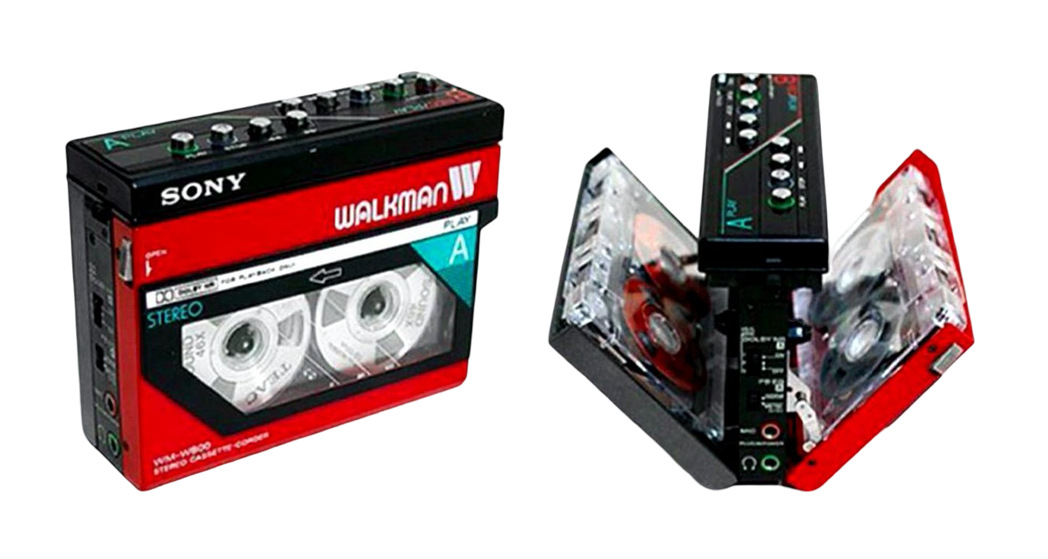
The WM-W800 set out to change that. Marketed as the world’s smallest dual cassette player, it lived up to the claim. Two complete mechanisms, two motors, and full recording circuitry were packed into a palm-sized plastic shell. While models like the WM-D3 pushed professional performance, the W800 went in another direction and tried to fit as much capability as possible into the smallest space Sony could manage.
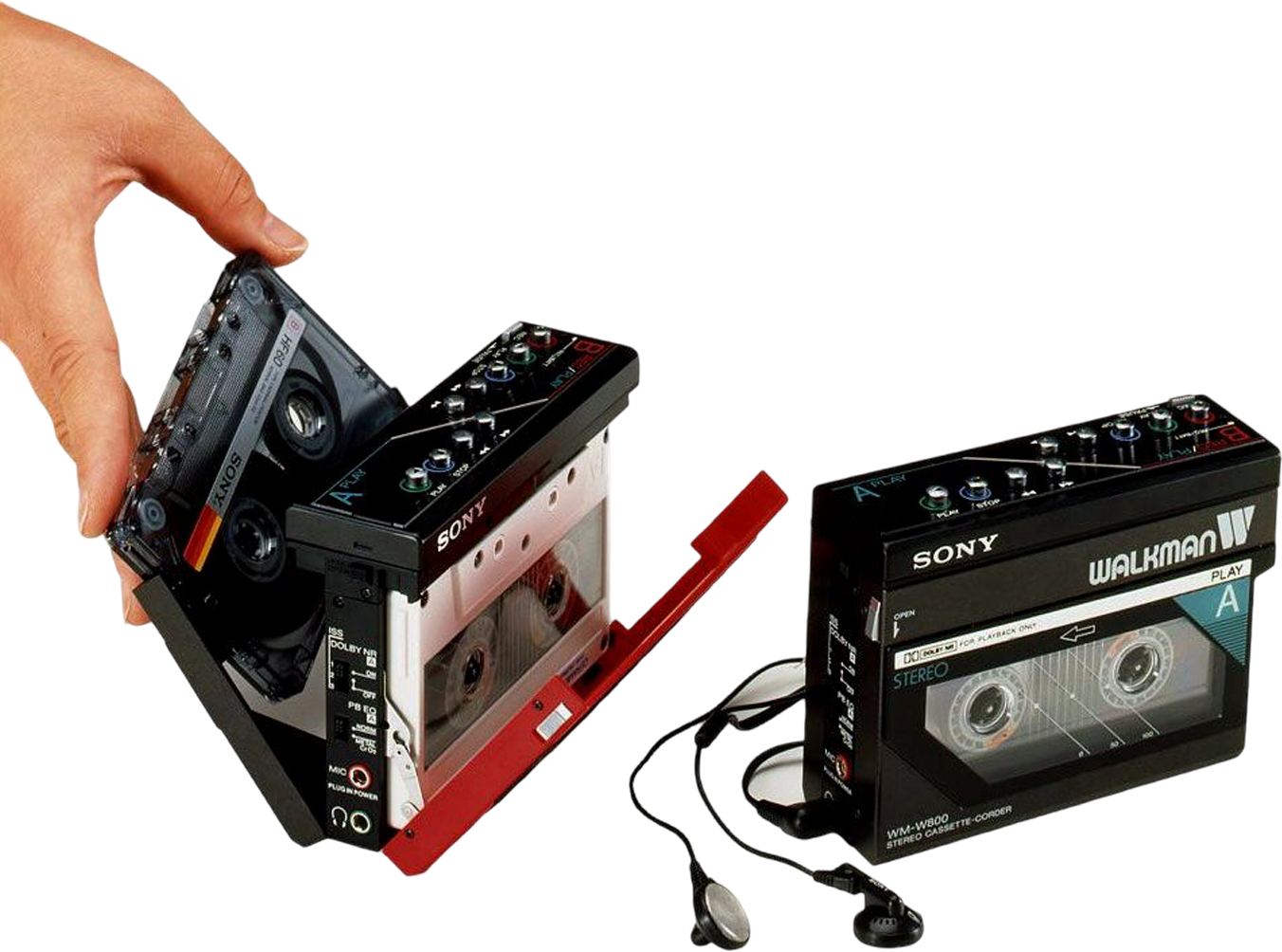
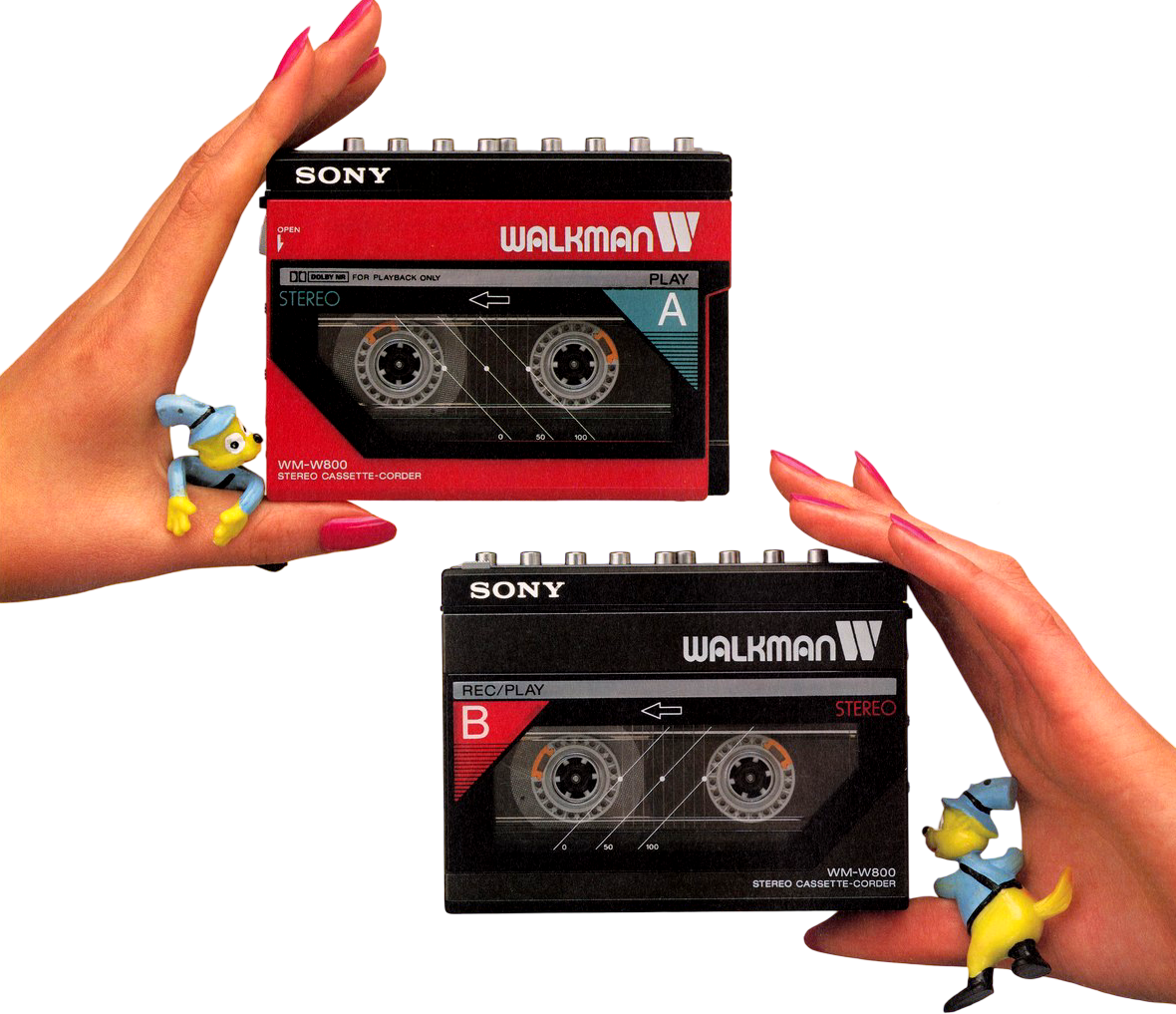
Its design relied on an uneven layout. Deck A handled both recording and playback with Dolby B noise reduction. Deck B worked strictly as a playback source for dubbing and offered a noticeably narrower range. This simplified second deck reduced weight, power draw, and cost, letting Sony build what was essentially a pocket-sized recording setup.
That density came with trade-offs. The lightweight plastic chassis offered little room for mechanical shifts, and running two transports drained a pair of AA batteries in only a few hours. Priced at about 150 dollars, roughly what the TPS-L2 cost six years earlier, it sat near the top of Sony’s lineup. Too specialized for commuters and too limited for listeners who wanted the fidelity of models like the WM-DC2 or D6C, it ended up appealing to a small but devoted niche.
Its release also landed during the period shaped by the Betamax case. In 1984 Sony had won a Supreme Court battle over its video recorders after movie studios tried to ban home taping. The Court ruled that people were allowed to record TV because the device had legitimate personal uses. Only a year later the W800 extended the same idea to audio and quietly gave people a way to copy and share music anywhere. What labels called piracy, many listeners saw as harmless. In the age of the mixtape, the W800 captured that spirit completely.
Commercial success was limited. Smaller and cheaper models such as the WM-55 and the WM-101 dominated the mainstream, leaving the W800 as a technical outlier. Yet as a piece of design it shows one of the last times Sony tried to do more by adding parts instead of taking them away. Out of the hundreds of Walkman models Sony produced, the W800 is the only one built this way. No other Walkman tried to squeeze two full transports into something this small. That makes it one of the strangest and most interesting machines in the entire lineup.
I wanted one so bad lol
whoa i actually had one of these