The Creation of "My First Sony"
Sony's Leap into Children's Electronics.
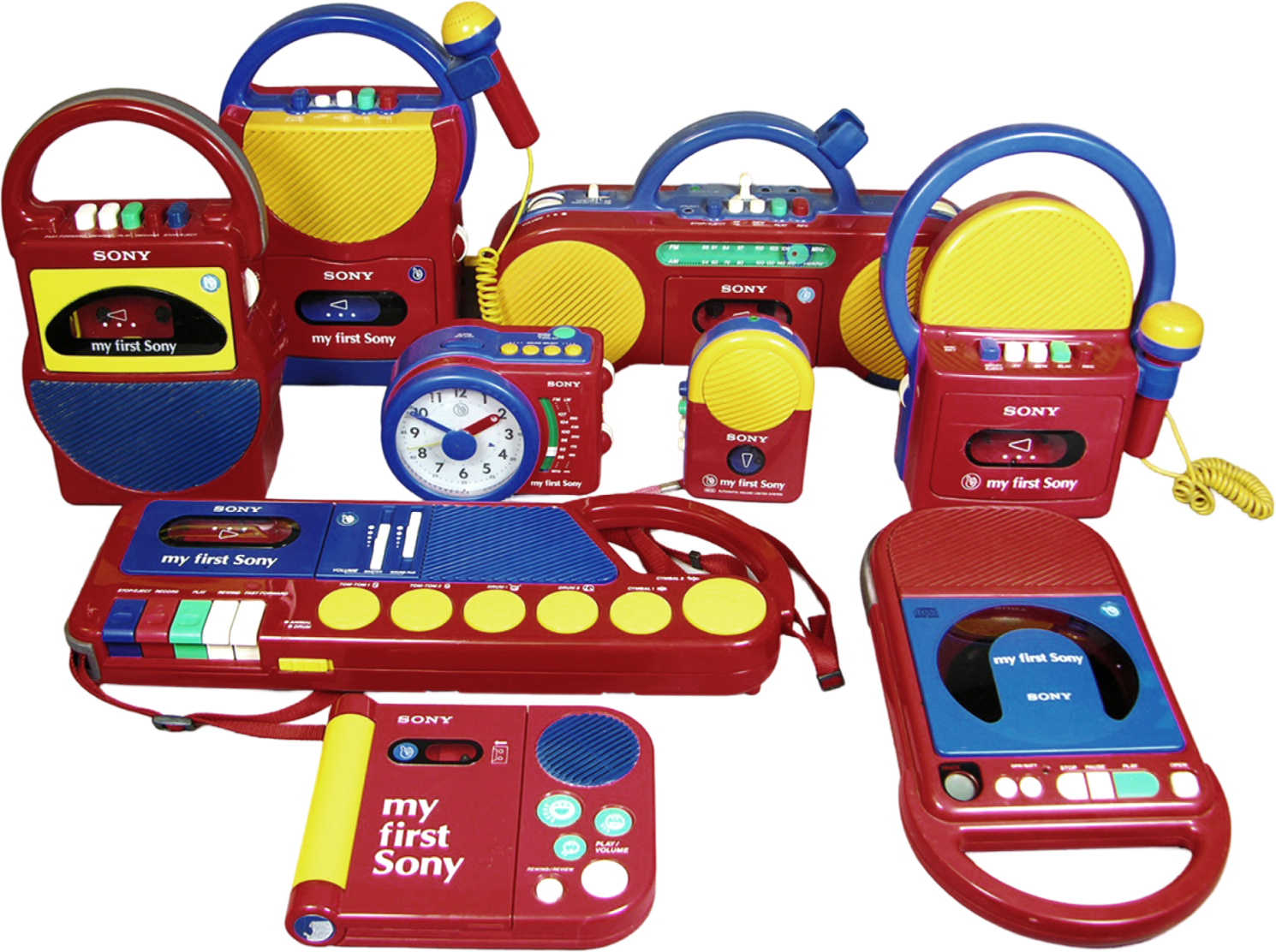
In 1987, Sony introduced the My First Sony collection, as an innovative series of child-friendly gadgets that included miniature Walkmans, cassette players, and other fun, tech-focused toys designed for young users. These products were the company’s way of making technology approachable and educational for children, offering the same quality that Sony was known for in a playful package.
The same year My First Sony was born, Sony’s U.S. Design Center was in full swing. Located in Park Ridge, New Jersey, the center was headed by Akihiko Amanuma, a visionary industrial engineer with a deep understanding of both Japanese and American culture. Amanuma’s role was to bridge the gap between Sony’s cutting-edge Japanese technology and the distinct tastes of American consumers.
Unlike many other Japanese companies, which chose to design their products in Japan, Sony took the bold step of establishing its own design center in the U.S. As Amanuma explained, it was essential to be in touch with local culture. “We should think globally but act locally,” he noted. His team’s job was to keep a pulse on American consumer trends and help guide the development of Sony products tailored to the tastes of the U.S. market, which was one of Sony’s biggest revenue drivers.
Amanuma’s philosophy was simple: being immersed in American culture would allow him to design products that truly resonated with American consumers. This approach paid off in numerous ways, especially with the My First Sony line.
The idea for My First Sony came to Amanuma during a casual discussion with Sony’s marketing team. The team was discussing how to sell a simple $10 tape recorder, when one salesman jokingly remarked, “Only $10 — even kids can buy it. It would be my first Sony for them.”
That was all it took. Amanuma’s intuition kicked in, and he realized the potential for a line specifically targeted at children. But what made the My First Sony line stand out was the name.
While other brands like Panasonic and RCA might not have had the same ring, “My First Sony” had a unique appeal — it spoke to the aspirational desire of owning a piece of Sony’s high-quality technology from a young age. Amanuma believed that this was more than just a catchy name; it was an emotional connection that could form the foundation of a lasting brand loyalty.
One of the first products to be released in the My First Sony series was a child-friendly cassette tape recorder. These products had transparent panels, allowing kids to see the inner workings of the devices—something that not only sparked curiosity but also ensured safety. The materials were designed to be safe even if accidentally put in the mouth, and the buttons were large enough for little fingers to operate with ease.
Another standout from the My First Sony lineup was the cassette player. With bright, playful colors—red for the base, blue for the function buttons, and yellow for the speaker—the design was visually appealing and fun for kids. The features weren’t just for show either. The products had excellent sound quality, a characteristic of Sony tech, and were built to be durable enough to withstand rough handling by young users.
The My First Sony Walkman-style cassette players were equipped with a comfortable volume switch that restricted sound levels to ensure that they weren’t too loud for sensitive ears. They also featured all the key functions of their adult counterparts, and were surprisingly functional, despite their “toy” status.
One of the most unique products in this series was the Cassette Coder TCM-4040, which integrated a rhythm machine into a cassette player. It allowed children to interact with sound in new and exciting ways. The flexible microphone allowed them to sing along while playing, encouraging creativity and musical participation.
Beyond music, Sony also ventured into educational gadgets, like the HB-A5000 graphic computer that allowed kids to draw on their TV screens. A precursor to modern-day graphic tablets, this device used a pen to create art on the screen, allowing to draw letters and pictures. It was an early experiment in tech-based learning that also doubled as a fun activity. With 12 colors to choose from and a variety of fun stamps and effects, the graphic computer was not only a hit with young users but with adults too. It was a playful, innovative way to engage with technology, and it set the stage for future interactive devices.
Another standout item in the line was the brightly colored Walkie Talkie, a toy that combined fun and function in a way only Sony could. Designed to resemble a miniature version of the more adult models of the time, these walkie-talkies were not just about communication—they were about sparking a sense of adventure and curiosity in young users.
After its 1987 launch, My First Sony became an instant hit. Within just three months, sales reached 400,000 units — an impressive number for any new product. The success of the line prompted Sony to accelerate plans to introduce it in Japan, and soon, the My First Sony products were available worldwide.
The My First Sony products were thoughtfully designed tools to spark a child’s interest in technology. Although some may question the practicality of launching electronic equipment for kids, Sony’s strategy paid off. By getting children involved with their products early on, Sony managed to foster a sense of interest in technology that would stay with many for years to come. Even if those kids didn’t remember My First Sony by name, they likely went on to develop a deeper affinity for Sony’s innovations as they grew older.


Oooo, this makes me think of 'My First Gran Turismo', released on playstation last year. That must be where the wierd name came from!
I’ve become quite fond of these as an adult. As you say, the tape recorders have surprisingly good sound quality. I’m glad that you also mention the video sketch pad. That’s usually a forgotten item.
I wish I could remember where I saw a photo of a My First Sony color TV that appears to have never come out. It looked like it was a 13” color TV that was red and partially transparent. With colorful guts. I’d make room in my life for one of those!