
IMX410: The Real Story Behind “Sony Powering Half the Camera Industry”
What the IMX410 reveals about the structure of the modern camera industry

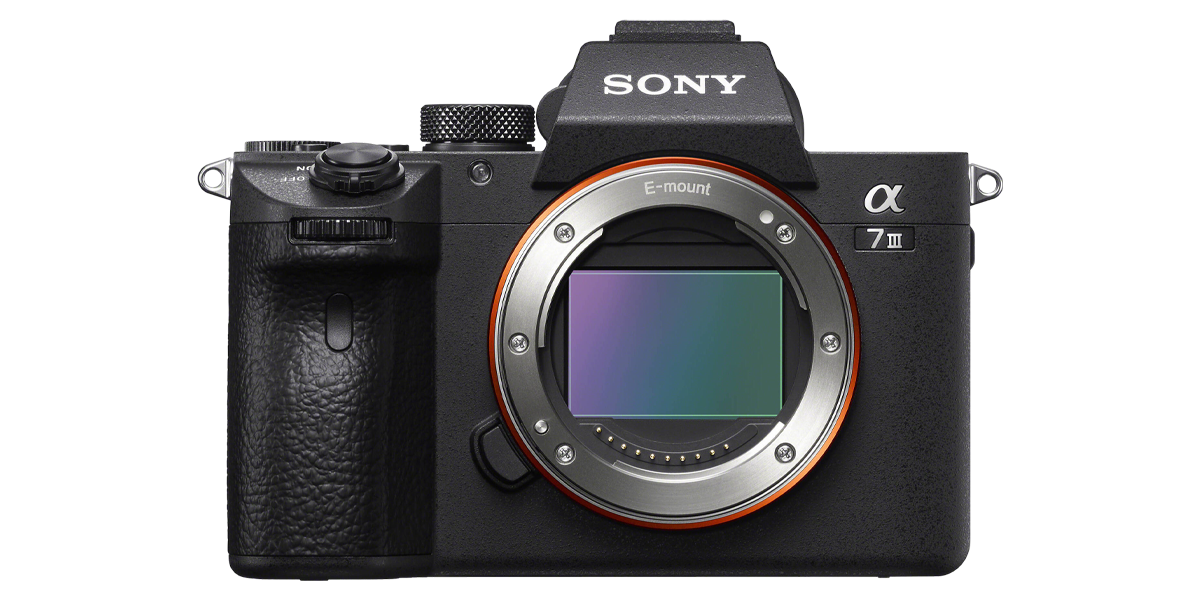
For years the camera world has repeated a simple observation: many modern cameras use Sony sensors. The claim usually appears when reviewers notice similar specifications across brands. Cameras like the Sony Alpha a7 III, Nikon Z6, and Panasonic Lumix S1H arrived within the same generation of full-frame technology, and from there it is easy to conclude that Sony must be powering a large part of the camera industry.
There is some truth to that. Sony Semiconductor Solutions is the largest manufacturer of image sensors in the world. But the mirrorless transition in the late 2010s followed a more specific pattern. Between 2018 and the early 2020s several manufacturers built their first mirrorless systems around the same generation of Sony technology. At the center of that period sat the Sony IMX410.
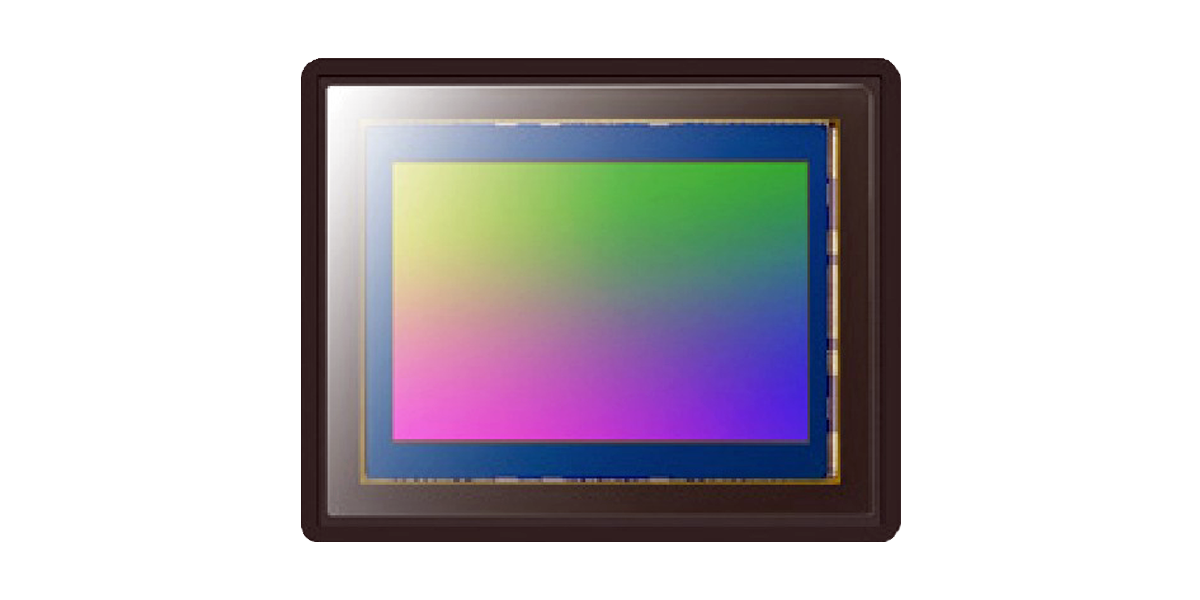
The timing explains why it became so widely used. By the late 2010s the camera market was already under pressure, DSLR sales were declining, smartphones had erased the compact-camera segment, and manufacturers suddenly needed credible mirrorless systems if they wanted to remain competitive. Designing a modern full-frame CMOS sensor from scratch is expensive and slow. Development can take years and requires tens of millions of dollars before a single camera ever ships.
Sony Semiconductor already had the manufacturing scale needed to produce advanced sensors in large volumes. Much of that infrastructure had been built to supply the smartphone industry, where Sony ships sensors in enormous quantities. That same manufacturing base could also produce full-frame camera sensors.
One widely adopted design from that period was the 24-megapixel backside-illuminated architecture used in the Sony Alpha a7 III and closely associated with the IMX410 generation. It offered exactly what the market needed at the time: strong dynamic range, reliable low-light performance, and data throughput that made oversampled 4K video practical. Its importance was not that it introduced radical new technology. It became widely adopted because Sony could manufacture the sensor at scale.
That availability allowed several camera manufacturers to launch competitive mirrorless systems quickly instead of waiting years to develop their own silicon. In practical terms Sony Semiconductor provided the industrial base that helped the industry move away from DSLRs.
Nikon shows how unusual this arrangement became. For most of its history Nikon specialized in optics, camera engineering, and image processing rather than semiconductor fabrication. A similar separation existed when Sony entered the interchangeable-lens camera market after acquiring Konica Minolta’s camera division in 2006. As sensor manufacturing grew more complex and capital-intensive, production gradually shifted toward companies with advanced fabrication facilities. Sony Semiconductor became the primary supplier.
This relationship already existed during the DSLR era, when several Nikon cameras used Sony-manufactured sensors. Mirrorless cameras simply continued that pattern. Early Z-mount bodies such as the Nikon Z6 relied on Sony sensor designs from the same generation as the IMX410 while Nikon engineered the rest of the imaging pipeline around them. Autofocus behavior, EXPEED processing, and color rendering remained Nikon’s domain.
The result was an unusual competitive structure. Sony’s semiconductor division was supplying imaging technology to companies whose cameras competed directly with Sony’s own Alpha line. One company produced much of the silicon while multiple manufacturers differentiated themselves through processing, firmware, optics, and system design.
Even when cameras shared related sensor architectures, they rarely produced identical results. The sensor captures light, but the surrounding system determines how that information becomes an image. Image processors interpret raw data differently, shaping color science, tonal mapping, noise reduction, and sharpening. Optical filters, analog circuitry, autofocus systems, and firmware all influence the final output. This is why cameras built on similar hardware can still behave very differently.
The sensors used in the first generation of mirrorless hybrid cameras were extremely capable for their time, but they also had clear limits. Full-frame readout speeds were modest compared with modern architectures, and many cameras built on these designs show rolling-shutter distortion during fast motion because the entire frame cannot be read simultaneously. Early hybrid cameras accepted that compromise, but as video capabilities expanded and frame rates increased the limitation became more visible. Manufacturers began pushing toward faster architectures designed to improve readout speed and responsiveness.
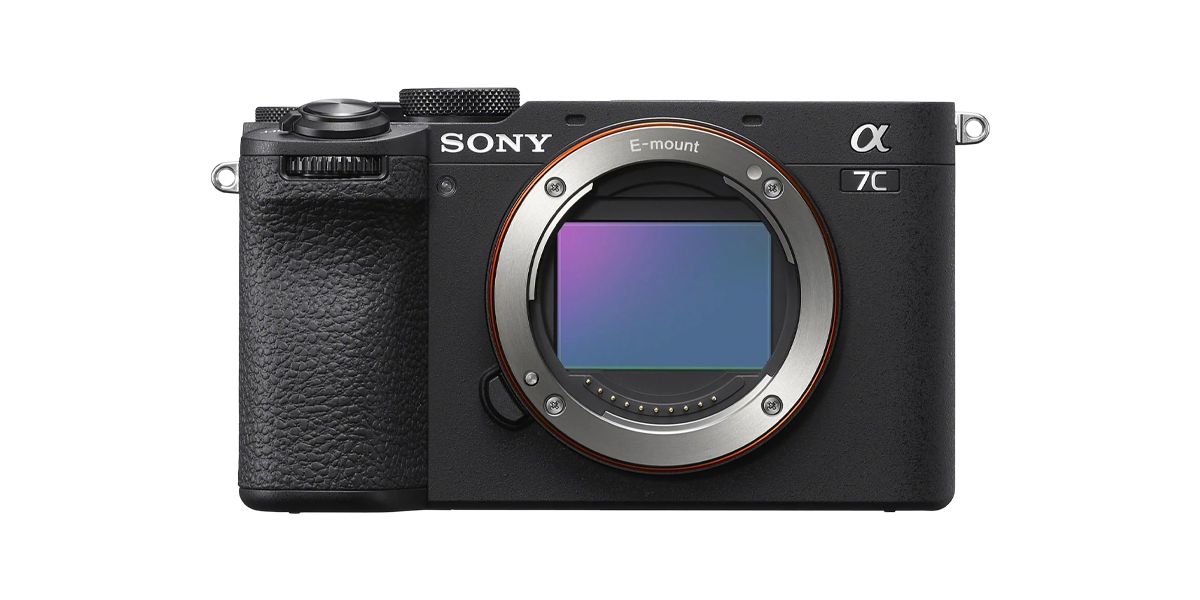
Recent camera releases show how quickly the structure of the industry is shifting. Nikon still relies on Sony fabrication, but newer sensors involve deeper collaboration and faster architectures such as the partially stacked design used in the Z6 III. Panasonic has moved to a newly developed 24-megapixel sensor with on-sensor phase detection and dual-gain circuitry tuned specifically for its video-centric philosophy rather than the earlier shared platform. Leica has confirmed it is developing a proprietary sensor again for future models, moving away from Sony silicon after years of reliance. Even companies that still purchase Sony-fabricated dies such as Blackmagic and DJI now build extensive custom circuitry and processing pipelines around them.
The widely used 24-megapixel platform associated with the IMX410 generation did not define the mirrorless era by itself. What it revealed instead was the structure of the industry during that transition. For a few years many manufacturers depended on the same supplier to move quickly into mirrorless.
That dependency window was far more significant for the camera industry than for Sony’s semiconductor business. For Sony, interchangeable-lens camera sensors represent only a small portion of a much larger operation dominated by smartphones and automotive imaging. The manufacturing scale that allowed Nikon and Panasonic to rely on IMX410-era parts was largely funded by those far larger markets.

Over the past two decades Sony has gradually shifted from competing purely as a camera manufacturer to supplying the technology that sits underneath much of the imaging industry. The IMX410 era made that structure visible. Camera companies relied on Sony’s manufacturing scale during the mirrorless transition while Sony continued expanding into markets far larger than dedicated cameras.
Sony took the ‘hit’ on their camera sales in order to create a market for mirrorless cameras out of a dying DSLR market, being content with fewer sales of cameras but most sales of imagers.
who are the other major imaging semiconductor players?