
How Sony Solved Digital Cinema’s Hardest Problem
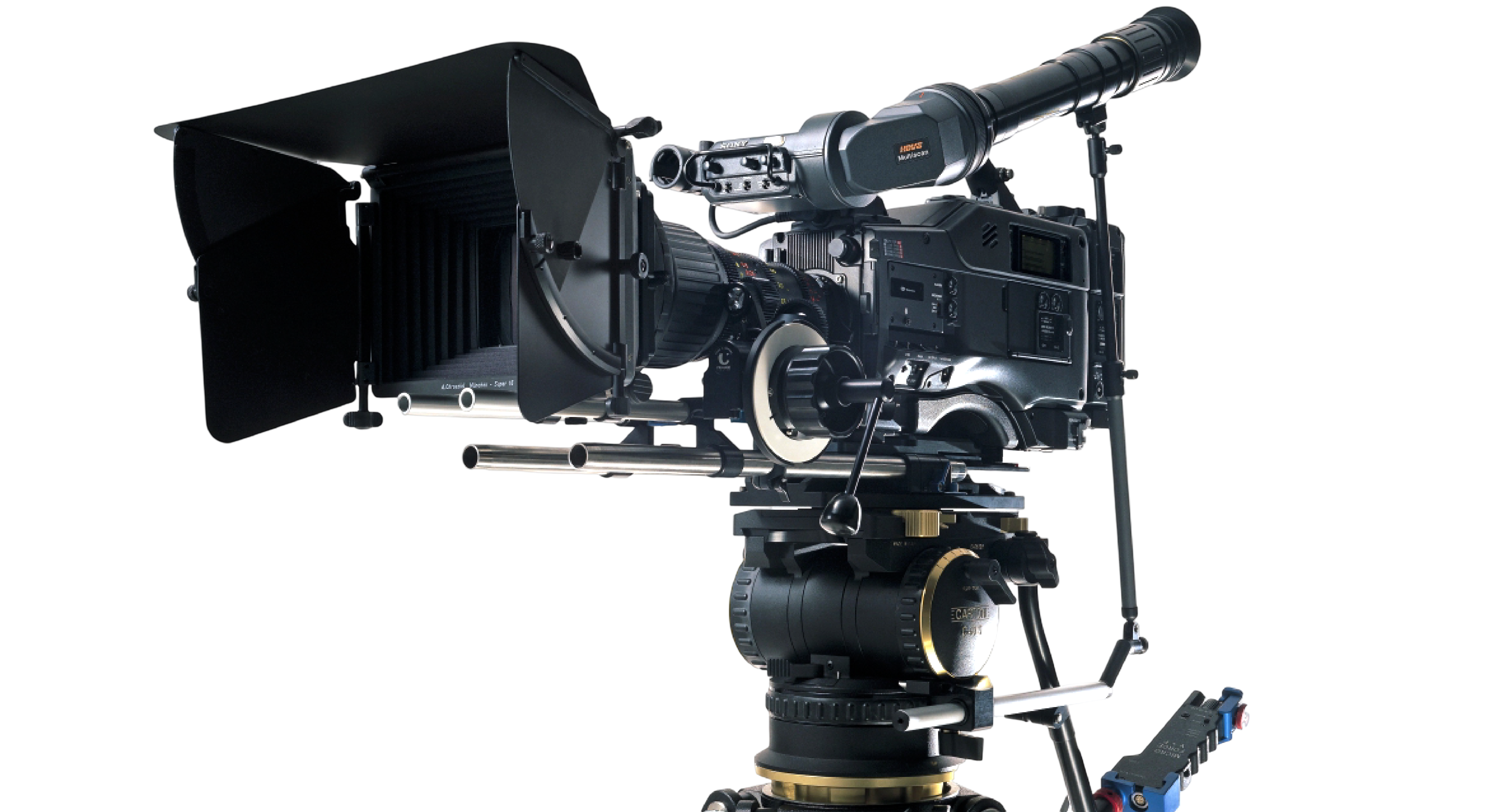
Sony HDW-F900: The First 24p Digital Cinematography Camera

Today, it is difficult to tell whether a movie was shot on film or digital. In many cases, the distinction no longer announces itself. Digital capture is widely accepted across feature filmmaking, and the stigma that once followed it has largely faded. That outcome feels inevitable now, though it was not at the time. The move toward digital cinema began over 25 years ago, when electronic cameras were still fundamentally incompatible with feature filmmaking. Feature production had evolved around long timelines and image latitude, while video systems prioritized immediacy. Bringing those worlds together required a camera that could survive established workflows without reverting to video behavior.
The Sony HDW-F900 was the first electronic camera to cross that line in practice. It was not the final form of digital cinema, but it could operate reliably inside feature film production. More importantly, it allowed feature film production to be pulled into an electronic pipeline Sony had already been building for decades.
For most of the 20th century, films were shot with the expectation that images would not be seen immediately. Exposure, framing, and motion were committed on set, with consequences arriving later, after the negative was processed. That delay shaped how films were planned, letting risk accumulate and failure reveal itself over time in ways filmmakers had learned to accept as part of the process.
Video developed under the opposite assumptions. Video cameras were built for situations where images needed to be seen instantly, adjusted in real time, and reproduced predictably. Motion was interlaced, color was standardized, and the system favored stability over latitude.
The difference showed most clearly when things went wrong. Film offered wide exposure latitude and forgiving highlights, allowing it to be pushed, pulled, underexposed, overexposed, and heavily manipulated without falling apart. When film failed, it failed gradually, through grain, blooming highlights, and color shifts filmmakers had learned to work with rather than correct. Early electronic cameras failed abruptly. Highlights clipped, color collapsed under stress, motion broke into structure, and noise appeared where grain once lived but behaved nothing like it. These were physical limits that defined what could be shot safely, and they explain why early video could not be absorbed into established production workflows.
By the late 1990s, much of filmmaking had already become digital everywhere except the camera. Editing, visual effects, sound, and color grading had moved into electronic systems. Capture still happened on film, but once the image left the camera, the rest of the workflow was already digital. The camera remained the last analog component because no electronic system had yet learned how to operate comfortably within these constraints.
That remaining gap was not just technical. For Sony, it marked the edge of a system it was increasingly trying to unify. Feature filmmaking still sat outside its electronics business, tied to processes and suppliers Sony did not control. For a company thinking in systems rather than individual products, that separation defined a limit. Influence came from shaping the full chain through which images were created and delivered, and feature production remained the most visible break in that chain. The 1989 acquisition of Columbia Pictures followed this logic, moving Sony closer to production, though as long as capture stayed outside its electronics stack, that proximity had limits.
Inside Sony Japan, this pressure solidified in the early 1990s into a clearer internal objective known as Glass to Glass. Light would enter glass at the front of a lens, pass through Sony sensors, recording formats, monitors, post-production systems, and projection, and finally strike glass again on a screen, all within a single compatible path. In that model, a camera only mattered if it could carry the rest of the workflow along with it. For engineers at Atsugi, the mandate became increasingly direct. They were tasked with building the missing link, an electronic camera capable of operating inside feature film production and making that workflow compatible with Sony’s infrastructure. The goal was integration.