
The Disc That Launched the PS2 in Japan
How The Matrix explained Sony’s new console better than anything in its launch lineup.

In my previous article, The End of PlayStation Discs, I wrote about Sony moving PlayStation away from the physical media that helped build it. This story returns to the opposite end of that history. When the PlayStation 2 launched in Japan in March 2000, physical media was one of the main reasons Sony could present it as something larger than a game console.
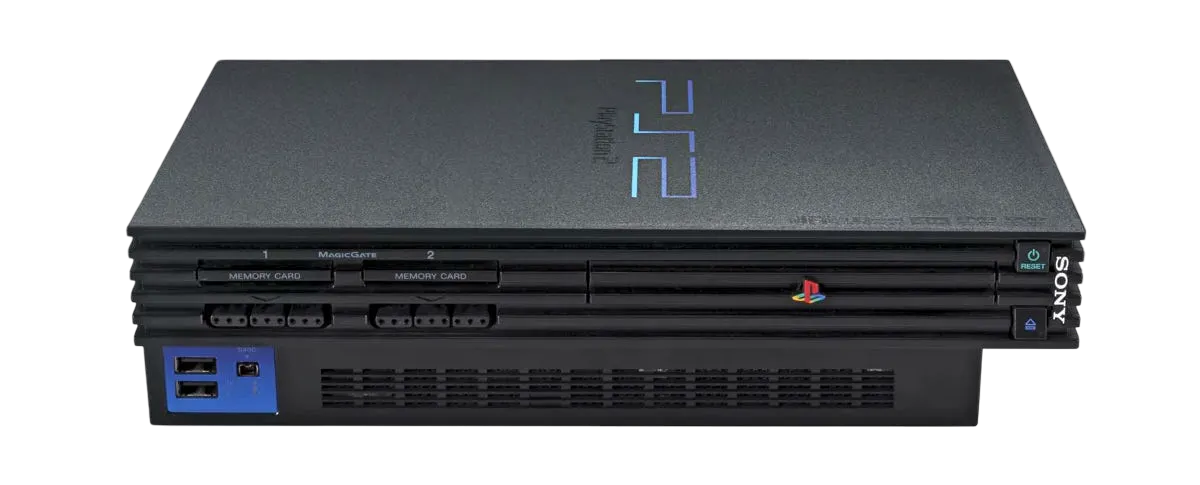
The usual explanation for the PS2’s success begins with DVD. Sony priced the launch-model SCPH-10000 at ¥39,800, placing it in roughly the same range as some of the more affordable standalone DVD players reaching the Japanese market. For roughly $370 at the exchange rate of the time, buyers received a new game console, backward compatibility with original PlayStation software, and access to the fastest-growing home-entertainment format in the world.
The DVD drive did more than make the hardware a good deal. It connected the PS2 to a film industry much larger than PlayStation.
Sony’s Final Rehearsal
In February 2000, Sony held PlayStation Festival 2000 in Chiba. February 18 was reserved for the industry and press, followed by two public days on February 19 and 20. The PlayStation 2 would reach Japanese stores less than two weeks later, on March 4.
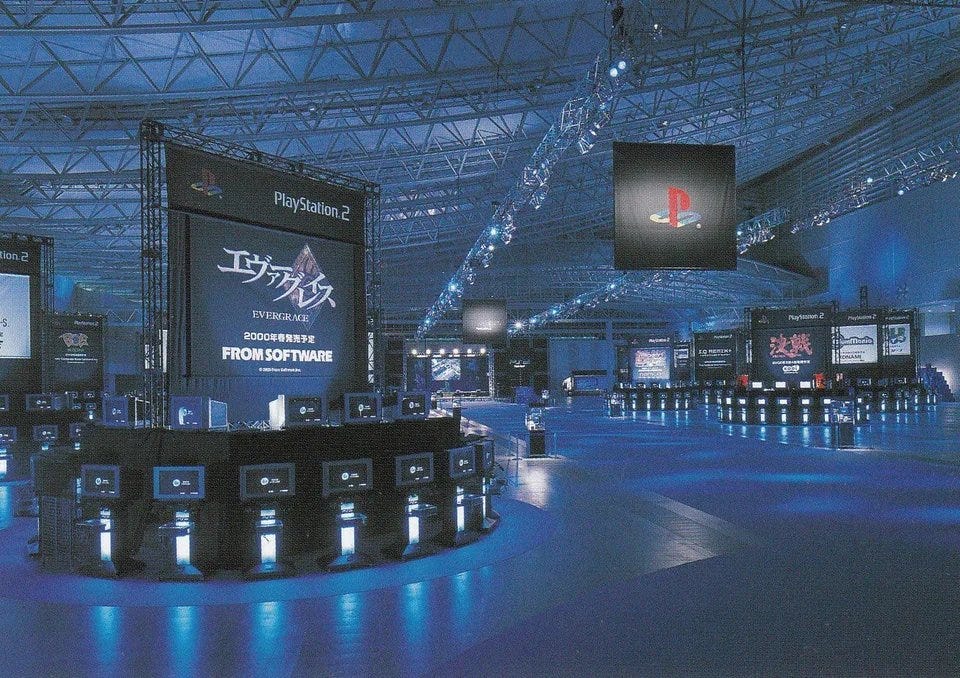
The festival was Sony’s final public rehearsal for the platform. Visitors saw working development software, including upcoming games, along with the startup animation and the browser interface used to manage memory cards and discs.
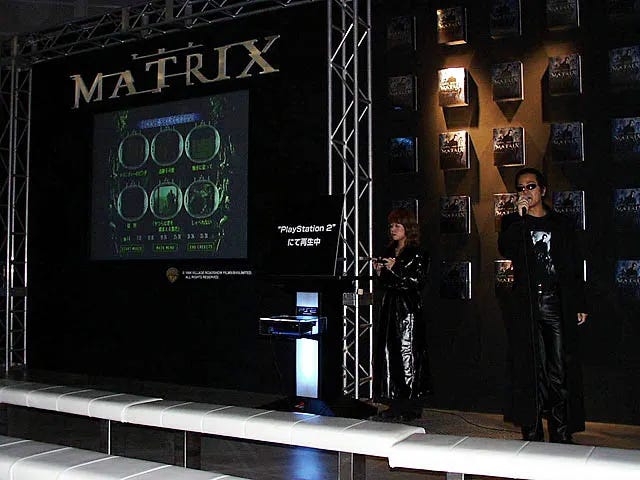
Near the entrance, away from the main presentations, the company had built a smaller stage to explain another feature it kept emphasizing: the PlayStation 2 could also function as a DVD player.
The movie chosen for the demonstration was The Matrix. Promotional signage beside the stage advertised its Japanese DVD release on March 17, thirteen days after the PS2 launch.
The choice carried more weight in early 2000 than it might today. Twenty-six years later, younger readers may know The Matrix through references that survived the original release: green code falling down a screen, black coats, narrow sunglasses, the red and blue pills, and Neo bending backward as bullets passed overhead. At the time, those images were still new, and they seemed to appear everywhere at once.
Popular culture was more concentrated then. Audiences encountered many of the same television shows, trailers, magazine, and advertising campaigns. A film could become part of the common language even among people who had not watched it.
The Matrix was one of the clearest examples. Released in 1999, it earned more than $460 million worldwide, but its influence was most visible in how quickly the rest of popular culture absorbed its visual language.
The timing also perfect. Computers and the internet were becoming ordinary parts of daily life while still retaining an air of mystery. The approach of the year 2000 and anxiety surrounding the Y2K effect had made software and digital systems subjects of everyday conversation. The Matrix gave that moment a recognizable form, presenting a world in which physical and computer-generated reality had become difficult to separate. Its combination of cyberpunk, martial arts, fashion, electronic music, and new visual effects made the digital future look seductive as well as threatening.
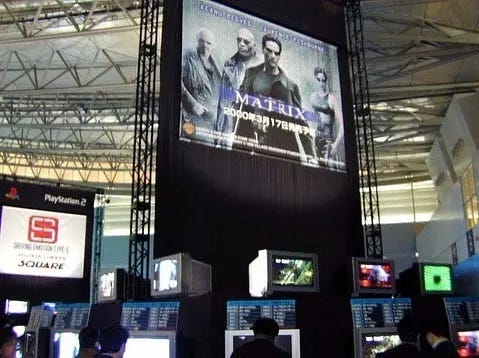
That aligned closely with the image Sony wanted for the PlayStation 2. The company presented the console as a meeting point between games, cinema, music, and computer-generated worlds. When The Matrix appeared onstage, Sony did not need to explain what the movie represented. It arrived with a ready-made idea of the future that the company wanted the PS2 to inherit.
Warner understood the connection as well. The Japanese DVD had originally been scheduled for release one week later, but Time Warner Entertainment Japan moved it forward to March 17 to take advantage of the enthusiasm surrounding the PS2. It sold 600,000 copies in its first two weeks, at a time when 10,000 copies was still considered a successful DVD release in Japan.
What the PS2 Actually Launched With
The importance of the movie becomes clearer when looking at the software Japanese customers could buy on March 4. The ten PS2 launch titles were A-Train 6, Eternal Ring, Kakinoki Shogi IV, Kessen, Stepping Selection, Street Fighter EX3, drummania, Mahjong Taikai III: Millennium League, Morita Shogi, and Ridge Racer V.
The lineup had real strengths. Ridge Racer V provided the familiar spectacle of a new PlayStation launching with a new racing game. Kessen filled the screen with large groups of soldiers, while Street Fighter EX3 brought an established arcade franchise to the system.
The full list also shows how early the hardware had arrived. Two of the ten games were shogi titles and another was mahjong. The selection included railway management, historical strategy, rhythm games, and a first-person fantasy RPG. Sony’s own FantaVision followed five days after launch, while Tekken Tag Tournament did not arrive until March 30.
The games now remembered as central to the PS2 era were still ahead. Gran Turismo 3, Final Fantasy X, Metal Gear Solid 2, Devil May Cry, and Grand Theft Auto III would eventually help define the console, but that identity did not yet exist when Japanese customers first encountered the machine.
Those buyers were not limited to ten games. Backward compatibility allowed existing PlayStation owners to carry much of the software library they had already built into the new generation. They did not have to begin again from zero, and that continuity made the decision to upgrade easier.

Backward compatibility, however, did not give the PS2 a new game capable of defining its launch. The old library explained why existing PlayStation owners could move to the new machine. DVD helped explain why the machine might matter to everyone else.
Sony entered the generation with enormous momentum, competitive pricing, backward compatibility, and much stronger software still to come. The Matrix did not cause the PS2’s success, but it gave the console an immediate cultural role before its native library had found one.
Shuhei Yoshida would later recall that Sony had been “awfully unprepared” for the transition between the first two PlayStations. He also remembered that, when the PS2 launched in Japan, “the best-selling software was actually the Matrix DVD.” His comment was a retrospective observation rather than audited launch data, but it captured the unusual position of the console in March 2000. The hardware was already a phenomenon before its native game library was ready to explain why.
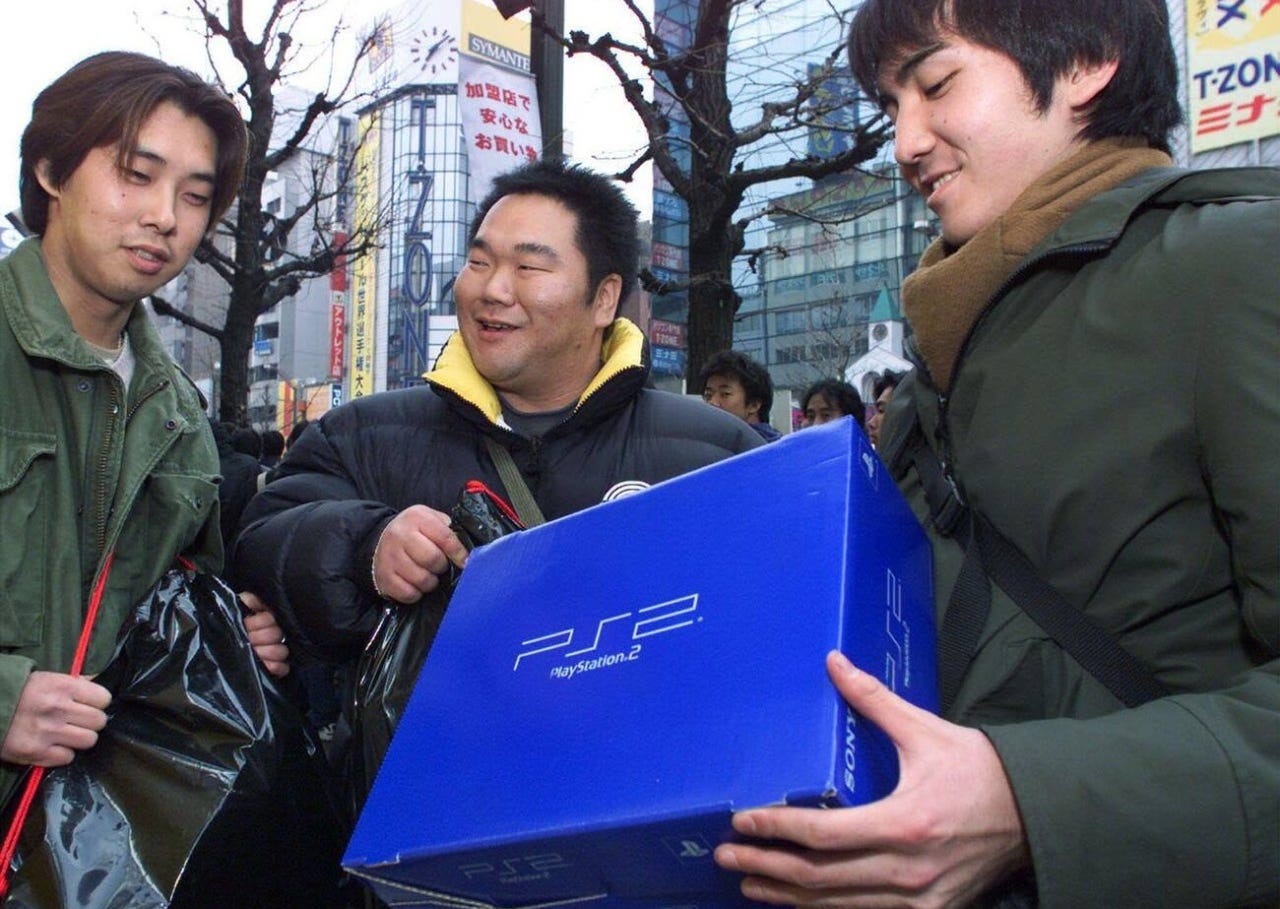
The launch games could demonstrate polygons, animation, scale, and the technical improvement over the original PlayStation. The Matrix offered something they did not yet have: a large international audience and an established place in popular culture. Someone with little interest in the launch lineup could still understand the appeal of watching one of the most discussed films in the world on DVD.
That was one of the great advantages of physical media at the beginning of the PS2 era. A Warner Bros. film, an audio CD, an original PlayStation game, and a new PS2 release could all enter the same tray. None had to belong to Sony to make PlayStation more valuable.
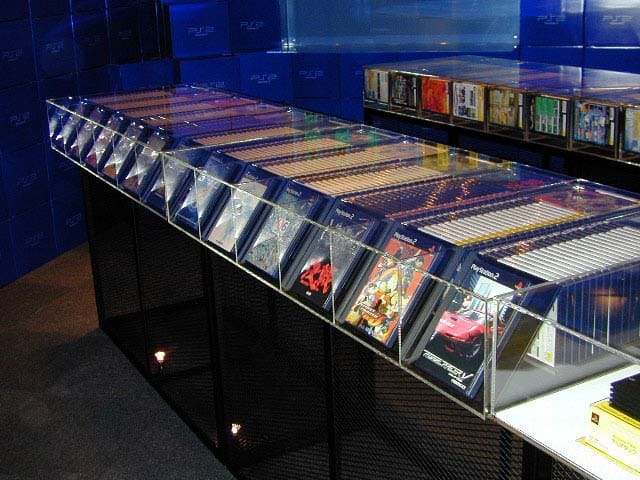
Even the packaging reinforced the connection. The PS2 games displayed at the festival used the same tall style of case associated with DVD movies. On a store shelf, the two forms of entertainment looked like neighboring parts of the same system before entering the same black machine.
Today, Sony faces the opposite incentive. A physical game can be bought outside the PlayStation Store, then lent, resold, collected, or preserved without remaining tied to an account. From Sony’s perspective, the openness that once brought outside value into PlayStation now allows part of the PlayStation economy to remain outside its platform.
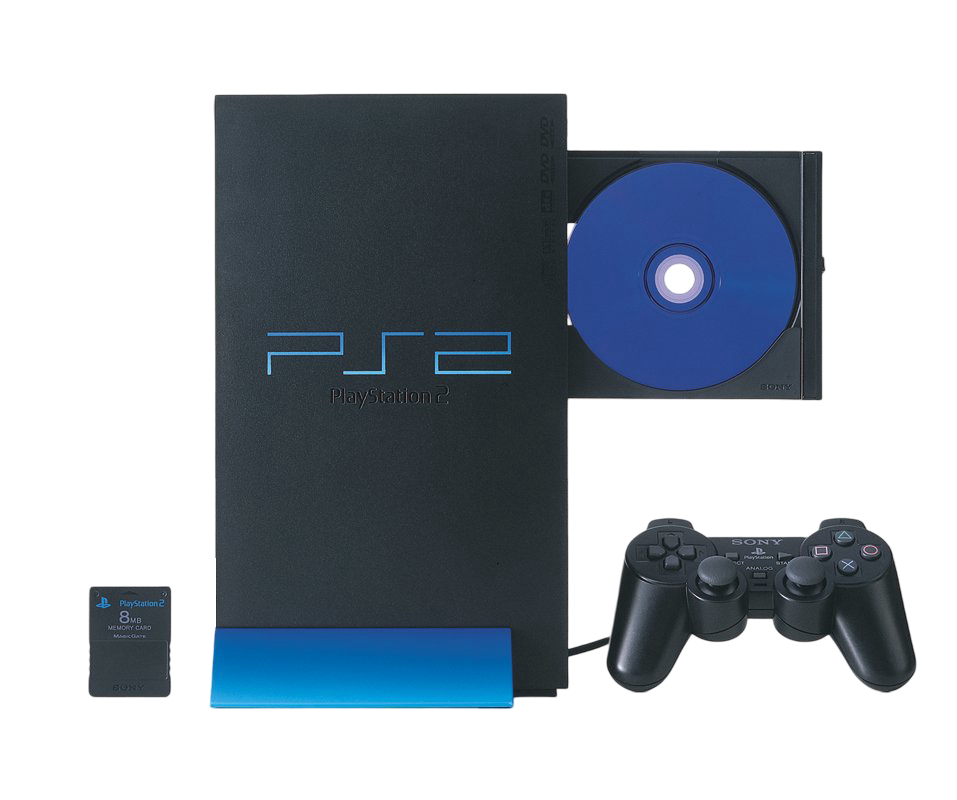
The PlayStation 2 eventually earned its reputation through one of the largest and most varied game libraries ever assembled. In March 2000, that future was still mostly a promise. Its disc drive connected it to a much wider entertainment market.
During those first weeks in Japan, The Matrix did not replace the PS2’s launch games, but it explained why Sony’s new machine belonged under the television more clearly than any one of them.
The PS2 became more valuable every time the wider culture produced something new because all of it could enter the same tray. The modern PlayStation is far more capable, but more of its world now begins and ends inside Sony’s account system. In 2000, physical media did not keep PlayStation in the past. It opened the machine to everything happening around it.
nothing beats PS2's era, nothing.
Forever the greatest console of all time. It will never be topped. Especially not now.