How MiniDisc Worked
A Format Ahead of Its Time

I don’t usually write deep dives explaining how tech works, but I had to make an exception for MiniDisc. Over the years, I’ve posted plenty about its design, its cult following, and how it fit into Sony’s story. But I kept running into the same thing: most people still don’t actually know how it worked. And honestly, it’s one of the coolest systems Sony ever built. So this time, I wanted to slow down, break it all down, and show why this misunderstood format deserves a second look.
MiniDisc is often remembered as a failed format, but that misses how far ahead of its time it really was. Long before streaming or solid-state MP3 players, Sony created a portable system that let you record, delete, edit, and organize music in real time. It used heated lasers, magnetic writing, smart compression, and skip-resistant memory, all packed into a compact cartridge. Once you see how it worked, the ambition becomes clear.
For a format-level overview of MiniDisc, see MiniDisc: Sony’s Digital Audio Format, History, and Legacy.

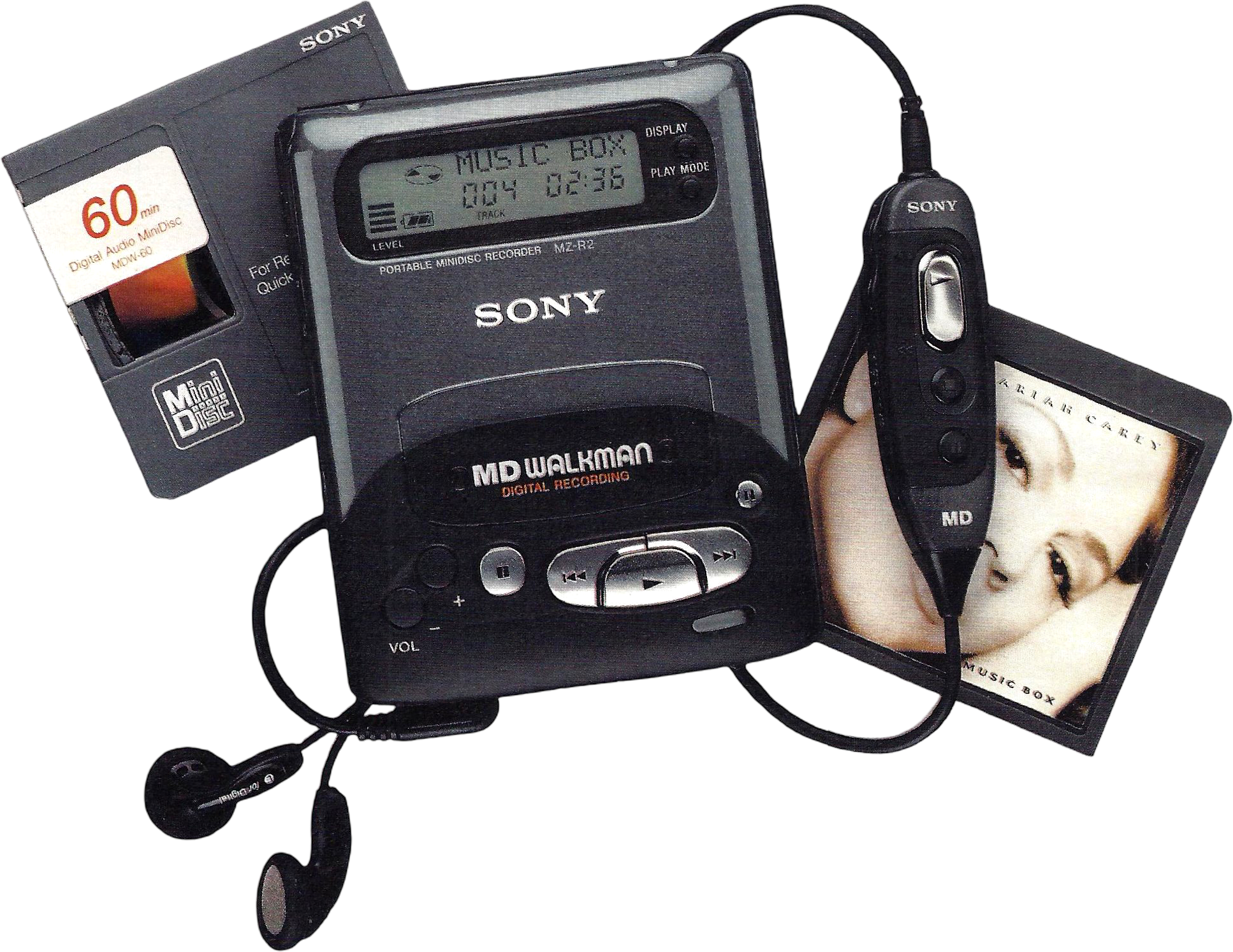
MD introduced three major innovations: rewritable magneto-optical discs, ATRAC audio compression to shrink file sizes, and a memory buffer that kept playback smooth even during movement. Each disc came in a tough plastic shell, combining cassette durability with the sound quality of a compact disc.
There were two types of discs. Rewritable ones for personal recording, and pre-recorded ones for commercial music. Sony licensed the format widely, hoping it would become a global standard. It succeeded in Japan, but elsewhere, CD-Rs and MP3 players quickly took over. Still, the technology behind MiniDisc was ahead of its time in almost every way.