
1987: The Year Sony Stopped Explaining the Walkman
How Sony kept Walkman ahead in a crowded market

The Walkman entered 1987 in a strange position. It was too familiar to be introduced like a discovery, but too important for Sony to treat as ordinary. The original shock had passed. Music in motion was no longer new. In less than a decade, Sony had turned the Walkman from a single product into part of daily life.

That success created a harder problem. Sony no longer had to prove that portable music could exist. It had to keep Walkman from becoming just another name in a category everyone else was now chasing.
Personal cassette players were everywhere. Competitors could fight on price, features, sound, and styling. The shape of the category had become easy to copy, and a small cassette player with headphones was no longer automatically a Sony idea in the mind of someone standing in a store.
Compact disc added pressure from another direction. It did not replace cassette in daily portable use, not yet. CD was still too fragile in motion and too dependent on stable conditions. But it changed where prestige was moving. Cassette still belonged to the street, the train, the school bag, and the long walk home. CD made the future point somewhere else.
Sony’s Walkman lineup from this period feels like a company protecting its position from every side. The archive records 24 Walkman models for 1987. Sony was no longer relying on one defining machine. It was surrounding the market with variations.
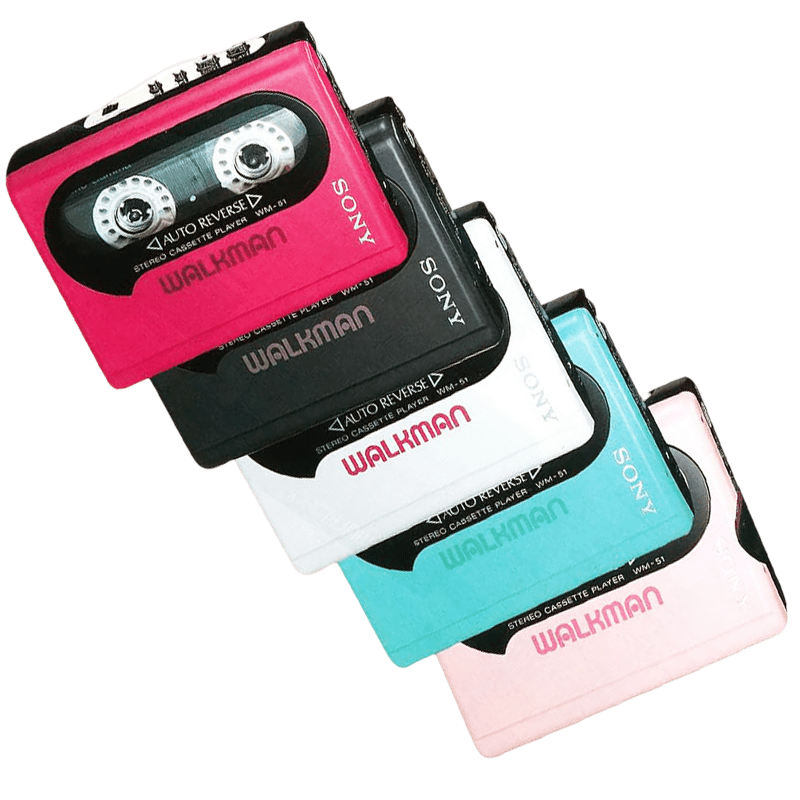
A buyer could move between simple playback, radio, recording, premium mechanics, smaller bodies, or more design-led models without leaving the same broad idea. These were not dramatic inventions. They were ways of making Walkman fit more people, more habits, and more situations.
Specifications still mattered, but they had started to behave differently. A spec sheet could now be compared across brands. Features alone no longer guaranteed authority.
The WM-501 does not explain the whole year, but it shows the shift clearly. It had the right ingredients: a thin 21 mm body, rechargeable gumstick battery, Auto Reverse, Dolby B, Dynamic Bass Boost, an amorphous head, and a premium shell. The real effect came from how those details sat together. The machine felt resolved.
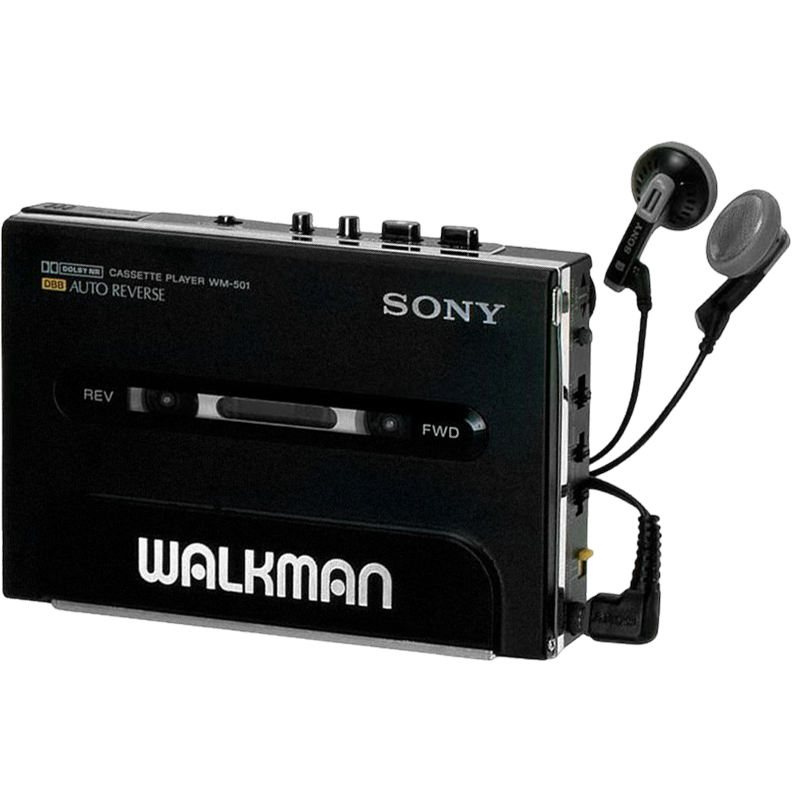
That was more important than any single claim. In a crowded market, Sony’s advantage was not only that it could add features. It could make those features feel like they belonged to a complete object.
Compact disc made that position more important. CD made cassette look older, but it did not make it less useful overnight. A Discman could offer cleaner sound and a more modern promise, but it could not yet absorb the ordinary behaviors cassette had already mastered.
Sony’s portable CD models from this period read like a format still looking for stable places to live. The D-30, D-2001, D-T100, D-600, and D-601K point toward the desk, the car, the bag, the remote control, and the radio tuner. Each one brought compact disc closer to daily use, but none of them yet had cassette’s casual relationship with motion.
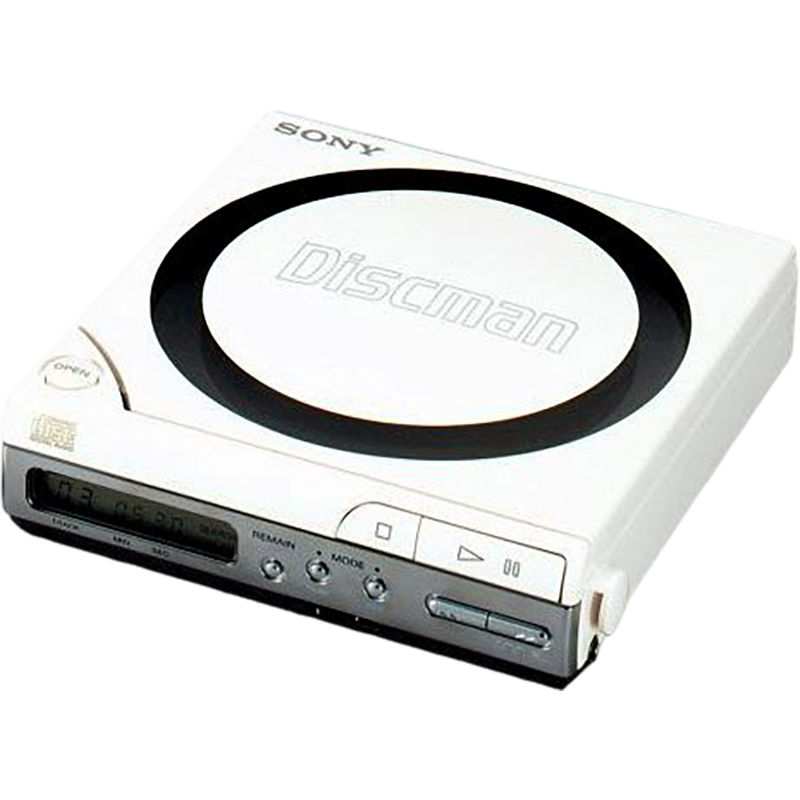
That was not failure. It was the nature of the moment. Discman had prestige and future energy. Walkman had behavior.
Sony had already won the first Walkman battle. It had made portable music desirable and turned private headphone listening into a global habit. The next stage was harder because success had made the idea easier to copy. Once the market filled, specifications became easier to compare. Once compact disc began defining the future of recorded sound, cassette could no longer own progress by default.
Sony kept refining the machines, but it also refined the position around them. Familiarity became strength.
I remember by '87 I had switched from Sony to Aiwa because they had a built in 5-band equalizer that Sony didn't offer and I thought that was really cool.
And it was a really good product, too. So good that when it broke I bought a 2nd one to replace it, which is completely out of character for me.