
Inside the PS2’s Emotion Engine
How Sony Designed a Geometry-First Processor for the PlayStation 2

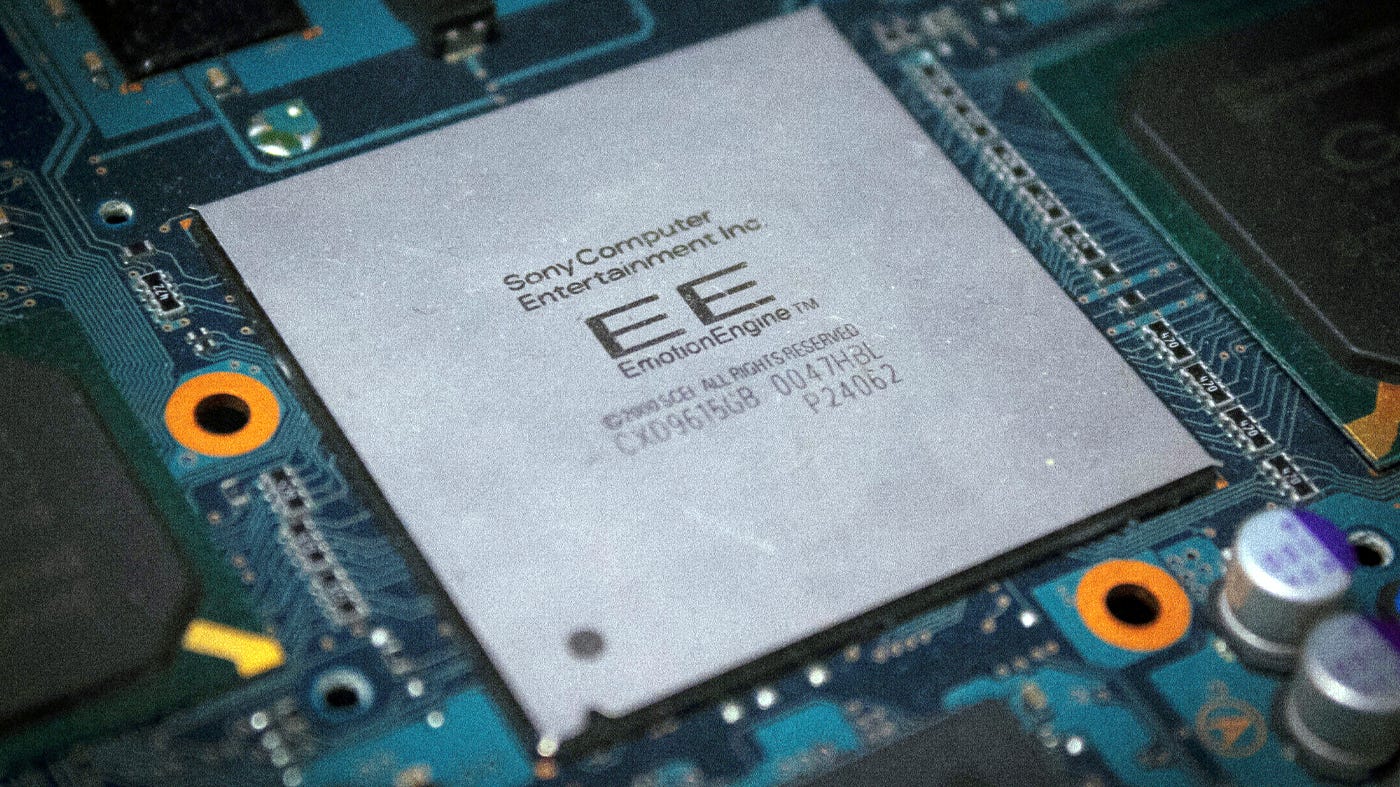
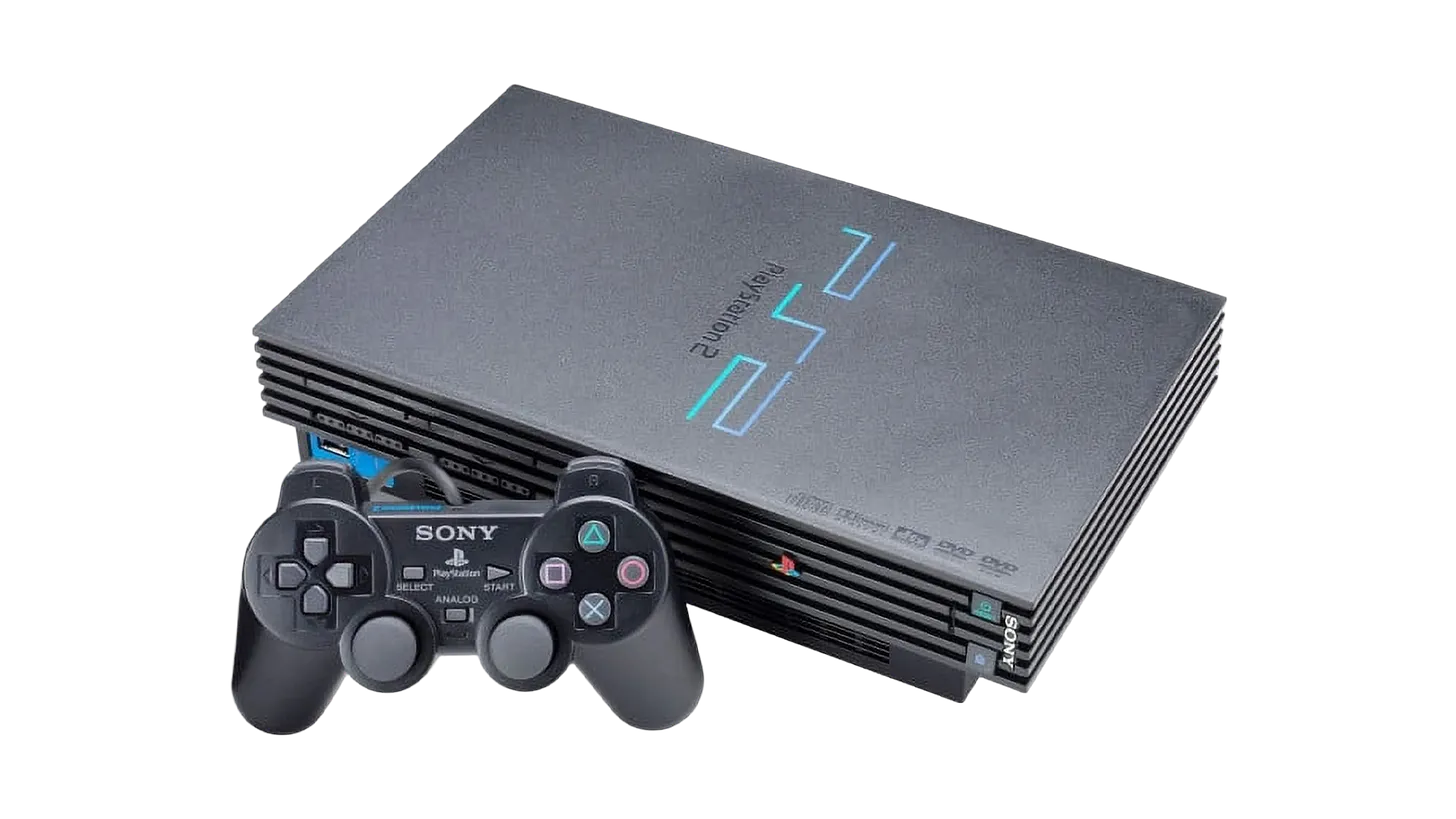
The Emotion Engine was the custom processor designed by Sony and Toshiba for the PlayStation 2, released in 2000. It powered the best-selling console in history, now officially over 160 million units sold. Its purpose was narrower and more deliberate. Sony wanted a way to construct convincing three-dimensional worlds at mass-market scale without relying on brute-force general-purpose computing.
This was ambitious, but tightly scoped. Sony believed the next constraint in games would not be CPU frequency. It would be the math required to move objects through space. Geometry, animation, and motion were where games were heading. The Emotion Engine was built around that assumption.
That single decision shaped everything that followed. It explains why early games often felt underwhelming, why later titles improved dramatically without new hardware, and why PS2 games respond so well to modern emulation. The Emotion Engine did not try to outgun PCs through pixel density. It tried to survive visually over time.
The Sony–Toshiba Joint Venture and the Cost of Scale
By the late 1990s, console design had become an industrial problem as much as a technical one. Larger chips meant lower yields and higher defect rates. Sony planned to ship tens of millions of units at a fixed price long before final silicon existed.
This is where Toshiba’s role became decisive. The Emotion Engine was produced through a Sony–Toshiba joint venture formed in 1999, and Toshiba’s semiconductor expertise defined what could realistically be manufactured at scale. Toshiba was one of the world leaders in merging logic and DRAM on a single die, a hybrid embedding process that made the Graphics Synthesizer possible at consumer scale. Sony did not simply choose a partner for capacity or cost. They chose the only partner who could physically build a chip with embedded DRAM at that volume.
Memory choices reinforced this direction. Sony committed to Rambus DRDRAM for main memory, shipping the PS2 with 32 MB delivering roughly 3.2 GB per second. In the PC world, Rambus later fell out of favor for practical reasons, including higher latency, licensing costs, and a broader industry shift once Intel moved toward DDR-based solutions. Sony still chose it because the PS2 was designed as a bandwidth-forward data-flow machine, even if that decision added friction elsewhere.

At the center sat the MIPS R5900 CPU running at a precise 294.912 MHz in early units, later nudged to roughly 299 MHz. Sony marketed it prominently as a 128-bit processor. In practice, its strength came from two programmable vector units. VU0 and VU1 could execute floating multiply-accumulate instructions in a single cycle, making them extremely effective at geometry and animation workloads. Under ideal conditions, the vector units delivered around 6.2 GFLOPS of single-precision performance.
Data movement held everything together. A 128-bit internal bus running at 150 MHz allowed information to pass between CPU, vector units, IPU, and memory without stalling the core. A ten-channel DMA controller enabled parallel transfers that turned the Emotion Engine into a coordinated data-flow system rather than a conventional CPU.
An Image Processing Unit handled MPEG-2 decoding and vector quantization, enabling DVD playback and full-motion video without burdening the main processor.
Launch-era silicon was large and hot. The original Emotion Engine die size is consistently cited at 225 mm² on a 0.18 micron process. Power draw for the EE alone sat at 15W. Early EE plus GS combinations are commonly cited around 37W for the chips, while higher numbers around 45W tend to describe whole-system draw at the wall under load. Over time, shrinks and integration reduced both heat and cost. By the slim era, combined EE and GS implementations dropped as low as roughly 8W, which helped keep the PS2 cheap, quiet, and in production far longer than most consoles.
All of that silicon complexity existed to serve a single visual priority.
Geometry First and the Texture Limit
When the PlayStation 2 was designed, resolution offered diminishing returns. Most players still used standard-definition televisions. Increasing pixel counts quickly exhausted bandwidth without delivering proportionate gains.
Geometry scaled differently. More objects, smoother animation, and denser scenes remained visible regardless of resolution. Movement survived blur, interlacing, and compression. Sony optimized for how games looked while in motion.
That choice collided with a hard constraint. The Graphics Synthesizer contained only 4 MB of embedded DRAM for framebuffers and textures. Internally, that memory delivered roughly 48 GB per second of bandwidth, vastly higher than the system’s main memory. Capacity, however, was extremely limited. The system could move small amounts of data at incredible speed, but it had nowhere to hold much of it.
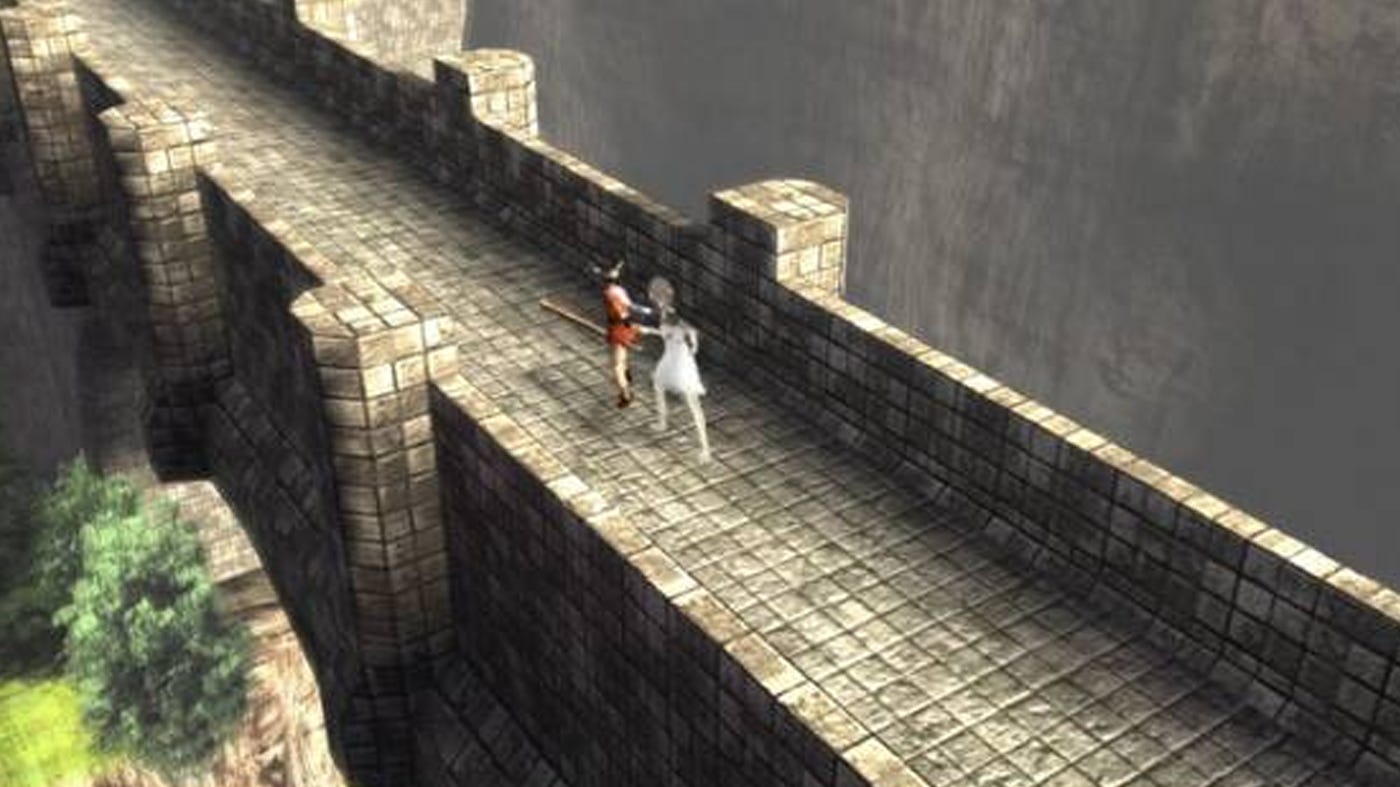
The Emotion Engine could calculate enormous amounts of geometry. Under ideal conditions, perspective transforms could approach roughly 66 million polygons per second. That figure was theoretical and never sustained in real games. Real-world scenes landed far lower, commonly topping out around 15 to 20 million polygons per second once animation, effects, memory movement, and game logic entered the picture. Sony’s bet was still clear. Spend silicon on motion math, then fight the texture ceiling with streaming and staging.
This limitation persisted throughout the generation. Even late-era titles relied on aggressive streaming, texture reuse, and carefully staged scenes. Aliasing and shimmering were not early missteps that vanished with experience. They were consequences of having too little space to store more detailed textures and buffers.
In simple terms, the Emotion Engine treated the PlayStation 2 less like a traditional graphics processor and more like a real-time geometry workstation. Its strength was not pushing pixels to the screen, but calculating motion, deformation, and transformation at scale. Textures were scarce, pixel effects were limited, and fillrate collapsed under real workloads. What survived was movement. That design choice explains both the PlayStation 2’s early visual struggles and its unusually long improvement curve.
Fillrate in Practice, Not on Paper
The PlayStation 2 is often described as having a peak fillrate of roughly 2.4 gigapixels per second. On paper, the number looks formidable.
Under real workloads, the number described a narrow and idealized case. That figure applied to simple, untextured pixel writes into embedded DRAM. Once depth testing, texturing, and alpha blending entered the pipeline, effective throughput dropped sharply. In many real scenarios it landed closer to roughly 1.2 gigapixels per second or lower.
The system lacked programmable pixel shaders and depended heavily on multi-pass rendering to achieve visual complexity. Most games did not encounter fillrate as their first hard limit. They encountered constraints in geometry setup, DMA scheduling, synchronization between parallel units, and memory contention long before pixel throughput became the limiting factor.
Marketing Promises and Early Reality
Sony’s messaging around the Emotion Engine was aggressive. Toy Story-level graphics in real time became inseparable from the PlayStation 2’s launch narrative. It was a promise the hardware could not immediately deliver.
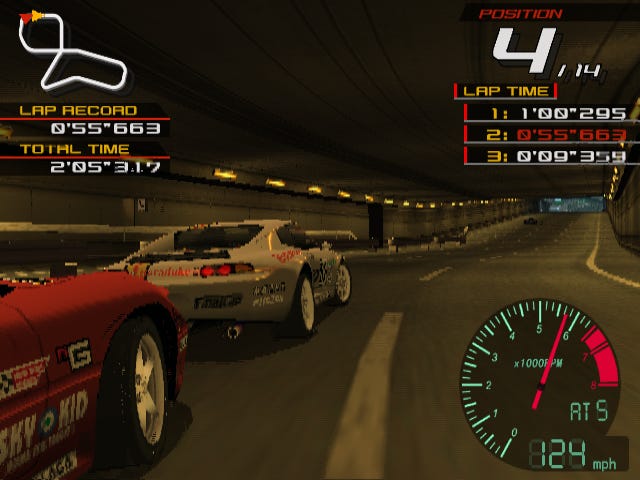
Early software made the gap obvious. Fantavision functioned primarily as a particle showcase. Ridge Racer V delivered smooth motion but exposed jagged edges and sparse environments. Tekken Tag Tournament demonstrated fluid animation but still showed the limits of texture detail. In several respects, early PS2 games looked comparable to late Dreamcast titles, which briefly gave Sega a real visual edge in the transition period.
Capability wasn’t the problem. Timing was. The tools and knowledge required to extract the hardware’s strengths did not yet exist, and third-party teams were slow to climb the learning curve.
Programming the Machine and Its Uneven Pipeline
Developing for the PlayStation 2 was notoriously difficult. Teams managed DMA transfers manually, scheduled parallel workloads explicitly, and wrote custom microcode for the vector units. There was no standard graphics API comparable to DirectX. Documentation was incomplete and early development kits were crude.
The pipeline split intelligence unevenly. The vector units formed a fully programmable vertex stage. Developers could perform skinning, lighting, deformation, and custom effects directly on the VUs. Many effects that looked like pixel shading were calculated upstream and baked into geometry before reaching the Graphics Synthesizer.
Once data reached the GS, flexibility ended. It was a fixed-function rasterizer. Extremely fast, but incapable of adaptation. There were no programmable pixel stages and limited opportunities to intervene once drawing began.
Middleware such as RenderWare lowered the barrier to entry but left performance on the table. Studios that committed years to custom engines pulled far ahead. Polyphony Digital, Naughty Dog, and others learned to orchestrate the vector units, DMA system, and memory layout as a single machine.
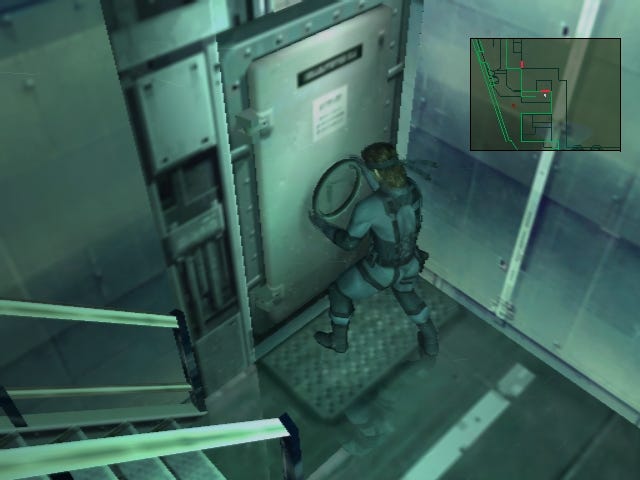
The results became unmistakable. Metal Gear Solid 2 demonstrated dense scenes assembled from coordinated geometry and effects. Gran Turismo 3 showed stability under sustained load. Late-generation titles such as God of War II, Black, and Final Fantasy XII pushed the hardware far beyond what early software suggested was achievable.
That complexity extended below the hardware layer, into how the system booted and exposed its capabilities to software, which is why the PS2 BIOS played a larger role than most players ever realized.
A counterpoint is worth stating plainly. Some multiplatform games exposed the PS2’s texture ceiling and pipeline friction. Silent Hill 2, for example, is often cited as cleaner in certain respects on Xbox, where memory allocation and effects pipelines were simply easier to work with.
Even in the best PS2 titles, limits remained. Frame rates often sat in the 20 to 30 range outside of well-optimized cases. Texture resolution lagged behind competitors. Experience improved outcomes, but it never removed the system’s boundaries.
The longer-term criticism also lands upstream. Sony’s vector-heavy confidence did not stop with PS2. The same philosophy carried forward into the PlayStation 3’s Cell processor, where the learning curve grew even steeper and third-party frustration became a defining story of that generation.
Against Its Rivals
Sony’s competitors chose different paths. Microsoft’s Xbox relied on brute force. A 733 MHz Pentium III, programmable pixel shaders, and a unified 64 MB memory pool made early visual effects easier to achieve and development far more familiar. Unlike the PS2’s split architecture, with 32 MB of system RAM isolated from 4 MB of video memory, the Xbox let developers allocate memory dynamically. This often translated into higher texture resolution and cleaner multiplatform ports. Gains arrived quickly, but the curve flattened early.
Nintendo’s GameCube emphasized balance and efficiency. Its architecture produced stable, clean visuals with fewer extremes and less developer friction. Teams frequently achieved sharp results through efficiency and predictability rather than raw flexibility.
The PlayStation 2 demanded more effort, offered less convenience, and punished mistakes. In return, it allowed unusually large gains over time for teams willing to adapt. The curve was harsher and longer, not smoother.
DVD Playback and Market Dominance
One technical detail had enormous commercial consequences. The Image Processing Unit enabled full DVD playback out of the box. At launch, the PlayStation 2 was the cheapest DVD player available.
That single feature expanded the audience far beyond traditional gamers. Many households purchased a PS2 primarily for movies. Hardware quirks mattered less when paired with an unmatched software library and multimedia appeal. The result was dominance. Sony’s official total now sits at over 160 million units sold, far ahead of roughly 24 million Xbox consoles and 21.7 million GameCubes.
Emulation, Preservation, and Modern Relevance
Modern emulators such as PCSX2 remove the display constraints the PlayStation 2 was designed around. With internal resolution scaling, geometry and animation scale cleanly. At the same time, weaknesses become easier to see. Low-resolution textures upscale poorly. Aliasing becomes more obvious.
PCSX2 now sits around 99.5 percent compatibility, with only a small handful of titles remaining unplayable or severely broken. Accuracy still demands careful timing due to tight relationships between parallel units, but the practical result in 2026 is simple. Most of the library now runs well enough to function as a preservation tool, not just a hobby project.
Modern relevance also shows up in official channels. PS2 Classics continue to circulate through PlayStation subscription libraries in limited form. Unofficially, hardware mods and homebrew remain a major part of how owners keep real consoles useful as drives fail and aging hardware becomes less reliable.
The Emotion Engine was never a universally elegant solution. It embodied trade-offs that aged well in some places and stayed painful in others. That combination explains why it remains worth studying long after its commercial life ended.
PS2 had the most 60fps games of any 3D console until the PS5 & Xbox Series X came out. People forget how terrible the PS360 generation was for frame rates.
Also Silent Hill 2 performed and looked better on the PS2 than Xbox. Especially the fog and lighting effects, only textures looked better. There were ton of other games where the Xbox looked better but Silent Hill 2 wasn't one of them.